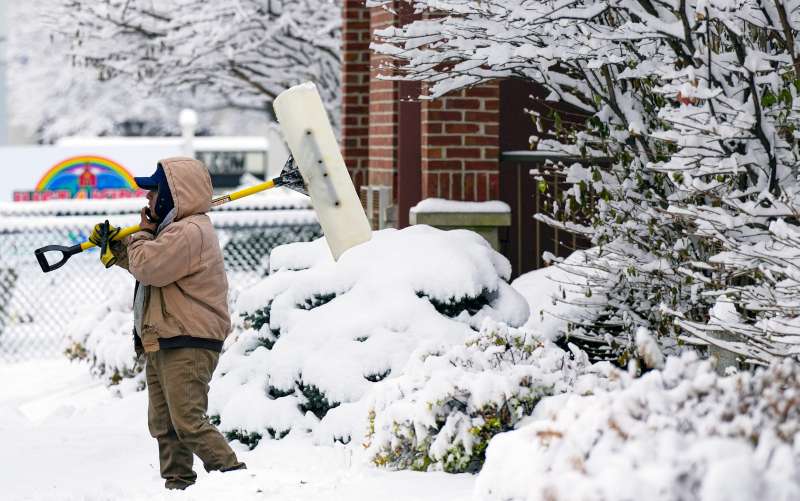
As Michigan enters late fall, some areas of Michigan have already had to deal with snow, and experts offer key advice if you’re planning to shovel, especially if you’re older or have health issues.
Older adults should exercise caution when shoveling, with recent guidance from an American Heart Association volunteer applying the warning to those 65 and older, while previous guidance was for those 45 and older, USA TODAY reported.
Those with health conditions like high blood pressure, high cholesterol or heart disease and lifestyle factors like smoking or lack of regular exercise face a greater risk of heart attack when shoveling.
Areas of the Upper Peninsula and northern Michigan have already seen enough snow to make it necessary to clean off a sidewalk or driveway. Farther south, accumulating snow may still be weeks away.
Be sure to bundle up and hydrate before bearing the cold on your shoveling sessions this fall and winter in Michigan.
Here’s what to know when shoveling this season.
How old is too old to shovel snow?
Recommendations for an exact age to retire from snow shoveling vary widely.
Dr. Barry Franklin, a former American Heart Association (AHA) volunteer, previously advised adults older than 45 to exercise caution when shoveling. Dr. John Osborne, an AHA volunteer, added that adults 65 and older should be “more wary” of snow shoveling.
Individuals with a higher risk for heart disease, such as tobacco use, diabetes, obesity, hypertension or high cholesterol, should be extra mindful as well.
Shoveling can pose a severe risk for people with heart disease and should be avoided, the Mayo Clinic points out. The combination of strenuous physical exercise and cold weather could trigger a heart attack as blood vessels constrict in cold weather, increasing blood pressure and potentially causing chest pain.
How does snow shoveling strain the heart?
According to an AHA news release, there are five main stressors on the heart when shoveling snow:
- Snow shoveling involves mostly isometric or static exertion that contracts muscles without movement in the surrounding joints.
- Shoveling snow requires arm work, which is more taxing on the heart than leg work.
- Straining the body while lifting heavy loads, during which most people unknowingly hold their breath, increases heart rate and blood pressure.
- Lack of leg movement or prolonged periods of sitting can cause blood to pool in the lower body, meaning less blood returns to the heart to be reoxygenated.
- Cold air can constrict blood vessels, disproportionately raising blood pressure and constricting coronary arteries.
Want to stay safe while shoveling? Follow these tips
When clearing winter snow, make sure to follow safe methods. Whether you’re using a snowplow or manually clearing snow with a shovel, here are some tips to remember:
- Dress warmly with a winter coat, hat, gloves and secure shoes or boots
- Check weather conditions. Avoid heading out in dangerous conditions
- Drink water before clearing snow
- Read your device’s owner’s manual
- Avoid excess strain on your body
- Keep children and pets indoors while clearing snow
- Avoid steep slopes
- Remove any obstacles in your path
What to know before heading out to shovel
If you choose to clear snow manually using shovels, pay attention to outdoor conditions and avoid excess strain on your body.
Shovel freshly fallen snow, as the snow will be lighter and easier to shovel soon after falling. Experts recommend shoveling when between 2-4 inches have fallen, clearing the snow before it’s been walked on or driven over.
Select appropriate shovels for the task. Options include a standard wood, metal, or plastic snow shovel, an ergonomic shovel for easier lifting, and a pusher or wide shovel for sliding along pavement.
Prepare your body for the physical task of manual snow clearing. Drink plenty of water beforehand and dress warmly. Watch out for ice paths on pathways and take periodic breaks to avoid strain on your back and shoulders.
Using snow-clearing devices? How to prepare
Before getting out machinery, it’s important to be prepared to use it safely. Experts recommend reading the device’s owner’s manual — complete with descriptions of how the snow thrower operates and instructions for safe use.
Prepare fuel-powered devices with the proper fuel as recommended by the manufacturer and fuel that is less than 30 days old. Keep fresh fuel nearby in case you need to refuel equipment and always turn off machinery before refueling. Never add fuel to a hot or running machine engine, as this poses a significant safety risk to the operator.
Fully charge battery-powered devices before hooking up the equipment.
If any snow jams occur in the equipment, always use tools or sticks to clear the snow. Make sure to turn off equipment before unclogging any jams. Never insert your hands into the device’s chute or auger, as the sharp machinery can be harmful.
This article originally appeared on Detroit Free Press: How old is too old to shovel snow? What experts say as winter arrives
Reporting by Jenna Prestininzi, Greta Cross and Doyle Rice, USA TODAY NETWORK / Detroit Free Press
USA TODAY Network via Reuters Connect