Michigan voters have the right to vote by mail, and they aren’t taking it for granted.
“In our August primary, almost 60% of our vote total came from absentee voters. We are certainly taking advantage of the opportunity to vote absentee in Michigan,” said Ottawa County Clerk Justin Roebuck.
Roebuck’s community isn’t alone. Over 1.4 million Michiganders voted via absentee ballots for the Aug. 4 primary election, a large portion of the 2.5 million votes that were cast.
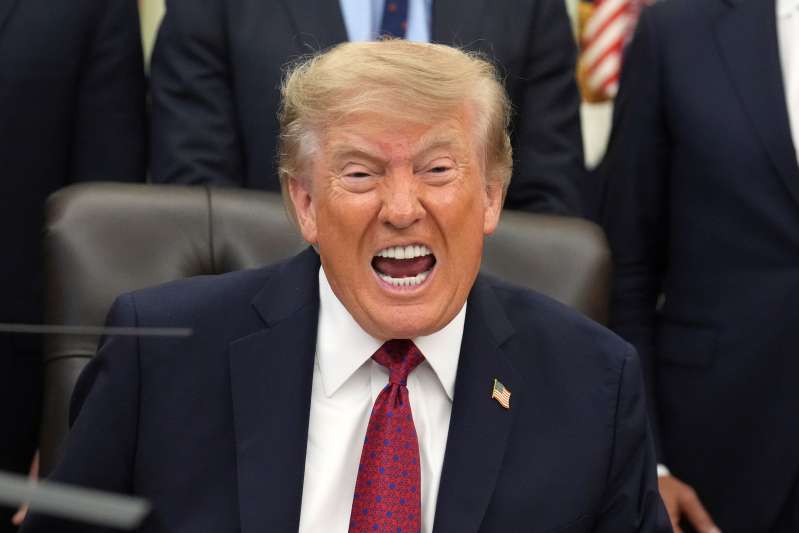
While the popularity of absentee voting has steadily increased after a majority of Michiganders voted to expand mail-in voting in 2018, and election administrators like Roebuck continue to ensure that Michigan elections remain fair and accessible, an executive order from President Donald Trump stands to disrupt this process.
The executive order, which Trump signed earlier this year, calls on the Department of Homeland Security to work with the Social Security Administration to create a nationwide list of verified eligible voters in each state, and block the US Postal Service (USPS) from sending absentee ballots to those not on each state’s approved list. Trump is also calling for ballots to have secure envelopes with unique barcodes for tracking, and said that federal funding could be withheld from states and localities that don’t comply.
Voting law experts say that the executive order violates the Constitution by attempting to seize states’ power to run elections. Roebuck, who has worked in election administration for nearly two decades in Ottawa County, said that the executive order would rely on the USPS and states to have access to data they haven’t ever had access to.
“I think what’s challenging, just from a structural point of view, is that USPS and states do not have strong databases that are actually able to pull this information together from the standpoint of voter registration,” Roebuck said, adding that having these databases has not been a federal or state priority. Without accurate data, he worries that Michigan voters would be denied the opportunity to vote.
“We cannot put this on people who ultimately have no say in the matter of how they’re listed in a government database,” Roebuck said.
As the executive order continues to bounce in and out of federal courtrooms and is challenged by several states, including Michigan, Roebuck and other election analysts worry there isn’t enough time for states to uphold the order before the first mail ballots are sent out for the upcoming midterm elections on Nov. 3. Current federal law says absentee ballots must be mailed to military and overseas voters at least 45 days before an election, and Michigan law guarantees voters the right to an absentee ballot at least 40 days before an election. That means ballots would need to reach voters overseas by Sept. 19, and in-state voters by Sept. 24.
“We know that this [executive order] is going to be contested in a couple different aspects state by state, and all of that is going to push these deadlines back. I’m concerned that we do not have time to get this right before November,” Roebuck said.
“It is certainly a reality check for us to deal with as voters and, of course, as election administrators. As we move into this election cycle and beyond, I think we need to continue having this conversation.”
“We have a responsibility as American citizens to really seek out truth when it comes to our democracy, because this matters. It’s so important to have dialogue, to do research to understand what’s happening, and also to get involved.”
To check your voter registration, see your ballot, or find your polling location, go to gandernewsroom.com/voter-registration.