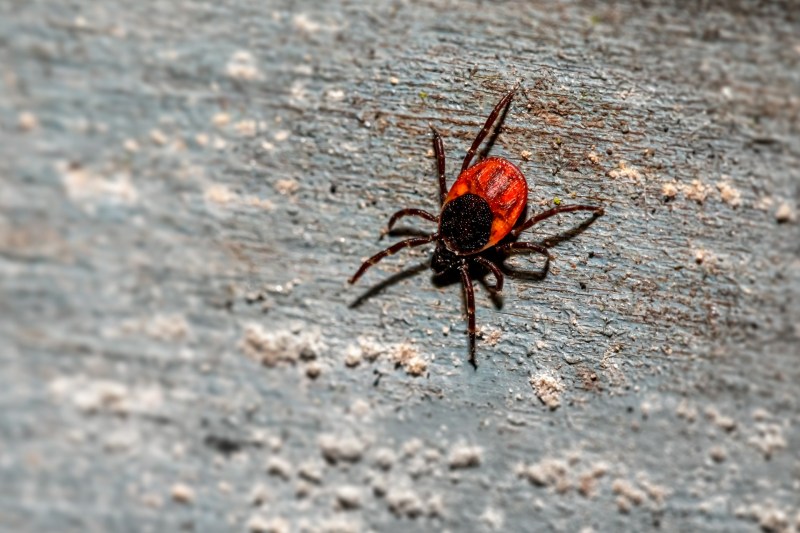
Ticks are out this season and if you spot one on you or yourself or your pet, it’s likely one of Michigan’s most populous species.
When you’re on your next hike, or even out in your yard, be sure to dress appropriately, use insect repellent and avoid tall grass to avoid a tick bite, the the Cleveland Clinic and Centers for Disease Control and Prevention say.
Lyme disease cases in Michigan nearly quadrupled between 2022 and 2025, according to data from the Michigan Department of Health and Human Services — jumping from 553 in 2022 to 2,167 confirmed cases in 2025.
Michigan is home to more than 20 tick species and many can pass dangerous bacteria, viruses or parasites, including the bacteria that causes Lyme disease, to people and pets, the Michigan Department of Health and Human Services warns.
There are five common species in Michigan, and two, American dog ticks and blacklegged or deer ticks, account for over 90% of the state’s tick population, according to Holland Hospital.
If you’ve been bitten, remove the tick as quickly as you can and watch for symptoms or consult a health care provider.
Here’s what to know about Michigan’s most common ticks.
What are brown dog ticks?
Brown dog ticks, or kennel ticks, tend to live near kennel, shelter and breeding facilities, and prefer to bite dogs, though they can also bite people in hot weather, according to PetMD.
Ticks are about 2 millimeters long, the size of a sesame seed, but can grow to 5 millimeters after a blood meal, the Michigan Department of Health and Human Services said.
Ticks are arachnids and have eight legs. Brown dog ticks survive and breed best indoors in warm, dry conditions, according to Michigan State University.
The species is occasionally present in Michigan and is typically active from spring to fall.
Diseases brown dog ticks can spread to dogs, cats and people include Rocky Mountain spotted fever, canine ehrlichiosis and babesiosis, Anaplasmosis, canine bartonellosis and Hepatozoonosis, PetMD said.
What are American dog ticks?
Accounting for 75% of Michigan’s ticks, American dog ticks, or wood ticks, live in forests and grassy areas throughout Michigan. The species is active from May to November, and most active in spring and summer.
American dog ticks have a hard exterior shell and eight legs, with a brown back with silver or gray markings and a brown scutum, the hard plate behind their head, according to PetMD.
Ticks are about 4-5 millimeters long, or a little larger than a sesame seed before they feed.
Diseases these ticks can transmit to people, dogs, livestock and other animals, include Rocky Mountain spotted fever, tularemia and canine tick paralysis.
What are blacklegged or deer ticks?
Blacklegged ticks, or deer ticks, account for 15% of Michigan’s ticks and are present on low forest vegetation, and along human and animal trails throughout the state.
The species can be active year-round, depending on life stage and temperature, though spring, summer and fall pose the highest danger for tick bites, according to the Ohio State University Extension and the Centers for Disease Control and Prevention. Blacklegged ticks have a reddish-brown back and a black scutum, with eight legs, according to PetMD.
Blacklegged ticks, which can be found in every Michigan county, are 1-3 millimeters long, slightly smaller than a sesame seed.
Blacklegged ticks can pass Lyme disease to its bite victims, posing a serious health risk. Lyme is caused by a bacteria. People often notice a red, bullseye circle around a tick bite.
What are lone star ticks?
Lone star ticks are a very aggressive tick that bites people and animals. They are named for a silver spot near the back of the head of adult females said to resemble Texas, according to Michigan State University. The species is reddish-brown and sometimes present in wooded and grassy areas across Michigan.
Adult ticks in this species are typically active from April to late June, according to the Commonwealth of Pennsylvania’s website.
Ticks are 2-3 millimeters long, about the size of a sesame seed.
Lone star ticks can transmit diseases like Rocky Mountain spotted fever and tularemia, with a severe bite that often becomes inflamed and develops lesions, MSU noted.
What are woodchuck ticks?
Woodchuck ticks, or the groundhog tick, tend to bite small animals, and occasionally people, and are often found on pets near dens of skunks and woodchucks throughout Michigan. These ticks have a reddish-tan-brown color, with eight legs.
Woodchuck ticks are about 2 millimeters long, about the size of a sesame seed.
The species can transmit the Powassan virus, according to Rutgers University. Woodchuck ticks reach peak activity in July, Tick Control LLC said.
What keeps ticks away?
Following these tips from MDHHS, CDC and Johns Hopkins Medicine can help you avoid tick bites:
- Stay on well-groomed trails
- Avoid areas of high grass, brush and fallen leaves
- Wear light-colored clothing
- Use repellents that contain permethrin on clothing
- Use insect repellents that contain DEET on your exposed skin
- Always check for ticks on yourself and your animals after being outdoors, including in your own yard
- Remove ticks from clothing before returning indoors
- Shower soon after returning indoors
- Tumble dry clothes in a dryer on high heat for 10 minutes to kill ticks on dry clothing after you come indoors.
- For dogs, try tick collars, sprays, shampoos or monthly “top spot” medications