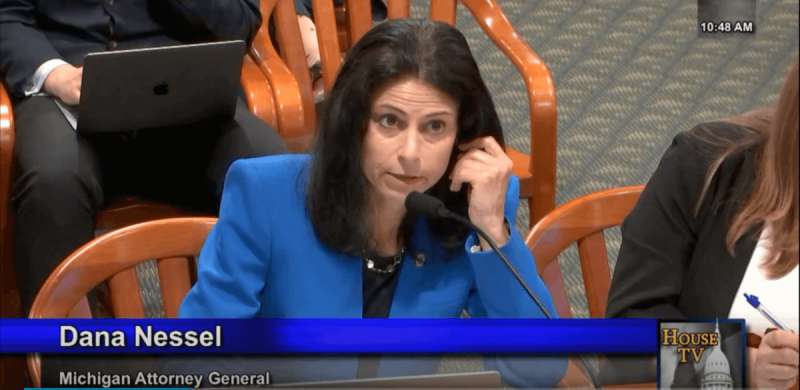
Michigan Attorney General Nessel testified in support of new bills to protect the confidential information of victims and witnesses.
LANSING — Bills advancing in the Michigan House of Representatives aim to help protect the personal information of victims and witnesses from being disclosed during criminal proceedings.
House Bills 4738 and 4739—introduced by Democratic Reps. Kelly Breen and Denise Mentzer—would require prosecutors to redact identifying personal information (like home addresses and phone numbers) of witnesses and victims of crimes in certain court records, as well as prohibit that information from being released to defendants who are accused of crimes.
At a hearing on Wednesday, Michigan Attorney General Dana Nessel said victims are often deterred from reporting crimes or participating in trials because, under state law, their personal information can be released to defendants (and their attorneys) during the discovery process.
She told lawmakers the legislation was needed because giving alleged abusers access to victims’ phone numbers, addresses, and other personal details can create “grave risks.”
“I have always said that it takes great strength and courage for victims to face their abusers or assailants,” Nessel said. “They are the most vulnerable individuals in our judicial system—and they deserve and require encouragement and our protection. And we know that many victims are afraid to come forward, particularly those who are victims of sexual and domestic abuse.”
The legislation defines personal information as a: home address; telephone number; driver’s license number; social security number; date of birth; mother’s maiden name; and the name and address of an employer. Under the legislation, prosecutors would be required to redact those details from court records—including those provided to defendants—unless they play a role in the circumstances of the alleged crime. Unauthorized disclosure would be a misdemeanor.
“Fairness and justice should occur on both sides of the courtroom,” Nessel said. “In the criminal justice system, victims are not an interference to our work, victims are the reason for our work.”
Both bills are still under review in the House Judiciary Committee, and will need to pass through both chambers of the legislature—and get Gov. Gretchen Whitmer’s signature—to become law.
READ MORE: Nessel Sues Company That Allegedly Made 25 Billion Robocalls
For the latest Michigan news, follow The ‘Gander on Twitter.
Follow Political Correspondent Kyle Kaminski here.