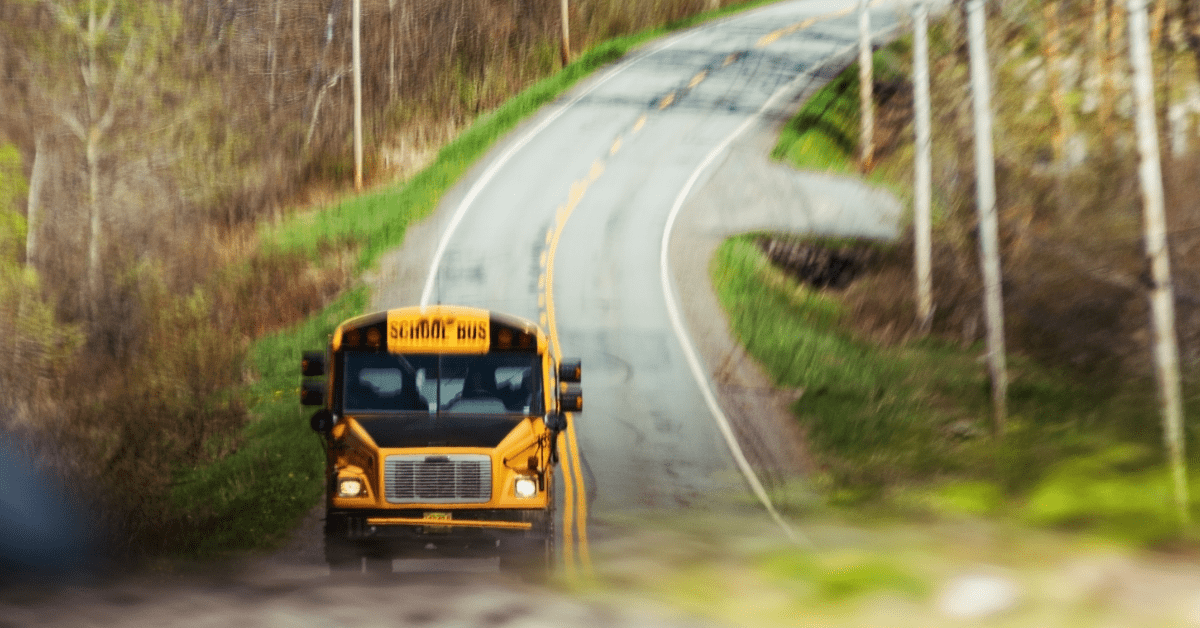
A report from the National Rural Education Association shows rural schools in Michigan have the nation’s lowest professional-to-student ratio—with just one psychologist or counselor often responsible for serving nearly 600 students.
MICHIGAN—A recent report from a nationwide nonprofit organization offers some unsettling insights into staffing issues facing Michigan schools—particularly those in rural communities.
Across rural school districts in Michigan, on average, a single school counselor or psychologist is responsible for serving 571 students, according to a new report from the National Rural Education Association. And according to the report, that’s 84% worse than the nationwide rural average and the lowest professional-to-student ratio among all other states in the country.
Nationally, the average ratio among rural school districts is much higher—with one school psychologist or counselor for every 310 students, according to the association’s report.
Allen Pratt, executive director of the association, told Public News Service that rural schools may require more funding—or perhaps use their funding differently—to help address the issue.
“We have to do more to train our teachers, number one, but also train folks in our community, in our school, to do a job helping these students,” Pratt said. “Even if you had (a ratio of) 10-to-500, you still couldn’t get the whole job done. So, this is a community effort.”
According to the report:
- About 38.3% of Michigan’s school districts are located in small, rural communities.
- About 18.2% of the students who attend a public school in Michigan live in rural communities, but only about 16.9% of state school state funding goes to rural districts.
- Rural school districts in Michigan spend about $6,613 on instructional expenses for each student, compared to a national per-pupil average expenditure of nearly $7,200.
Last year, Michigan lawmakers approved a $24 billion budget that centered largely on investments in public education, marking the first opportunity in decades that Democrats have had to craft a spending plan that reflects their legislative priorities for the state’s schools.
Michigan’s public schools receive their state funding, in part, based on the number of students in their classrooms. The most recent budget boosted that funding to its highest point in state history: $9,608 per student. That’s an extra $458 (or 5%) per student compared to 2022.
All told, per-pupil funding has climbed 22% since Gov. Gretchen Whitmer took office in 2019, ultimately allowing school districts for budgetary flexibility—and resources—to serve students.
That latest budget also provided $328 million specifically for mental health and school safety, reports Michigan Advance. The general omnibus budget reportedly provided another $280 million for certified community behavioral health clinics—including in rural communities.
“Access to mental health care is something every community across the state is grappling with,” Sen. Kevin Hertel (D-St. Clair Shores) told Michigan Advance last summer. “We’re seeing a huge need among our adolescent population. We prioritized this in our budget.”
Pratt also told Public News Service that upcoming policy changes and ongoing budget discussions in the current legislative cycle could help advance rural education in Michigan.
“You have to take the numbers and you’ve got to put it in a ‘drive’ direction on what we need to change to get better,” Pratt said. “But also, let’s find positives. Even if it may even be a small positive, we’ve got to find positives to help our rural schools and rural communities.”
READ MORE: Secretary of State calls for Michigan schools to bring back driver’s ed
For the latest Michigan news, follow The ‘Gander on Twitter.
Follow Political Correspondent Kyle Kaminski here.
Author

Support Our Cause
Thank you for taking the time to read our work. Before you go, we hope you'll consider supporting our values-driven journalism, which has always strived to make clear what's really at stake for Michiganders and our future.
Since day one, our goal here at The 'Gander has always been to empower people across the state with fact-based news and information. We believe that when people are armed with knowledge about what's happening in their local, state, and federal governments—including who is working on their behalf and who is actively trying to block efforts aimed at improving the daily lives of Michigan families—they will be inspired to become civically engaged.

Working folks build food solutions, while Congress slashes SNAP
On Thursday nights, I walk a few blocks along my neighborhood’s cracked sidewalks to the People’s Market. Once a week, an empty lot becomes a...

Gwen Frisbie-Fulton: ‘The people closest to the problem are often the ones who can find the solution’
About two years ago, tents started to show up in my neighborhood along the creek beds and in small stands of trees. Most only became visible when...

A love letter to the working class, from Gwen Frisbie-Fulton
It started in the back seat of my family’s Jeep Cherokee, the one with the broken AC and vinyl seats that stuck to my thighs in the late summer...

Fresh food, stronger farms: Michigan invests millions to support local agriculture
A new ‘Farm-to-Family’ grant program aims to connect Michigan farmers with more consumers, boost local economies, and build a stronger food system....
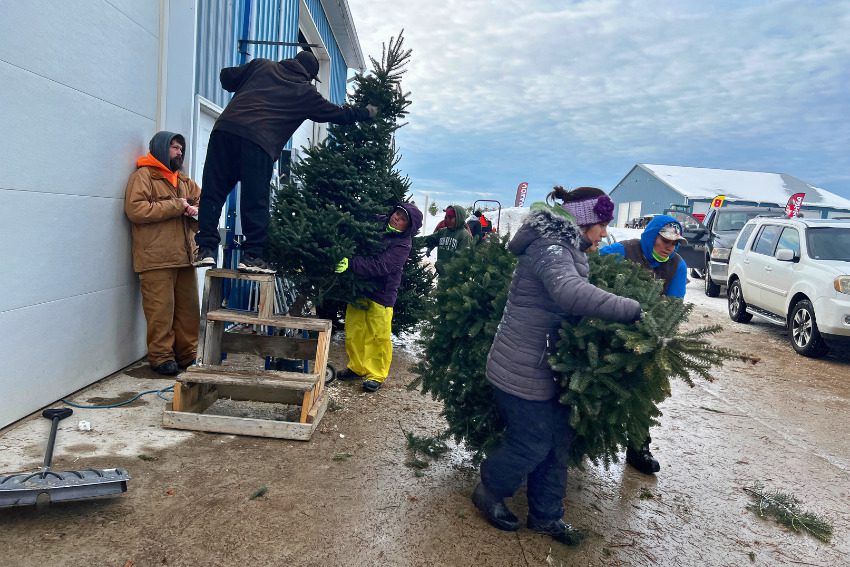
Rooted in Tradition: How Michigan’s Christmas tree industry is keeping the holiday spirit alive
Family farms—and traditions—help Michigan produce more Christmas trees than almost every other state in the country. GOBLES—Under a clear December...