AP Photo/Charlie Neibergall, File
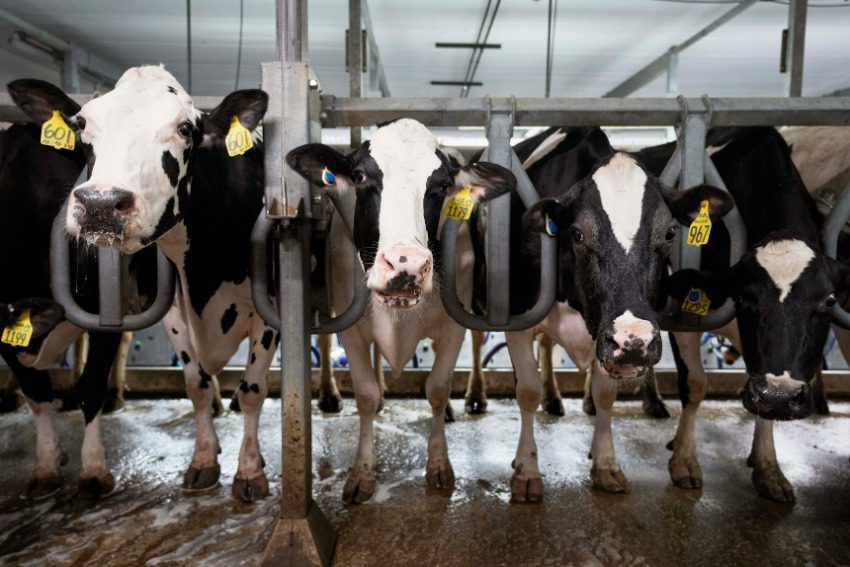
The US government on Friday ordered testing of the nation’s milk supply for bird flu to better monitor the spread of the virus in dairy cows.
Raw or unpasteurized milk from dairy farms and processors nationwide must be tested on request starting Dec. 16, the Agriculture Department said. Testing will begin in six states—California, Colorado, Michigan, Mississippi, Oregon and Pennsylvania.
Officials said the move is aimed at “containing and ultimately eliminating the virus,” known as Type A H5N1, which was detected for the first time in March in U.S. dairy cows. Since then, more than 700 herds have been confirmed to be infected in 15 states.
“This will give farms and farmworkers better confidence in the safety of their animals and ability to protect themselves, and it will put us on a path to quickly controlling and stopping the virus’ spread nationwide,” Agriculture Secretary Tom Vilsack said in a statement.
The risk to people from bird flu remains low, health officials said. Pasteurization, or heat treatment, kills the virus in milk, leaving it safe to drink.
Veterinarians, farmers, scientists and academics have been calling for nationwide milk testing for months, said Keith Poulsen, director of the Wisconsin Veterinary Diagnostic Laboratory, who led the efforts.
“It’s another step in the right direction,” Poulsen said. “They’re coming around that we need a better handle on it.”
Dairy farmers and processors across the US have been reluctant to test animals or milk for the virus, fearing economic or other repercussions. Jamie Jonker, chief science officer of the National Milk Producers Federation, said the industry supports USDA efforts to eliminate the virus.
Under the federal order, dairy farmers and those who handle raw milk intended for pasteurization must provide samples of the milk on request for testing for bird flu. It requires reporting of positive tests to the USDA and it requires herd owners to provide basic information to allow tracing of the disease in cattle.
The move follows an April 24 federal order that mandated testing of certain dairy cattle before they could move between states and required reporting of any positive tests. Despite that order, the virus has continued to spread, Poulsen noted.
Raw milk from infected cows contains high loads of live virus, testing has shown.
At least 58 people in the US have been infected with bird flu, mostly farm workers who became mildly ill after close contact with infected cows, including their milk, or infected poultry.
Bird flu has also been spreading among wild birds and a number of other animals.
Federal officials continue to warn against drinking raw milk, which can contain a host of germs that make people sick. In California, officials quarantined a farm and halted distribution of milk after bird flu virus was detected in raw milk sold in stores. Raw Farm of Fresno issued a voluntary recall of raw milk and cream produced after Nov. 9.
OPINION: We need a Farm Bill that prioritizes small family farms and animal welfare
Author


These viral animals from Michigan will turn your day around
Michigan is home to an adorable variety of social media-famous animals. Read on to learn all about them. While Michigan is known as the Wolverine...

Trail cam captures Michigan cougar kittens. What DNR is saying about cubs
Two cougar cubs spotted last spring in Ontonagon County were seen again this month, walking along a snowy trail with an adult cougar in Michigan's...
Public attitudes toward wolves split in the Upper Peninsula
By Samantha Ku, Capital News Service LANSING–Public attitudes toward wolves are split in the Upper Peninsula, a new study finds, with more than 60%...

Lights, camera, bark! Dogs from Michigan prison training programs featured on 2026 calendar
By Camila Bello Castro, Capital News Service LANSING –The holiday season at the Department of Corrections is the time of the year when staff,...
Tracking moose on Isle Royale. How to volunteer for Moosewatch
A nonprofit group dedicated to studying moose-wolf interactions at Isle Royale National Park is looking for volunteers to hike the archipelago to...