Kyle Davidson/Michigan Advance
BY KYLE DAVIDSON, MICHIGAN ADVANCE
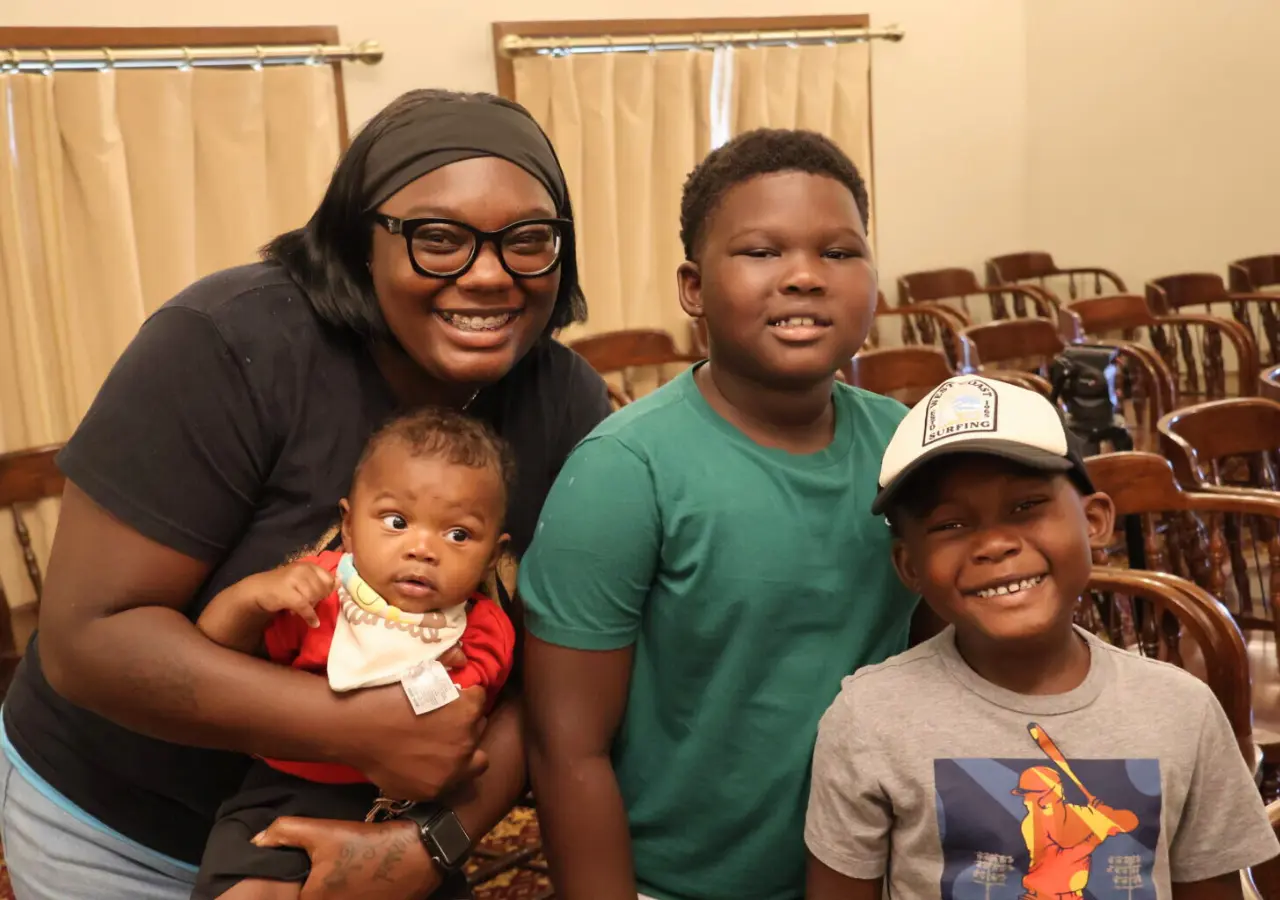
MICHIGAN—Parents and advocates for maternal and child health filed into the Michigan Capitol on Tuesday as members of the Senate Committee on Housing and Human Services prepared to take testimony on a proposal to bring a cash-based program supporting pregnant parents and babies into state law.
The Rx Kids program opened enrollment in 2024 in an effort to combat childhood poverty and improve infant and maternal health in the city of Flint. However, the program has since expanded to offer cash-based assistance to parents of babies in Kalamazoo and Pontiac as well as Alger, Clare, Chippewa, Luce, Mackinac and Schoolcraft counties.
Now, members of the Legislature are aiming to expand the program to the entire state.
Sen. Sylvia Santana’s (D-Detroit) Senate Bill 309 would amend the state’s Social Welfare Act, requiring the Department of Health and Human Services to contract with Michigan State University to administer the program, which offers pregnant parents within a set area $1,500 during pregnancy and babies $500 a month for either the first six or 12 months of their life.
“This cash assistance helps remove economic barriers that often prevent families from obtaining necessary items, such as baby supplies, food, rent, utility bills and clothing,” Santana said.
Mona Hanna, the program’s director, explained that while the program in Michigan is the first of its kind in the nation, it’s not a new concept, with 70% of countries across the globe offering some kind of child/family allowance.
The early months of a child’s life is crucial in development, Hanna said, noting that a child’s brain doubles in size over the first year of their life.
This is also a period when stress and scarcity can have lifelong impacts on a child, Hanna explained, with families also facing their steepest costs during this timeframe.
These costs are compounded by a loss of income if the mother has to leave the workforce and the added cost of caregiving and childcare, Hanna said, with individuals living in poor communities facing an even greater burden from these challenges.
To date, the program has prescribed over $13 million dollars to more than 3,000 Michigan families, Hanna said, with the program financed through a combination of funds from the Temporary Assistance for Needy Families program and municipalities, alongside other public-private support.
“That means that every state dollar is matched and often multiplied by private investment, stretching our public resources further and maximizing impact,” Hanna said.
The most common item Rx Kids recipients spent their cash prescription on was baby supplies, namely diapers, Hanna said.
Additionally families in the program reported less back-owed rent and mortgage payments, alongside improved nutrition security, and improved health benefits, Hanna said.
“We are seeing a significant reduction in postpartum depression, a reduction in anxiety and a significant reduction in parental stress. We have a massive increase in prenatal care utilization. Moms are going to prenatal care earlier, they’re going more often,” Hanna said. “Because they’re going earlier and more often, we’re increasing the detection of pregnancy illnesses like gestational diabetes and hypertension. We have less smoking [in] the third trimester, and we are also seeing significant improvements in birth weight and gestational age.”
Hanna said that has resulted in fewer admissions to the neonatal intensive care unit.
During the hearing, Sen. John Damoose (R-Harbor Springs) offered effusive praise for the program, noting that part of the region he represents is participating in Rx Kids .
“I love that there are no strings attached, that you’re actually trusting that parents are going to use this for the right things, that those maternal and paternal instincts kick in and they use it for that,” Damoose said. “You don’t have means testing, which I think is a great thing, because there’s no stigma now. Everybody can go get this. It’s also helped you to lead to a tremendously low overhead, unlike so many sort of relief programs out there.”
Alongside praise from Damoose, two mothers who had participated in the program shared how their participation had offered greater stability.
Quianna Jenkins had her first child at 18 years old. Despite stepping into motherhood young, Jenkins said she was determined to give her children the best life she could, though it hasn’t been easy.
“There have been days filled with uncertainty, stress and sacrifice. From doctor visits to late night feedings to budgeting every single dollar just to make sure there’s enough to get through the week, it’s a lot.… That’s why, when I heard about the program, it felt like someone finally said, ‘we see you, we believe in you,’” Jenkins said.
Those dollars have been instrumental in providing her kids with a better quality of life, Jenkins said, using the money to start a life insurance policy, something she never thought she’d be able to afford.
Additionally, the cash benefit gives participants the ability to handle real life as it comes, treating recipients like the capable adults they are, Jenkins said.
Celeste Lord-Timlin said she and her husband were both living in affordable housing when she found out she was pregnant.
Lord-Timlin was also pursuing two Masters degrees at the University of Michigan-Flint, opting to reduce her class schedule to remain in good standing. However, that decision led to the loss of her FAFSA eligibility, creating stress as she thought about her upcoming hospital bill alongside having to pay tuition out of pocket.
“This is, again, where Rx Kids stepped in. That initial $1,500 payment was a lifeline. Half went to essential baby items, like a stroller and a car seat, and the other half covered my part-time tuition, allowing me to remain in good standing,” Lord-Timlin said.
Now that they are off the program the $500 a month payments for her daughter has put them in a much better position by giving them a year to prepare, Lord-Timlin said.
While other working moms sometimes have to leave the workforce when childcare costs outweigh their salary, Lord-Timlin said the money from Rx Kids gave her a buffer so she could remain in the workforce.
“This past June, I proudly received my Masters in organizational leadership and I’m on track to receive my [Masters of Business Administration] this December,” Lord-Timlin said. “It’s more than just cash, it’s an investment in the potential of mothers, the stability of families and the futures of communities.”
While members of the committee voted to approve a substitute to the bill, the committee did not hold a vote on whether to refer the policy back to the Senate floor for a vote.
READ MORE: How a Michigan program that gives new mothers cash could be a model for rest of US
This coverage was republished from Michigan Advance pursuant to a Creative Commons license.
Author


Trio of Michigan Senate Democrats introduce policy to address data center water usage
BY KYLE DAVIDSON, MICHIGAN ADVANCE LANSING—Following a groundswell of opposition to data center projects throughout the state, a trio of Democratic...

Michigan Dems say $645M work project cuts are ‘cruel’
BY BEN SOLIS, MICHIGAN ADVANCE LANSING—Organizations that have relied on Michigan state agency work project funding learned Thursday that the House...

Michigan Senate passes petition collection, election disinformation reforms
BY BEN SOLIS, MICHIGAN ADVANCE MICHIGAN—The fight against election disinformation and changes to Michigan’s petition circulation process cleared the...

Michigan OKs landmark regulations that push up-front costs to data centers
Michigan regulators on Thursday adopted landmark standards for the booming data center industry with a plan they say tries to protect residents from...

Q&A: Why this 29-year-old Detroiter thinks he can make Michigan government work again
Democratic state Senate candidate Justin Onwenu says he wants to rebuild trust, invest in neighborhoods, and help deliver a new generation of...