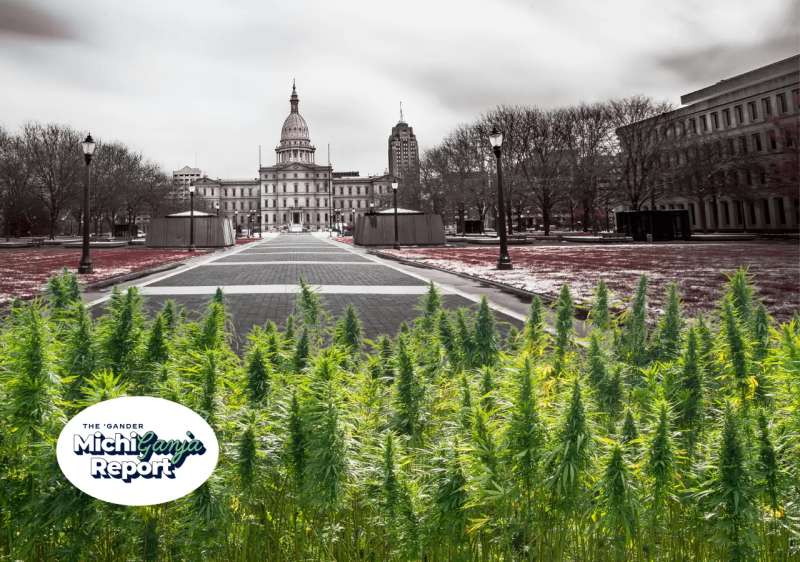
Sweeping new legislation would cap the number of dispensaries in Michigan cities, freeze new grow licenses, and crack down on unregulated, hemp-based products.
MICHIGAN—After five straight years of consistent growth, Michigan’s recreational cannabis market is showing signs of burnout. Prices are at rock bottom, dozens of companies are in financial freefall, and state lawmakers say it’s time for regulators to start pumping the brakes.
New legislation introduced this month would put hard limits on the number of dispensaries allowed in every Michigan community, halt new large-scale growing operations, and pull the plug on certain hemp-derived products that have flooded store shelves without testing or regulation.
Bill sponsors and supporters say the plan is a necessary step to stabilize an oversaturated industry and protect Michigan stoners from sketchy products. But critics warn the changes could freeze out small businesses, create monopolies for the big players, and undo parts of the 2018 voter-approved law that made Michigan one of the country’s most competitive weed markets.
What’s on the table?
A six-bill package, sponsored by Democratic state Sens. Sam Singh, Jeremy Moss, and Dayna Polehanki, would effectively overhaul how Michigan regulates marijuana and hemp products. And they say Michiganders can expect additional cannabis-related bills in the “near future.”
Among the biggest changes up for consideration:
- Dispensary caps: Senate Bills 597 and 598 would limit each Michigan city or township to one licensed dispensary for every 10,000 residents. Any municipality that’s already over that limit would be stuck—with existing shops allowed to stay open or sell their licenses, but no new stores allowed until another closes or the local population grows.
That would mean hot spots like New Buffalo and Menominee would see their markets frozen at their current levels while larger cities like Detroit could still add new retailers. Towns with less than 10,000 residents would be allowed to have one dispensary.
The bill also carves out exceptions for so-called “resort districts” where the population climbs during the summer months but it’s still unclear how those will be defined.
- Crackdown on hemp-derived highs: Senate Bills 599–602 would allow the state to start regulating products like delta-8 vapes, hemp-based edibles, and synthetic “THC” cartridges that are often sold without restrictions at convenience stores and gas stations.
Specifically, these bills enact the “Industrial Hemp Processing Act” and require a new license for anyone who processes consumable hemp products from industrial hemp.
- Freeze on big grows: Singh has also reportedly voiced plans to introduce additional legislation that would, beginning in 2026, prevent the state from issuing new licenses for large-scale marijuana cultivation operations capable of housing more than 150 plants.
How did we get here?
When Michiganders legalized weed in 2018, voters envisioned a wide-open market.
And for a while, it worked: Hundreds of dispensaries popped up across the state, tax revenue exploded, and Michigan became one of the largest recreational cannabis markets in the country.
But too much of a good thing can still hurt. With hundreds of cultivators also flooding the market, supply has now greatly outpaced demand—and prices have crashed. An ounce of flower that used to fetch $200 in 2021 now sells for an average of about $60, according to state reports.
That’s been great for consumers but brutal for businesses.
Dozens of growers and retailers have gone under or entered court-supervised receiverships over the last 18 months. And the financial stress only worsened this month after Gov. Gretchen Whitmer signed a new 24% wholesale cannabis tax into law as part of the state budget.
Lawmakers say the new regulations are meant to create “stability” for the cannabis market—namely by shielding existing shops against competition from new startups. And industry groups, like the Michigan Cannabis Industry Association, also support the changes.
What’s the problem?
Not everyone thinks more state regulations are needed.
Longtime legalization advocate Jamie Lowell—who helped draft the original 2018 legalization law—said the whole point was to avoid this kind of state-imposed cap. In a letter to a Senate Committee, Lowell reportedly billed the legislation as “a major and unnecessary rewrite of a voter-approved law” that was “deliberately designed to avoid rigid, state-imposed limits.”
And for businesses that aren’t done growing, the new caps could pose a real roadblock.
Steven Wagner from Alien Tek Farms reportedly told lawmakers that capping licenses “would essentially freeze us out from vertically integrating or expanding in any way.” And without the ability to grow, he—and others—may soon be forced out of business, Bridge Michigan reports.
A state Senate analysis of the bills also concedes that the new limits “would create regional monopolies or oligopolies preventing new businesses from entering the marijuana market,” with a disproportionate impact on smaller cities and villages that will only be allowed one dispensary.
What’s next?
Because these legislative changes would amend Michigan’s voter-approved marijuana law, they’ll need three-fourths support in both the state House and the state Senate—an unusually high bar. And Senate leaders have promised more hearings before any votes take place.
The bottom line
Michigan’s weed boom is leveling off, and Lansing wants to decide what comes next.
For now, the legislation is just a proposal. But if these bills gain enough steam and make their way into law, they could define Michigan’s cannabis landscape for the next decade—ultimately deciding who survives, who expands, and who gets regulated out of the market altogether.
Whether you’re a consumer chasing cheap ounces or a grower trying to stay solvent, the message from Lansing is clear: The wild west days of Michigan weed are officially numbered.
READ MORE: Why Michigan weed is cheaper than ever—and how that’s a huge problem

Want more cannabis news delivered right to your inbox? Click here to sign up for The MichiGanja Report—our free weekly newsletter about all things marijuana.