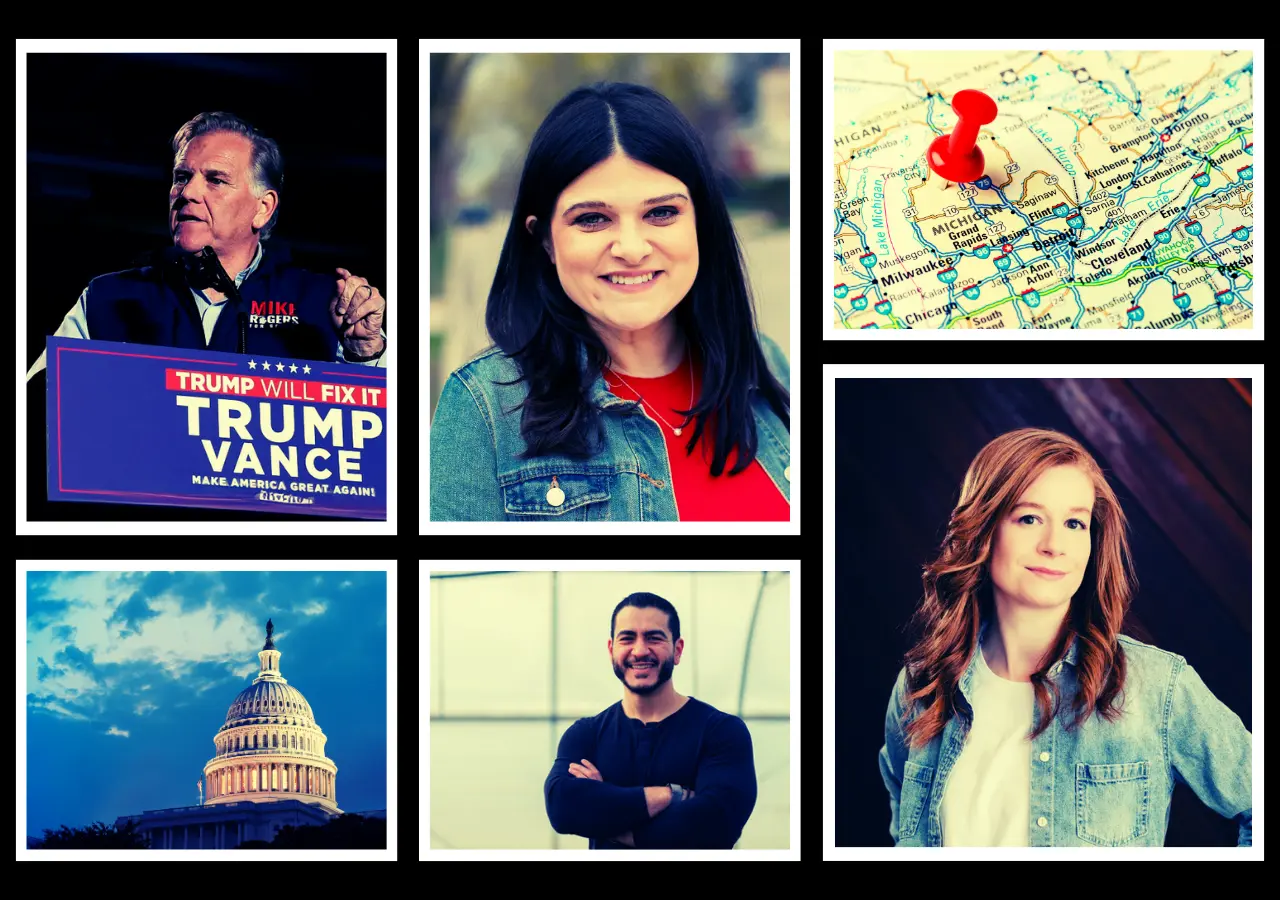
A look at which power players, unions, activists, and national groups are lining up behind each candidate—and what those early endorsements reveal about Michigan’s political divide.
MICHIGAN—The race for US Senate in Michigan is quickly becoming a test of political identity.
And the alliances forming behind candidates like Mike Rogers, Haley Stevens, Mallory McMorrow, and Abdul El-Sayed are showing just how divided those identities have become.
For Republicans, the picture is nearly locked in: President Donald Trump and the Republican Party at large have thrown their full weight behind Rogers ahead of the 2026 primary election.
For Democrats, the map looks a bit more complicated: Stevens is consolidating support from party elders, many Black political leaders, and several major unions; McMorrow is collecting endorsements from younger, insurgent Democrats and national progressives; and El-Sayed is drawing some of the biggest names on the left, with clear support from grassroots organizers.
Endorsements don’t decide elections. But they do tell voters something about what kind of candidate each campaign is trying to send to Washington next year—and whose interests they’ll be expected to serve if and when they’re elected to office.
Here’s a snapshot of where the major players stand today:
Haley Stevens
Democrats closest to the so-called “party establishment” are rallying behind US Rep. Haley Stevens, who has built the largest and most traditional political coalition in the race so far.

Haley Stevens via Facebook
Her endorsements read like a who’s who of mainstream Democratic politics in Michigan and beyond. Among them: US House Speaker Emerita Nancy Pelosi, former Michigan Gov. Jim Blanchard, former US Rep. Mark Schauer, and a growing list of Michigan mayors, state lawmakers, and other political leaders, including the Michigan Democratic Party’s Black Caucus.
In an interview with The ‘Gander, Stevens focused largely on Trump’s tariffs, her Macomb County roots, and why manufacturing workers need a “fighter” in Washington.
“Michigan needs a champion in the US Senate, and I believe that’s me,” she said. “It’s not just the tariffs; it’s cuts to Medicaid, Medicare, Social Security while costs are going through the roof. We need a proven leader to push back and deliver for our state.”
US Reps. Hillary Scholten and Shri Thanedar have both endorsed Stevens. And her campaign is also reportedly being backed this year by the Democratic Senatorial Campaign Committee, Senate Minority Leader Chuck Schumer, and other top Democrats in Congress—though that support isn’t expected to be made public until after next year’s primary election has ended.
Stevens has also pulled in key support from organized labor on the campaign trail, including from key union groups like Pipefitters, Steamfitters, Refrigeration & Air Conditioning Service Local Union 636, IronWorkers Local 25, UNITE HERE Local 24, and Teamsters Local 243.
Several national groups are also backing Stevens, including the Democratic Majority for Israel, which has praised her support of Israel.
Stevens has reportedly raised about $4.7 million and still has about $2.6 million cash on hand.
The bottom line: Taken together, Stevens’ roster looks like a classic “big tent” establishment coalition with party leaders, a wide swath of mayors, Black political institutions, key unions, and a major pro-Israel PAC all betting that she’s the safest choice to keep the seat blue in 2026.
Mallory McMorrow
State Sen. Mallory McMorrow has quickly become a favorite among Democrats looking for a more insurgent, next-generation voice. Her endorsements include US Sen. Martin Heinrich, state Sens. Mary Cavanagh, John Cherry, Veronica Klinefelt, Sue Shink, and Sam Singh, as well as a slate of other younger state legislators and local officials across Michigan who see her as a candidate capable of energizing voters who are disillusioned with the party’s old guard.

Mallory McMorrow via Facebook
Following a viral moment on the Senate floor in 2022, McMorrow has built a pitch around creating a “new American Dream,” with a focus on lowering costs and mobilizing suburban voters, especially women, who’ve defined Democratic gain in Michigan in recent years.
In an interview with The ‘Gander, McMorrow opened up about her rural roots, viral rise, and why she believes Michigan needs bolder leadership to take on the Trump administration.
“It is not the time for politics as usual,” she said.
Among other noteworthy endorsements: UA Local 370, which represents plumbers, pipefitters and steamfitters in Genesee, Shiawassee, and Lapeer Counties; Nurses for America; and The Next 50, a group that’s designed to support young Democratic candidates across the country.
McMorrow has also collected endorsements from the Rev. Barry Randolph at Church of the Messiah in Detroit and Devon Buskin, founder and CEO of the Detroit City Lions Youth Club.
Unlike Stevens, McMorrow’s campaign is rejecting corporate PAC money. And in October, she joined a growing number of Democrats in declaring the situation in Gaza to be a “genocide.”
She has raised $3.9 million and has $1.5 million cash on hand, Michigan Advance reports.
The bottom line: McMorrow is uniting younger lawmakers, progressive-leaning suburban voters, and Democrats who are hungry for a fresh, more combative approach to government.
Abdul El-Sayed
Former Detroit health director Abdul El-Sayed is running as the most progressive candidate in the field and that’s reflected in his endorsements. He’s backed by national heavyweights like US Sen. Bernie Sanders, as well as US Reps. Rashida Tlaib, Ro Khanna, and Pramila Jayapal.
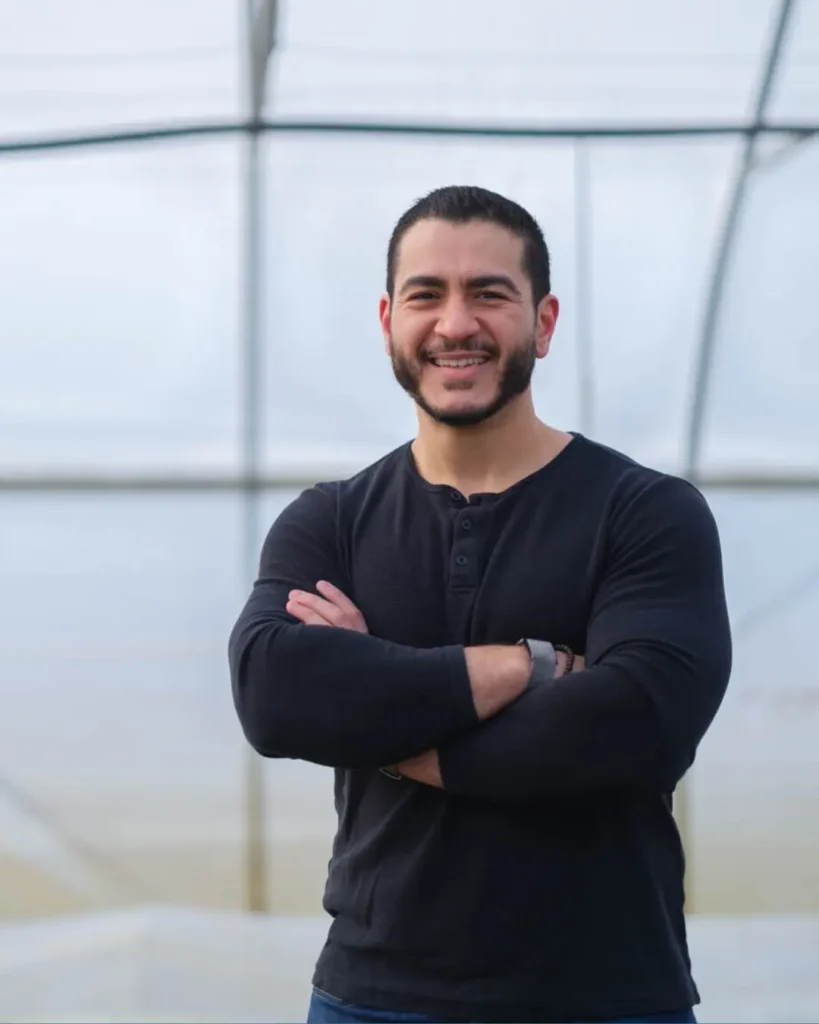
Abdul El-Sayed via Facebook
Like McMorrow, El-Sayed is also rejecting donations from corporate PACs. And he’s been clear about his position on Israel for months: El-Sayed says what’s happening in Gaza is genocide.
In an interview with The ‘Gander, El-Sayed opened up about Trump’s chaotic tariff policies, looming Medicaid cuts, and how his upbringing shaped his campaign for the US Senate.
“With me, you are getting somebody who can stand on principle and stand up to anybody,” he said. “You’re getting somebody who knows how to bring people together to build from what is left over. And I think that’s what Michiganders are looking for right now in the US Senate.”
He has also been endorsed by former US Reps. Andy Levin and Keith Ellison; Wayne County Executive Warren Evans; state Reps. Emily Dievendorf, Alabas Farhat, Dylan Wegela, and Jimmie Wilson Jr.; and a host of locally elected officials from nearly every corner of the state.
El-Sayed has been positioning himself as the grassroots movement candidate, with a focus on energizing younger voters and communities that have been historically underrepresented in Michigan politics. His political momentum is evidenced, in part, by recent endorsements from the Progressive Change Campaign Committee, Peace Action, and the Michigan Democratic Party’s LGBT&A Caucus, Progressive Caucus, and Grassroots Caucus.
He has raised $3.6 million and has $1.8 million cash on hand, Michigan Advance reports.
The bottom line: El-Sayed is backed by some of the country’s most influential progressive leaders and is betting on a grassroots movement to help carry him through the primary.
Mike Rogers
Republicans in Michigan have mostly coalesced around former Congressman Mike Rogers, who is running with President Donald Trump’s endorsement, strong ties to Republican leadership in the US Senate, and millions of dollars in campaign cash in the bank.
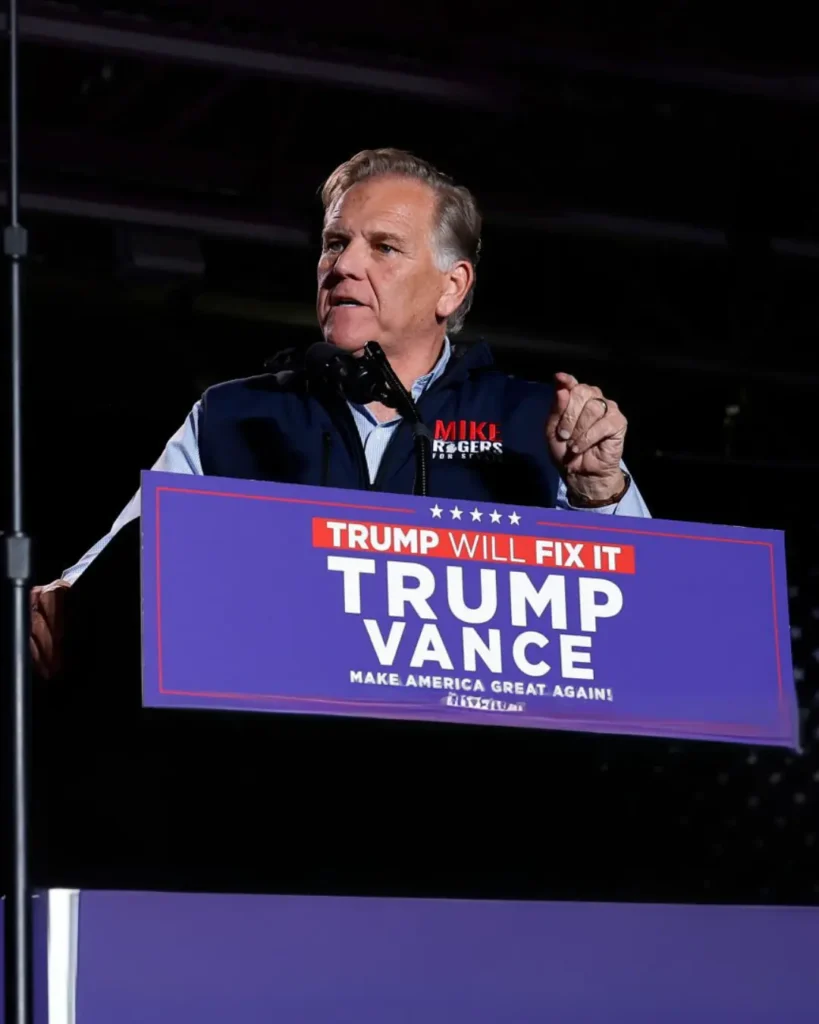
Mike Rogers via Facebook
Rogers is the clear establishment favorite, though his coronation isn’t technically guaranteed: former state Republican Party co-chair Bernadette Smith recently launched a primary campaign to challenge him, along with dentist Kent Benham and activist Genevieve Scott also eyeing long-shot bids. Still, none are expected to pull Trump World away from Rogers in 2026.
Some of Rogers’ most significant backing is coming from far-right megadonors and national anti-abortion groups. Nearly all the cash behind Rogers’ super PAC comes from Texas oil billionaire Tim Dunn, a major funder of Christian nationalist causes, abortion bans, and efforts to defund public schools. Dunn has poured at least $5 million into boosting Rogers’ campaign.
@gandernewsroom He thinks only Christians should lead. And now he’s bankrolling a US Senate candidate in Michigan. Political correspondent Kyle Kaminski breaks down who’s really pulling the strings:
SBA Pro-Life America, a powerful national anti-abortion group, has also launched a $4.5 million effort in Michigan to elect Rogers. That group requires endorsed candidates to support new federal abortion limits—even after Michigan voters enshrined reproductive rights in 2022.
@gandernewsroom An anti-abortion group is dumping $4.5 million into Michigan for Mike Rogers. And yes, there appear to be strings attached. 👀
Another donor, billionaire John W. Childs, gave Rogers’ fundraising committee $12,000 this year. Childs was previously charged in a 2019 Florida prostitution case tied to an international sex-trafficking investigation that also ensnared New England Patriots owner Robert Kraft.
Rogers also has the backing of Senate Majority Leader John Thune, Americans for Prosperity, Associated Builders and Contractors, several state lawmakers, and local officials. He’s raised $3.4 million and has $2.7 million cash on hand heading into 2026, Michigan Advance reports.
The bottom line: With Trump’s backing, Rogers is the Republican establishment’s top candidate in 2026. But his campaign is also being powered by out-of-state ideologues and anti-abortion groups whose agendas stray far from mainstream Michigan politics.
What’s next?
Votes are very much up for grabs ahead of next year’s elections. Recent polling has shown Stevens with a modest early lead in a hypothetical matchup against Rogers. But McMorrow and El-Sayed are both staying competitive, especially with many Michigan voters still undecided.
The primary election is Aug. 4, 2026. The general election is Nov. 3, 2026.
Click here to ensure you’re registered to vote ahead of Election Day.
READ MORE: Gilchrist calls Gaza crisis a genocide at Arab convention
Don’t miss Michigan’s biggest stories—follow The ‘Gander on Instagram.
Author

Support Our Cause
Thank you for taking the time to read our work. Before you go, we hope you'll consider supporting our values-driven journalism, which has always strived to make clear what's really at stake for Michiganders and our future.
Since day one, our goal here at The 'Gander has always been to empower people across the state with fact-based news and information. We believe that when people are armed with knowledge about what's happening in their local, state, and federal governments—including who is working on their behalf and who is actively trying to block efforts aimed at improving the daily lives of Michigan families—they will be inspired to become civically engaged.

When is Election Day 2025? What to know, how to find your polling place, who’s on ballot
On Tuesday, Nov. 4, 2025, Detroiters will select a new mayor, fill two open seats on the Detroit City Council, decide whether to re-elect or replace...
McMorrow clarifies stance on Gaza, joins Michigan Dems calling situation a genocide
BY BEN SOLIS, MICHIGAN ADVANCE MICHIGAN—Yet another Michigan Democratic candidate seeking statewide office has called the situation in Gaza and the...

Mary Sheffield to face Solomon Kinloch in November election for Detroit mayor
DETROIT—The race for Detroit's next mayor is set to pit a longtime City Council member against a popular pastor, after council President Mary...
Decline to sign: Michigan voting rights groups sound alarm on petition drive ‘trap’
With signature gatherers hitting sidewalks across Michigan, groups are sounding the alarm on petitions they say would disenfranchise voters under...
Empty ballots leave thousands of Michiganders with no choices on Election Day
A new analysis from BallotReady shows that Michigan’s 2024 election cycle featured several dozen races with no real competition—or no candidates...