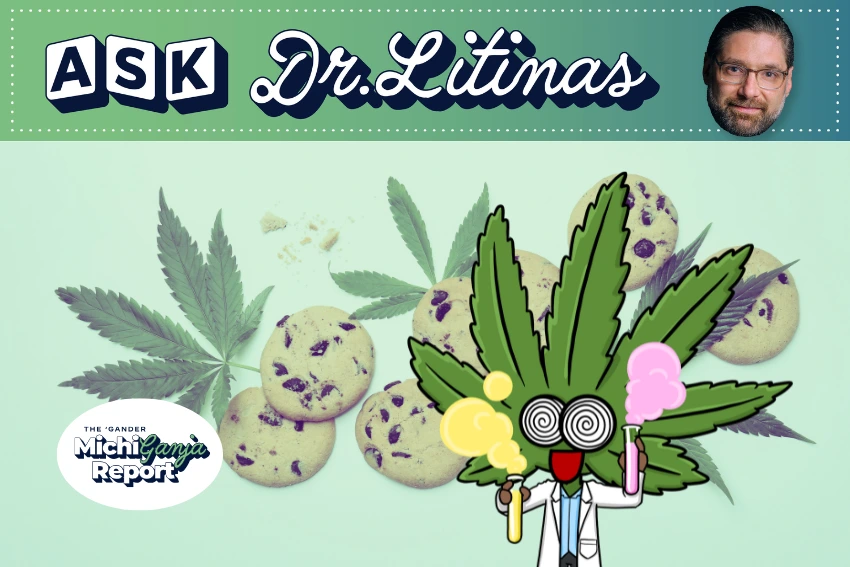
Ask Dr. Litinas is a column that publishes twice monthly as part of The MichiGanja Report—our free, weekly newsletter about all things marijuana. Click here to sign up.
MICHIGAN—A lot of cannabis consumers have had this experience: One day, a single gummy or specific dose feels mild and manageable. Another day, the exact same gummy and dose leaves you uncomfortably high, anxious, or glued to the couch for hours.
It can feel random—like cannabis is unpredictable or you “did something wrong.” But in reality, what changed was not the edible. It was how your body interacted with it.
Edibles simply don’t behave like smoking or vaping. When you eat THC, it enters a much more complicated biological pathway—one that makes the effects stronger, longer-lasting, and far more variable and sensitive to what’s happening inside you that day.
Your liver turns THC into a different drug.
When you inhale cannabis, THC goes directly from your lungs into your bloodstream and then to your brain.
With edibles, something very different happens. THC must pass through your digestive system (absorption) and then through your liver (metabolism) before entering the bloodstream and eventually the brain.
In the liver, enzymes convert THC into a different active compound called 11-hydroxy-THC. This molecule crosses into the brain more easily and tends to feel more intense and more sedating than inhaled THC, where delta-9 THC is the primary active compound.
So an edible is not just delayed by absorption and metabolism—it becomes a chemically different experience inside your body compared to smoking.
These biological steps are why edibles can last longer, have a stronger effect, be harder to control, and vary more from day to day.
Absorption changes everything.
Before THC even reaches your liver, it has to be absorbed through your gut—and that process can be wildly inconsistent.
What you ate that day matters. A gummy taken on an empty stomach behaves differently than one taken after a fatty meal. Fat helps THC dissolve and be absorbed more efficiently, which can make the same dose feel much stronger.
It also matters how fast your stomach empties, how well your intestines are moving, and even how hydrated you are. Two identical gummies taken on two different days can enter your bloodstream at completely different speeds. Faster absorption often feels stronger. Slower absorption often feels weaker—until it suddenly catches up.
Your liver is not the same every day.
The liver enzymes that turn THC into 11-hydroxy-THC are influenced by genetics, medications, alcohol, stress, sleep, overall health, and other factors. Some days your liver converts THC efficiently. Some days it doesn’t. That’s why the same edible can feel mild one week and overwhelming the next. Your internal chemistry shifted, even if nothing else did.
Why do edibles sometimes hit late—and all at once?
This is the most common edible trap: A person takes a gummy. After 45–60 minutes they feel nothing. They take another.
What they don’t realize is that absorption is still happening—slowly and quietly. On average, it takes 60-90 minutes before most people feel the initial effects. When the THC finally finishes passing through the gut and liver, both doses arrive in the brain at nearly the same time.
That’s when people say: “It suddenly hit me all at once.”
This stacking-dose effect—overconsumption—is responsible for most cannabis-related panic, emergency room visits, and bad edible experiences.
What does this mean for using edibles safely?
None of this means edibles are dangerous. It means they require patience and respect for biology. And a few simple rules can go a long way in improving the experience:
- Start low and go slow.
- Wait longer than you think you need to before taking more.
- Avoid experimenting on days when you have obligations.
- Try to keep your eating patterns consistent when you use them.
The bigger picture
Edibles can feel unpredictable because you are not a fixed machine. Your digestion, absorption, liver chemistry, and brain sensitivity can shift from day to day. When you understand that, the mystery disappears. Eventually, edibles become far more comfortable, useful, and safe. And you’ll be able to achieve a more consistent and reproducible effect, making edibles a valuable tool for your well-being journey. Cannabis isn’t random; your biology is dynamic.
READ MORE: What to know about ‘scromiting’ and other cannabis side effects
Got a question about weed for Dr. Litinas? Send it in here. We’ll get you a response.

Want more cannabis news delivered right to your inbox? Click here to sign up for The MichiGanja Report—our free, weekly newsletter about all things marijuana.
Author


Stoners pick the 8 best dispensaries in Michigan
Hundreds of Michiganders voted in our readers’ choice poll to help identify some of the best dispensaries in Michigan. MICHIGAN—Ask 10 Michigan...

6 quick hits of cannabis news from across Michigan
MICHIGAN—It’s been another busy week for Michigan weed. Here’s what’s worth a look: PINCKNEY POT: The village of Pinckney is getting closer to its...
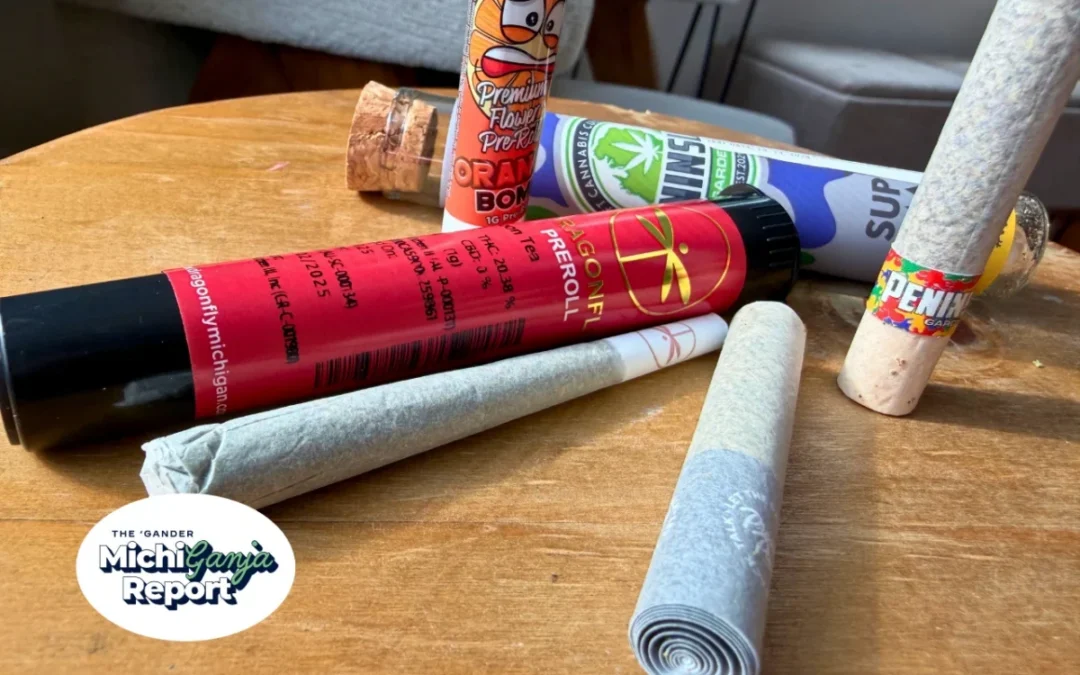
What’s really inside the pre-rolls Michiganders are smoking
I tore open three Michigan pre-rolls to see what was inside. One looked more like yard clippings than weed. MichiGanja in Review is a column that...

8 Michigan weed picks to upgrade your Valentine’s Day
Not every Valentine’s Day gift needs to come from a jewelry store or flower shop. Your local dispensary might work, too. MICHIGAN—Some cannabis...
7 quick hits of cannabis news from across Michigan
MICHIGAN—It’s been another busy week for Michigan weed. And as usual, we’re grinding up the headlines, flicking out the seeds and stems, and rolling...