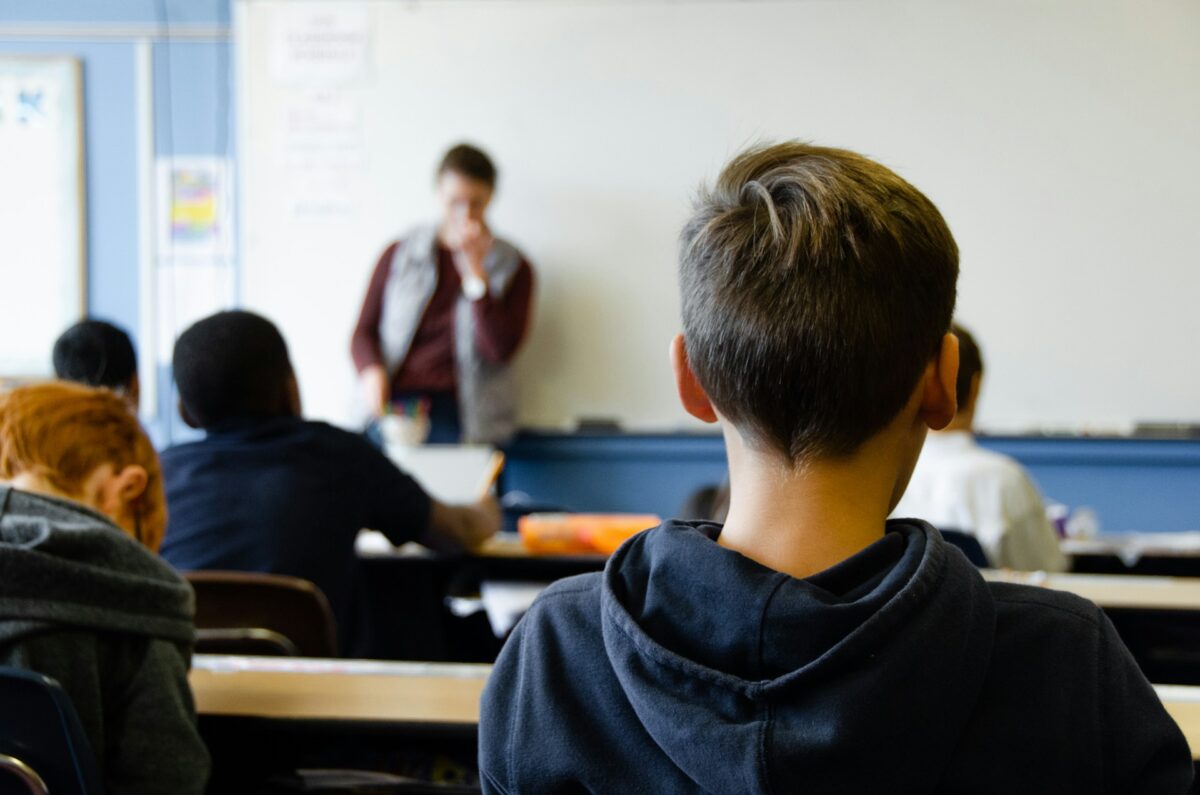
Voucher programs have become one of the most controversial topics in the history of the US education system—here’s what Michiganders need to know.
Education vouchers, also known as school vouchers, use public education funds to help parents send their child to another school district or a private school, and they are rapidly expanding across the country.
It typically works like this: Residents pay state and local taxes, like income and sales tax. That money funds government budgets, which are distributed by elected leaders. Those leaders are guided by state responsibilities, such as those outlined in the constitution. That’s why a chunk of funding is always earmarked for public education—with specific amounts per student set aside at the discretion of elected officials.
While supporters of vouchers believe the program helps provide students with high-quality schooling, education officials and advocates worry that these subsidies will pull students away from local public schools and reduce their annual funding.
Take a look at Ohio, which has one of the oldest active education voucher programs in the country. From 2000 to 2023, Ohio’s public school enrollment declined by nearly 9% and is expected to increase by an additional 10% over the next decade. Researchers at the Economic Policy Institute estimate that enrollment dips could cost Ohio public schools millions of dollars in educational spending, with some forced to close their doors altogether.
Does Michigan have an education voucher program?
While Michigan does not currently have an education voucher system, our state’s school of choice policy allows parents to enroll their children in different schools within their district—including charter, magnet, and private schools.
Michigan’s school choice policy has created controversy in communities across the state, similar to how educational voucher programs have created school funding issues in other states. That may worsen under the Republican-backed reconciliation bill signed by President Trump last summer.
The Educational Choice for Children Act (ECCA) is not a direct voucher and requires states to opt in, giving governors control over implementation. It operates as a tax-credit program that allows individuals to receive up to $1,700 in credits for donating to nonprofit scholarship-granting organizations, helping these groups distribute scholarships for private school tuition, tutoring, transportation, and more. Those eligible for ECCA vouchers include any student from a household with an income less than 300% of the area’s median gross income, qualifying Michiganders for the program.
The ECCA is modeled after a program that Trump’s former education secretary, Betsy DeVos, pushed but failed to pass in Michigan in 2023. Similar to DeVos’ plan, state education officials worry that Michigan’s rural communities stand to lose the most if the federal education voucher program is enacted.
WATCH: Trump’s vouchers revive DeVos’ rejected plans for Michigan’s schools
A brief history lesson
To understand why school vouchers have grown so controversial, it helps to take a look back at the fundamentals of public education in Michigan.
State governments fund public schools because our country’s founding leaders argued that a republic could only survive if ordinary people were educated enough to understand issues and hold leaders accountable. Michigan’s history of fighting for quality education access for students goes back hundreds of years.
Before the US claimed independence from Britain during the Revolutionary War, most schools around the world were private, with only the wealthiest families sending their kids. But here in the US, founders believed all people deserved the right to a quality education and to become knowledgeable citizens.
After joining the Northwest Ordinance, which stated that “schools and the means of education shall forever be encouraged”, Michigan established several laws in the early 1820s that would eventually create school districts, help townships with over fifty residents hire teachers, require families to pay taxes (between $2 and $4 at the time) to support public education, and make public education a public responsibility by statute in the state constitution—all before Michigan gained statehood in 1837.
Today, while some elected leaders in Michigan still believe that public funding should be used exclusively for public schools, based on the founding principles of the country, others believe that funding should be used for any school a family chooses to send their child to—even if that school is private, for-profit, and discriminates when selecting which students are allowed to attend.
Where do we go from here?
While the implementation of the ECCA and its potential effects on funding our state’s public schools remain uncertain, communities across Michigan are working together to ensure that the state’s ultra-wealthy residents pay their fair share to support public schools.
The ‘Invest in MI Kids’ ballot initiative—which has already gained thousands of signatures in hopes of appearing on the 2026 ballot —would change Michigan’s state constitution to ensure that individuals earning over $500,000 and couples earning over $1 million pay 5% of their income in state taxes. While the ballot initiative does not fix a broken federal system, it does address an issue that has led to growing underfunding for Michigan’s public schools. That slight increase in income tax for wealthy Michiganders would generate nearly $1.7 billion in funding for public K-12 schools across the state each year.
Additionally, ‘Invest in MI Kids’ would direct new revenue to the Michigan School Aid Fund, part of the state’s Department of Education, and allot additional funding for areas like career and technical education—attracting and retaining teachers and reducing class sizes, especially in underserved communities.
Michiganders interested in helping gather signatures for the initiative can sign up onlineand visit InvestInMIKids.com to see the growing list of school boards, small businesses, and state lawmakers who have endorsed the initiative.
Author

Support Our Cause
Thank you for taking the time to read our work. Before you go, we hope you'll consider supporting our values-driven journalism, which has always strived to make clear what's really at stake for Michiganders and our future.
Since day one, our goal here at The 'Gander has always been to empower people across the state with fact-based news and information. We believe that when people are armed with knowledge about what's happening in their local, state, and federal governments—including who is working on their behalf and who is actively trying to block efforts aimed at improving the daily lives of Michigan families—they will be inspired to become civically engaged.


Michigan teachers weaving lessons on Jan. 6 uprising into history classes
By Kim Kozlowski/Bridge Michigan Ask any history teacher in Michigan how their lessons could be better and they will tell you that they need to...
OPINION: Michigan’s students deserve a future full of opportunities
Michigan’s School Aid Budget must commit to closing opportunity gaps, funding special education, and supporting educators. In the back of my white...
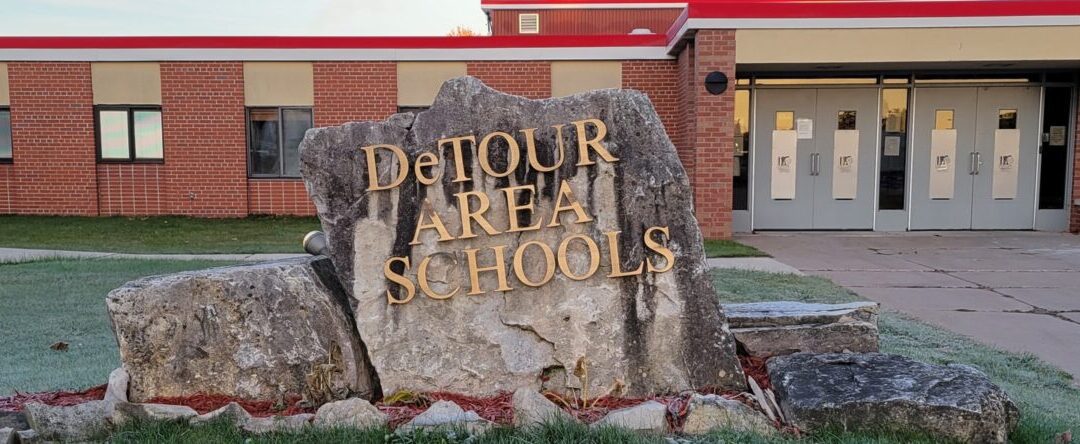
Brighter days are ahead for students in the Eastern Upper Peninsula
Superintendent Robert W. Vaught explains how academic achievement and the mental health of students, teachers, and parents have improved since...
About 72% of Michigan students considered not ‘college ready’
By Clara Lincolnhol, Capital News Service LANSING – Nearly three quarters of Michigan high school students are considered to be unprepared for...

Appeals court backs Michigan school in banning ‘Let’s Go Brandon’ shirts
SAND LAKE, Mich. (AP) — A federal appeals court on Tuesday ruled in favor of a Michigan school district in a dispute over free speech and "Let's Go...