Kyle Kaminski/The 'Gander Newsroom
A lean cannabis grow operation in Warren is navigating oversupply, falling prices, and the challenge of being recognized in Michigan’s crowded weed market.
WARREN—Michigan weed is so cheap right now that it barely even registers as a real purchase anymore. As of this week, you can walk into just about any dispensary, grab a bag of cannabis-infused edibles, and spend less than you would on a bag of Skittles at Walgreens.
Flower shopping, meanwhile, has become a bit of a blur. Rows of jars; bargain-bin specials; budtender recommendations. You leave with something that smells good and fits your budget, often without thinking much about who grew it or even noticing the brand name on the label.
That’s the environment Omnino Cannabis is operating in.
Based in Warren, Omnino is a flower-focused cultivation operation supplying more than 30 dispensaries across Michigan—mostly on the east side of the state. It’s a lean shop by industry standards with 15 employees, and roughly 5,000 plants in the building at any given time.
But it’s producing enough volume that plenty of Michigan stoners have likely smoked Omnino flower without realizing it. And that anonymity is exactly what the company is trying to fix.
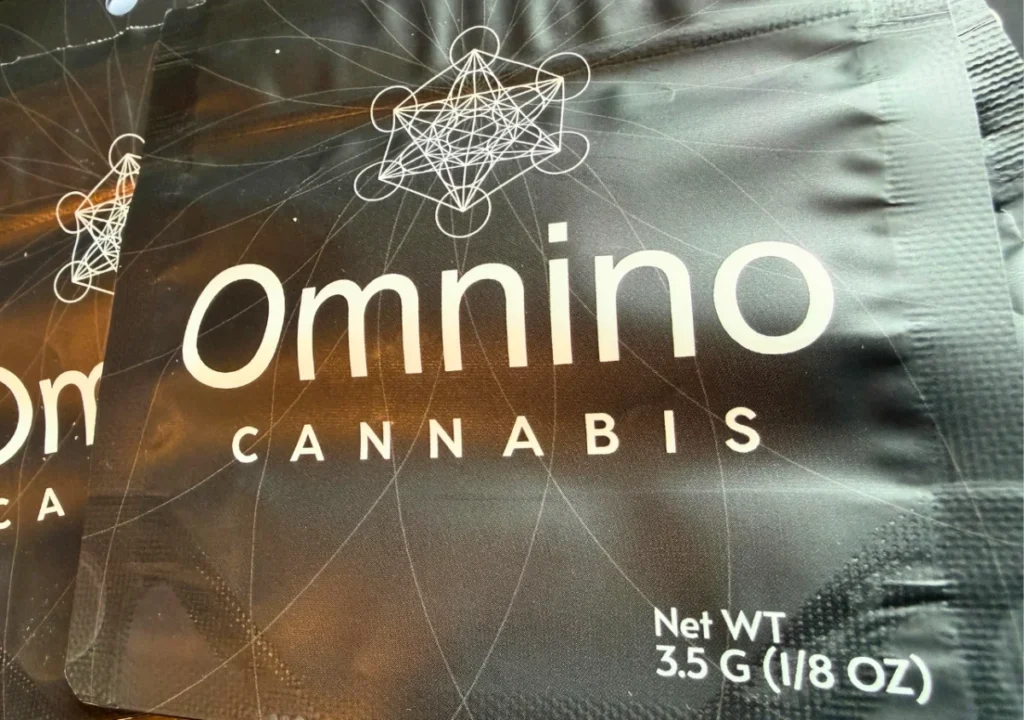
A name that means something
Omnino isn’t just a made-up cannabis word.
The name comes from Latin and translates roughly to “all together” or “completely.”
Kyle Kaminski/The ‘Gander Newsroom
The concept was created by Nic Hernandez, the company’s vice president of operations, who told me it was chosen intentionally to reflect how his team thinks about cannabis. It’s not just as a product, it’s something that connects people across backgrounds, cultures, and experiences.
“We really wanted to create a brand that kind of explained who we are as people and what we all bring to the table,” Hernandez said. “It’s easy to think about the things that separate people, and we really think that cannabis can be a power for good that brings people together.”
That idea can sound abstract in a state with more than 2,100 licensed cannabis businesses.
But walking through Omnino’s facility, it’s clear the company is trying to translate that philosophy into something tangible: a diverse workforce, a collaborative culture, and a product that’s meant to be consistent enough that people actually come back for it—not just once, but repeatedly.
Standing out in a deli-jar world
One of the biggest challenges Omnino faces has nothing to do with how its flower is grown.
It’s how it’s sold.
Like many Michigan cultivators, Omnino primarily moves bud through deli-style sales, where dispensaries repackage bulk cannabis into jars labeled with strain names and prices. That system keeps costs down and gives stores flexibility—but it also strips away brand identity.
Chris Fogt, Omnino’s sales and brand manager, put it bluntly: “You’ve probably smoked it and not known it,” he told me.
Fogt said brand awareness is especially difficult right now because many dispensaries use their own generic labeling on deli jars, making it hard for customers to distinguish one grower from another. To counter that, the company has started asking its retailers to place branded Omnino stickers on their deli jars so customers can actually see whose flower they’re buying.
It’s a small move, but a deliberate one. Because in a market where price competition is brutal and shelves are crowded, brand recognition doesn’t happen by accident.
Built for consistency
The tour itself revealed that Omnino isn’t relying on vibes or buzzwords to sell its flower.
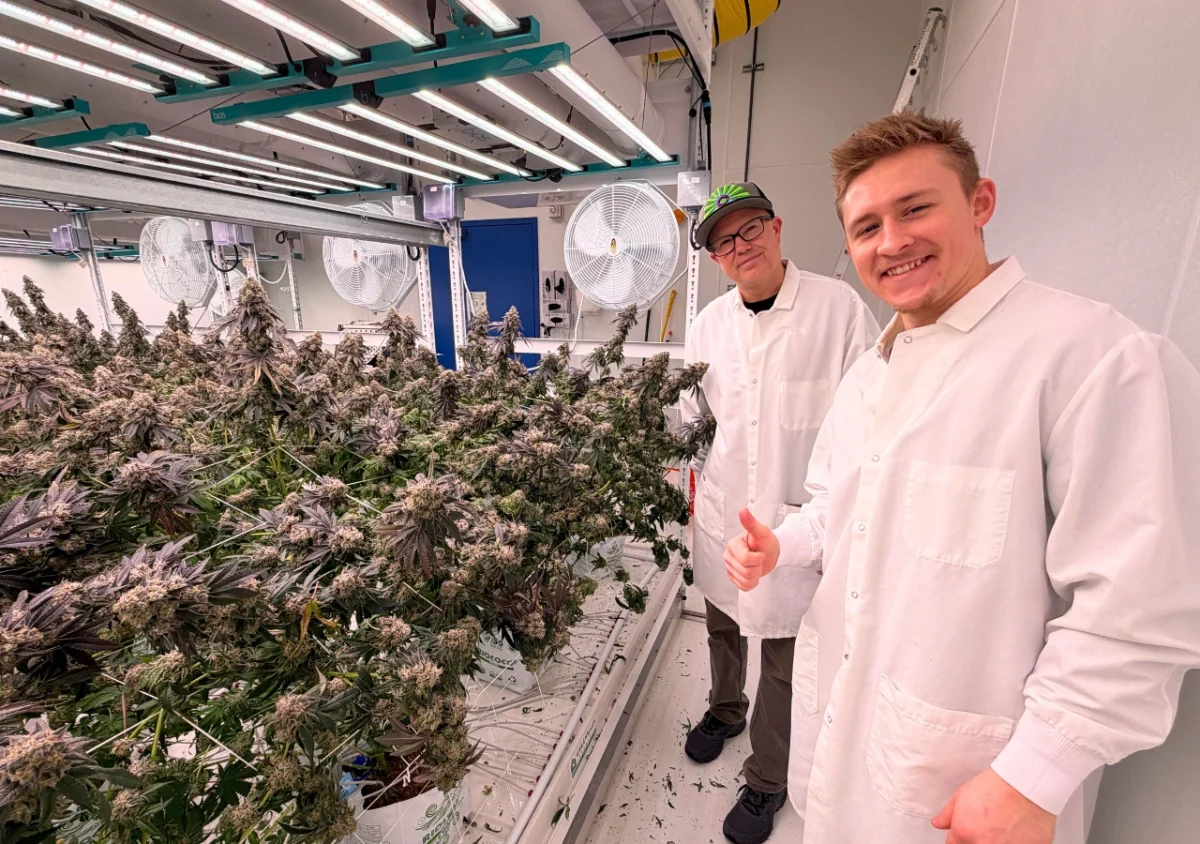
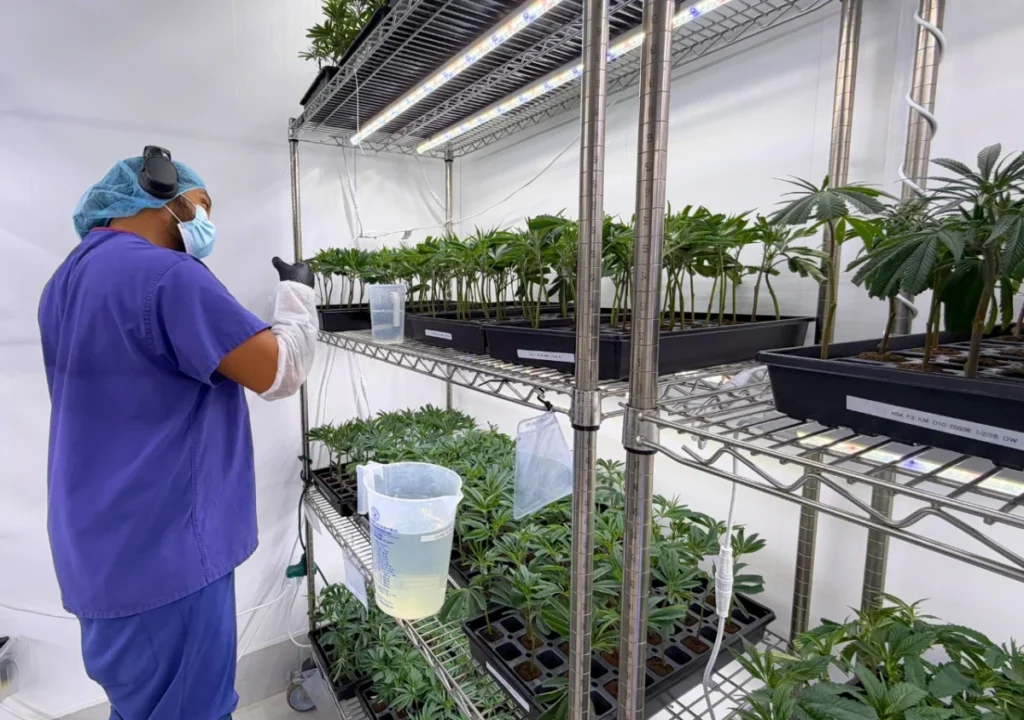
Before entering the cultivation area, I put on a white coat. Cleanliness is taken seriously here. Between rooms, I had to step onto wet decontamination pads. Touching plants required gloves.
Kyle Kaminski/The ‘Gander Newsroom
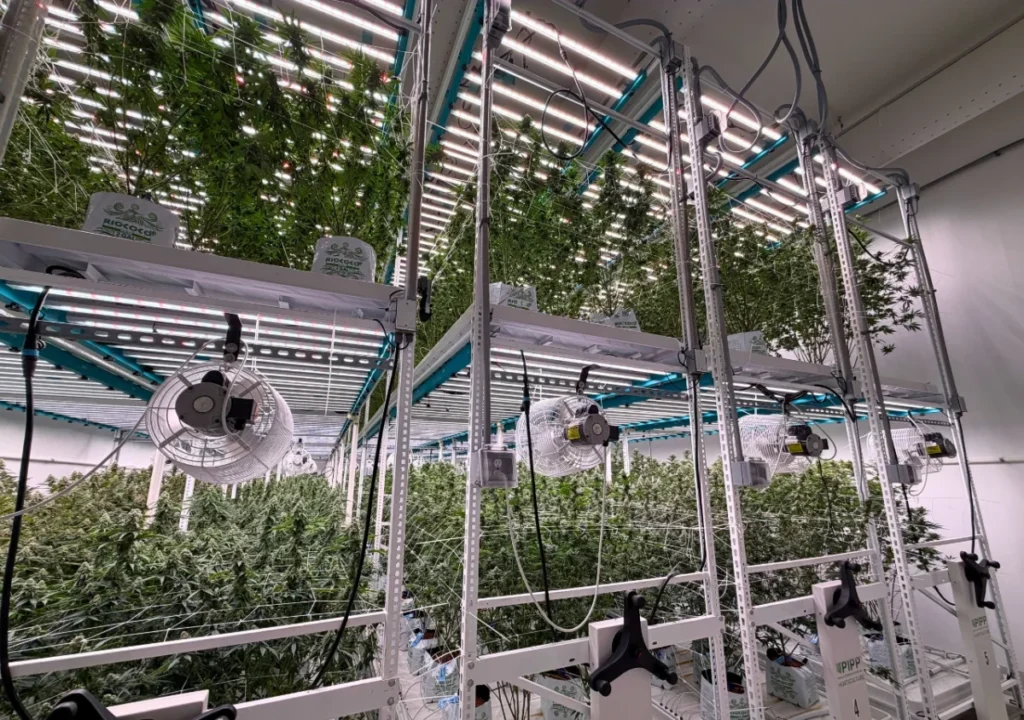
Inside the grow rooms, several strains grow simultaneously on double- and triple-decker tiers designed to maximize output in a limited footprint. There’s a dedicated clone room where everything begins, a trimming station, a packaging area, and two large “vaults” holding hundreds of pounds of finished flower that’s waiting to be shipped off to dispensaries.
Kyle Kaminski/The ‘Gander Newsroom
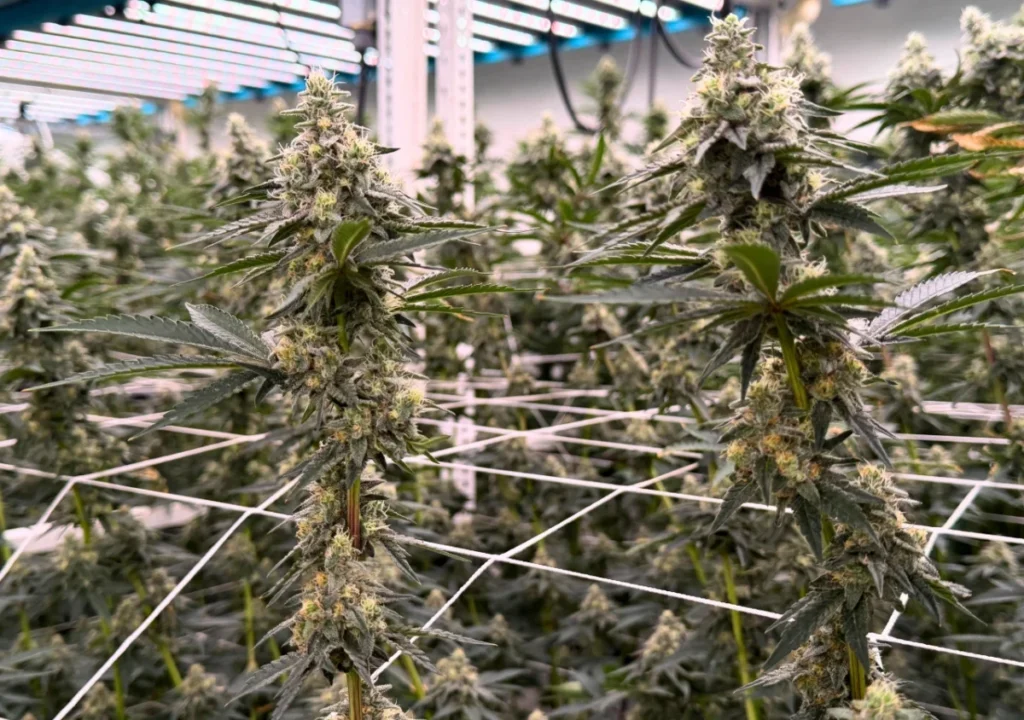
The whole operation is highly automated. Nutrient delivery, irrigation, and environmental controls are all wired into a computerized system that tracks temperature, humidity, airflow, CO2 levels, and soil moisture. The team says they’re constantly tweaking those variables to increase yields, shorten grow times, and—perhaps most importantly—push terpene levels even higher.
Kyle Kaminski/The ‘Gander Newsroom
Terpene percentages routinely land above 3% and even 4%, the team boasts, which is no small feat in a market that’s perpetually flooded with rushed, undercured flower.
All the automation, Fogt says, isn’t about cutting corners.
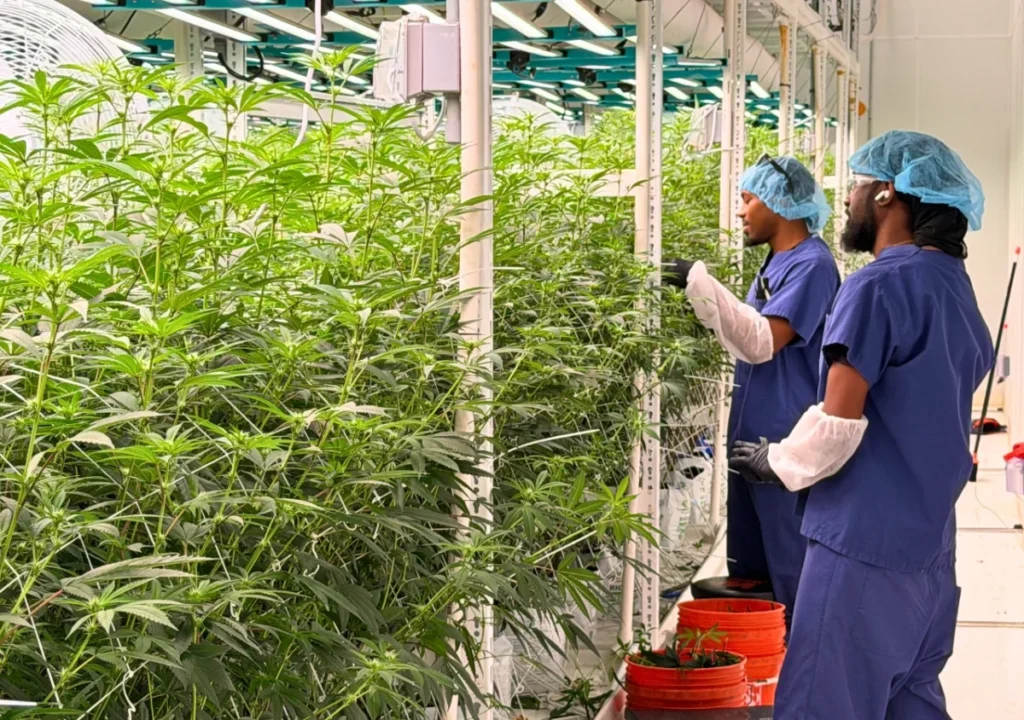
It’s about eliminating inefficiencies so the cultivation team can focus their time where it actually matters. While nutrients and watering are automated, staff are checking plants, adjusting trellises, pruning, and dialing things in by hand.
The obsession with doing everything manually, the team says, has become a kind of cannabis gimmick—one that doesn’t always pay dividends. The real goal here, they say, is consistency.
When the weed speaks for itself
Omnino lists a total of 17 strains in its rotation, which the team says reflects both market demand and a willingness to adapt as consumer tastes shift. Gas-heavy strains cycle in and out. Candy-forward profiles come and go.
One standout is Apples and Bananas, which Omnino labels as a high-terp strain.
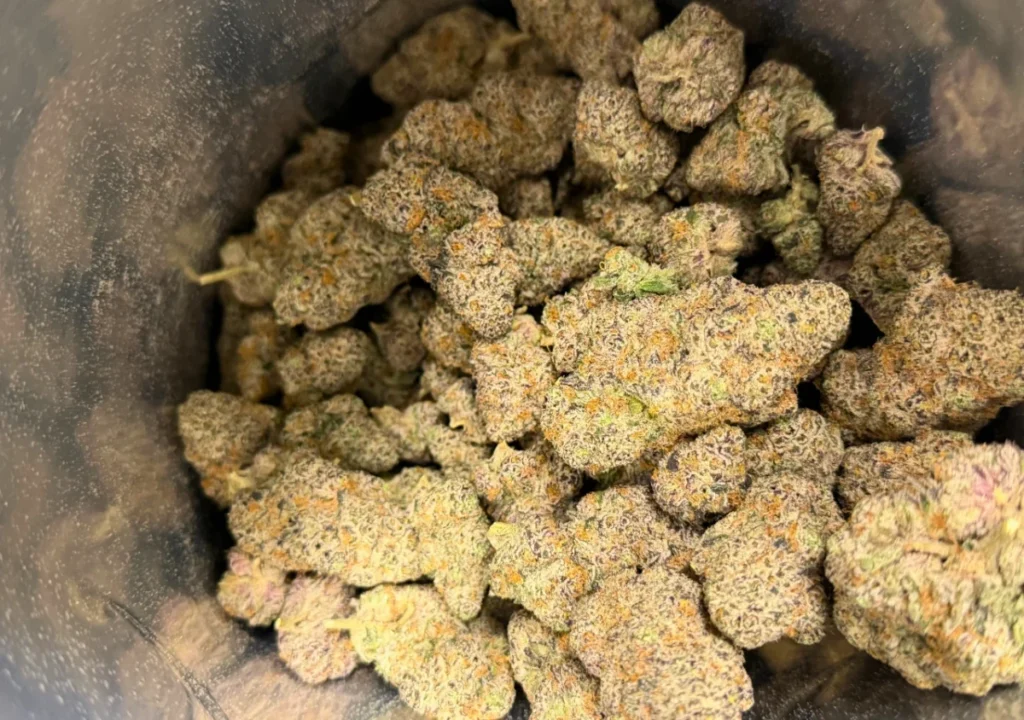
But the flower that left the strongest impression on me was Glitter Bomb.
It checked all the boxes that tend to separate well-grown cannabis from everything else. The buds were dense but springy. They didn’t crumble into dust or feel overly wet. Rolled into a joint, the flower burned evenly and smoothly—clear signs of a proper cure.
In a market where speed often wins, that kind of attention to post-harvest detail matters.
Culture as a survival strategy
Omnino’s leadership talks about culture not as a buzzword, but as a retention strategy.
Rachel Kingsley, the company’s finance and human resources manager, came to cannabis after years in more traditional corporate environments. She said she felt the difference immediately.
“The cannabis industry is human,” she said. “You’re not a number or expected to be a robot.”
Kyle Kaminski/The ‘Gander Newsroom
Later this year, Omnino plans to launch an internal coaching-style program that allows employees to book sessions around any topics they want guidance on as long as they’re legal, ethical, and moral. The whole idea, Kingsley said, is to support workers beyond their job descriptions—and to retain staff in an industry that’s notorious for burnout and turnover.
“I’m not going anywhere,” Kingsley added. “I definitely found a home here.”
The company also repurposes its shipping pallets and barrels for use in local community gardens, a small but concrete effort to give back in a way that doesn’t feel performative.
“Giving back to the community used to be such a big part of this industry,” Fogt said. “Once the numbers crunched down, everyone moved away from that. We need to get back to our roots.”
Holding the line
It’s a tough time to run a cannabis business in Michigan. The market is oversaturated with products, prices have continued to slide, and many dispensaries stocked up heavily ahead of recent state tax changes. As a result, sales have slowed, which ultimately puts pressure on growers to cut prices even further—sometimes at the expense of quality.
Kingsley expects the coming year to be a reckoning.
“It’s going to be a flip upside down year for the cannabis world,” she said. “It’s going to make or break a lot of people, regardless of whether they’re doing things the right way.”
Kyle Kaminski/The ‘Gander Newsroom
Omnino’s bet is that high-quality flower, consistency, visibility, and a recognizable name can help it avoid the worst of that race to the bottom. For now, the company is focused on deli flower offerings and a new run of concentrates made from trim, along with upcoming plans to roll out pre-rolls, half-ounce jars, and additional formats in the coming months.
Hernandez said the company’s guiding principle hasn’t changed. In a market flooded with cheap, anonymous weed, Omnino wants its name to mean something to the people buying it.
“The people on our team are your neighbors. We are the community,” Hernandez said. “We’re just trying to create a product that we’re passionate about, to bring folks together, and really focus on the things that we can do to help each other out, not just in cannabis, but in life.”
READ MORE: 7 quick hits of cannabis news from across Michigan

Want more cannabis news delivered right to your inbox? Click here to sign up for The MichiGanja Report—our free weekly newsletter about all things marijuana.
Author

Support Our Cause
Thank you for taking the time to read our work. Before you go, we hope you'll consider supporting our values-driven journalism, which has always strived to make clear what's really at stake for Michiganders and our future.
Since day one, our goal here at The 'Gander has always been to empower people across the state with fact-based news and information. We believe that when people are armed with knowledge about what's happening in their local, state, and federal governments—including who is working on their behalf and who is actively trying to block efforts aimed at improving the daily lives of Michigan families—they will be inspired to become civically engaged.


8 Michigan weed picks to upgrade your Valentine’s Day
Not every Valentine’s Day gift needs to come from a jewelry store or flower shop. Your local dispensary might work, too. MICHIGAN—Some cannabis...

7 quick hits of cannabis news from across Michigan
MICHIGAN—It’s been another busy week for Michigan weed. And as usual, we’re grinding up the headlines, flicking out the seeds and stems, and rolling...

Cannabis can help Michigan patients but it’s not risk-free
Ask Dr. Litinas is a column that publishes twice monthly as part of The MichiGanja Report—our free, weekly newsletter about all things marijuana....

10 unwritten rules of Michigan weed culture (that we finally wrote down)
Nobody voted on these. Nobody enforces them. But if you spend enough time around Michigan stoners, you’ll start to notice everyone playing by the...

6 quick hits of cannabis news from across Michigan
MICHIGAN—From smash-and-grabs and lab testing drama to mayoral politics and border-state busts, it’s been a busy week for Michigan’s weed world....