Kyle Kaminski/The 'Gander Newsroom
Growing good weed is only half the job. At Growing Pains, the rest comes down to how it’s handled after the harvest.
PAW PAW—Growing good weed isn’t the hard part for Michigan cannabis brands anymore.
Nowadays, it’s about not ruining it after the harvest.
That’s the part a lot of cannabis companies still get wrong—especially in a market like Michigan, where there’s no shortage of flower and plenty of pressure to get it onto dispensary shelves fast.
During an exclusive tour of Growing Pains’ cultivation facility last month, that reality showed up most clearly once the plants were already cut down, dried, trimmed, and prepared for sale.
“That’s where a lot of people fuck things up. They get in a rush,” co-founder Seth Miller said.
Built for precision
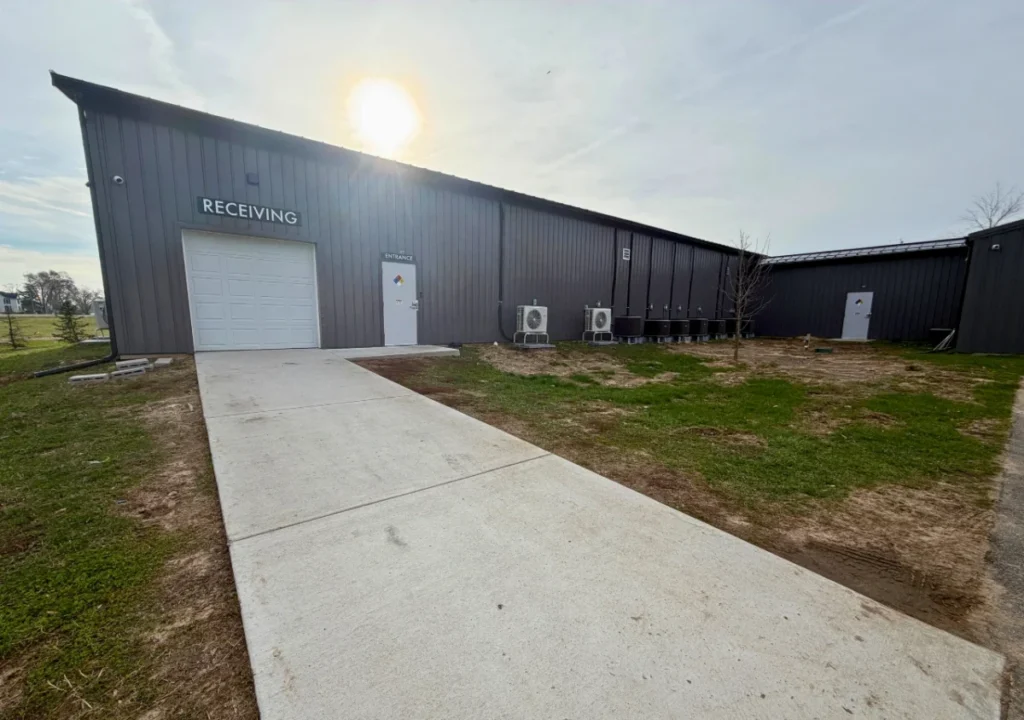
From the outside, there’s not much to see. Growing Pains’ cultivation facility is a nondescript metal building with no signage and no hint of what’s happening inside. That’s by design.
Kyle Kaminski/The ‘Gander Newsroom
But step through the doors, and the operation opens up fast.
Kyle Kaminski/The ‘Gander Newsroom
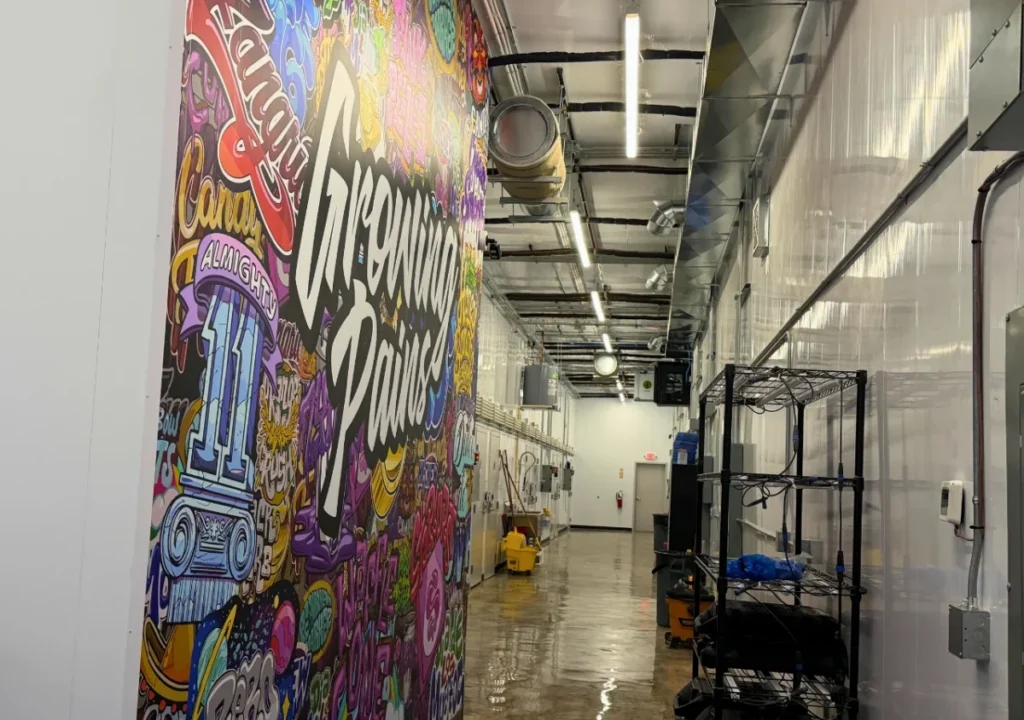
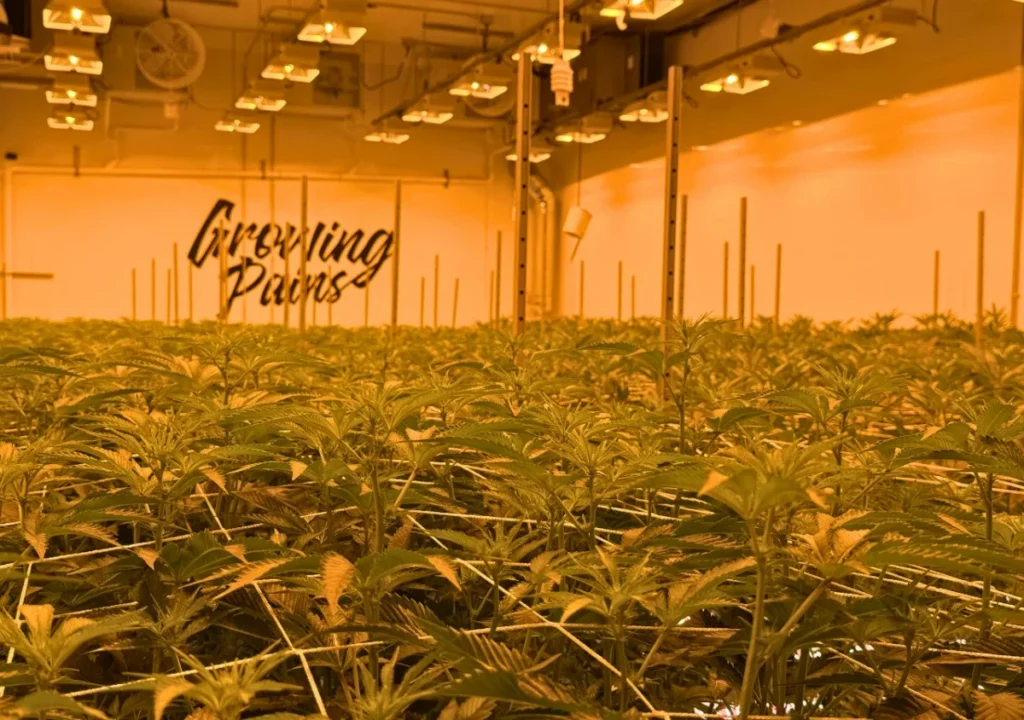
A colorful mural featuring some of the brand’s most popular strains stretches across the wall. Beyond that, it’s all clean lines—white walls, polished concrete floors, and a series of tightly controlled grow rooms, each calibrated for a different stage of the plant’s life cycle.
Kyle Kaminski/The ‘Gander Newsroom
Miller said the menu is always evolving to match what smokers actually want.
“Weed is like fashion. It comes back around,” he said.
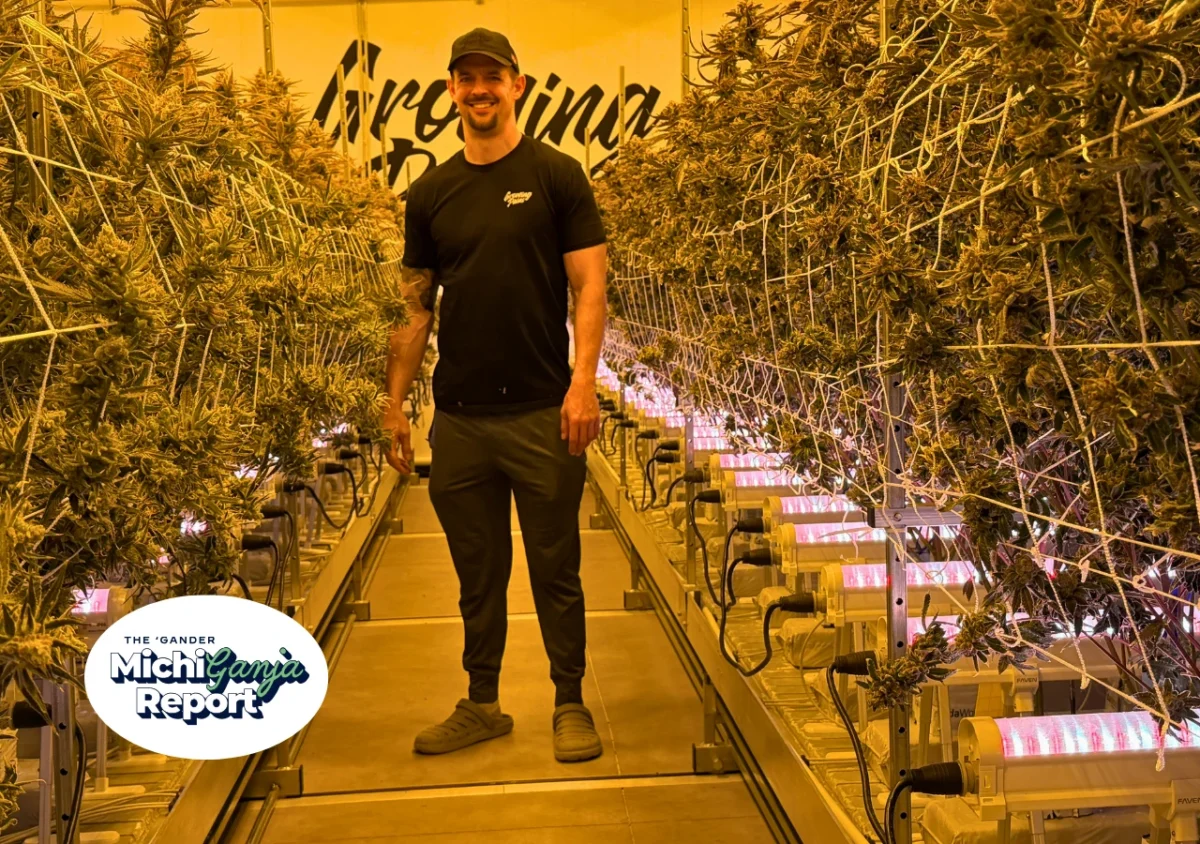
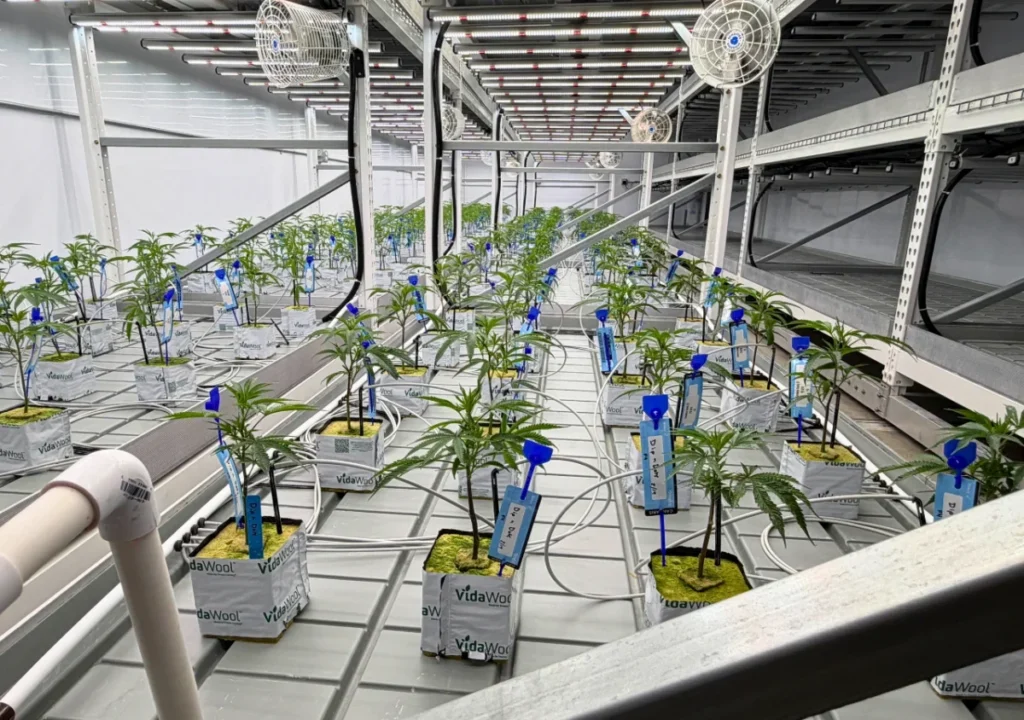
There’s a mother room where it all begins, a clone room with baby plants and thick humidity, and several flower rooms where every plant stands at nearly identical height, lined up in near-perfect formation under carefully dialed lighting, including beneath the canopy.
Each plant is also rooted in small, mineral-rich cubes and fed through a highly-tuned irrigation system that delivers nutrients with precision built over years of trial and error.
Kyle Kaminski/The ‘Gander Newsroom
It’s a system designed to remove as many variables as possible.
For a brand that started relatively small in 2023 and has scaled up significantly over the last few years, the goal now is consistency—batch after batch, harvest after harvest.
Because at this level, Growing Pains isn’t guessing anymore.
And lately, that consistency has turned the brand into a favorite among Michigan stoners, with regular praise on Reddit forums like R/Michigents—where some of the state’s most opinionated cannabis consumers (myself included) often go to separate the hype from reality.
“We’ve had 15 years to figure a lot of this shit out,” Miller said.
Where a lot of weed goes wrong
Miller co-founded Growing Pains in a basement as a caregiver operation. He’s been around the block—well before weed was legalized here for recreational use. He’s also watched a lot of Michigan cannabis companies make some tragic mistakes with some very good weed.
That’s because growing top-shelf cannabis is only part of the job. The bigger risk comes after harvest—when time, pressure, and volume start working against quality, he said.
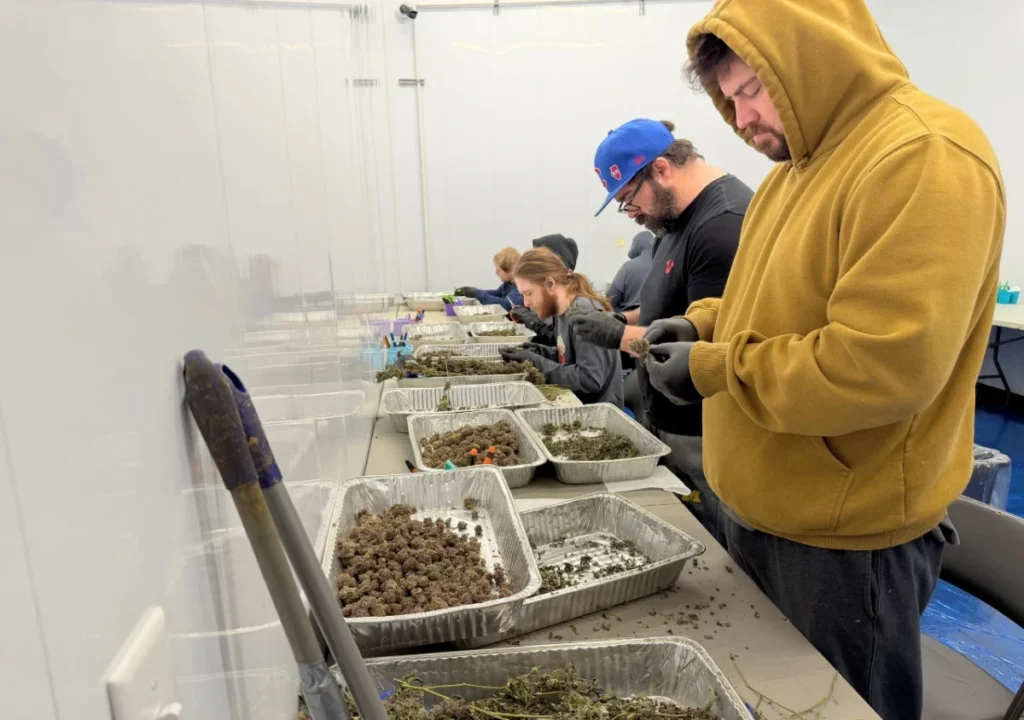
And that pressure shows up quickly at scale. Growing Pains trims roughly 130 to 150 pounds of cannabis every week—a volume that would tempt plenty of cultivators to move faster, cut labor, or automate different parts of the process. But Miller has drawn a firm line in the sand.
Kyle Kaminski/The ‘Gander Newsroom
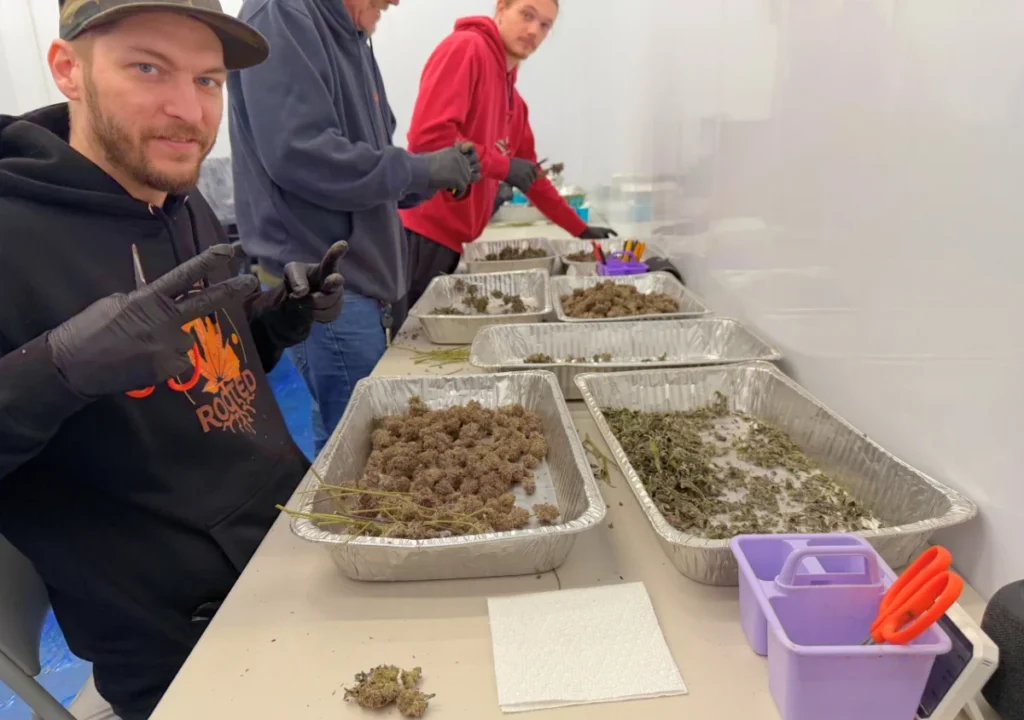
Instead, the busiest spot in the building is the post-harvest room—where teams carefully sort through each batch, trim everything by hand, and handle the flower as delicately as possible.
“We could rush through that process and I could cut the staff in half and put out a lesser quality product,” Miller explained. “But that’s just not us. That’s not what we’re here to do.”
Kyle Kaminski/The ‘Gander Newsroom
That decision comes at a cost. Trimming is a bit of a bottleneck at Growing Pains. It takes more time, more people, and more patience. That can be tough in a market where speed often wins.
But rushing that step can undo everything that came before it, Miller said.
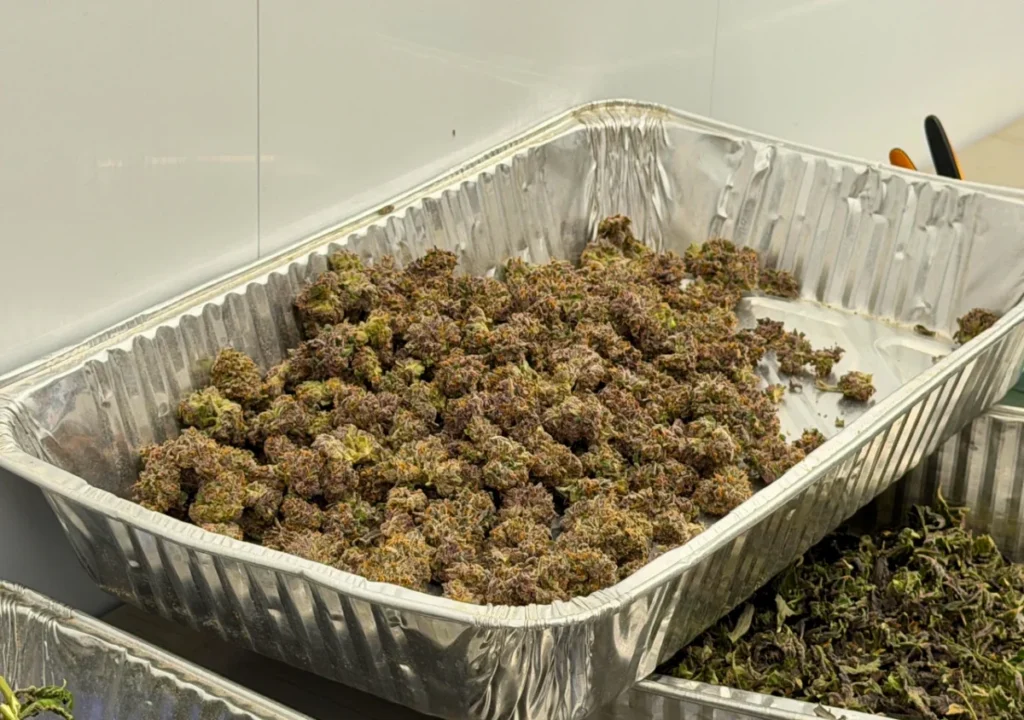
Drying too quickly; curing improperly; handling buds too aggressively. All of it can strip away flavor, flatten the aroma, and leave behind weed that looks and smokes like trash.
At Growing Pains, the whole mission is centered around keeping the finished product as close as possible to how it looked—and smelled—the moment it came off the plant.
Kyle Kaminski/The ‘Gander Newsroom
Miller says it’s all part of a three-part cultivation philosophy:
“Smoothness, number one. Flavor, number two. Effects, number three,” Miller said.
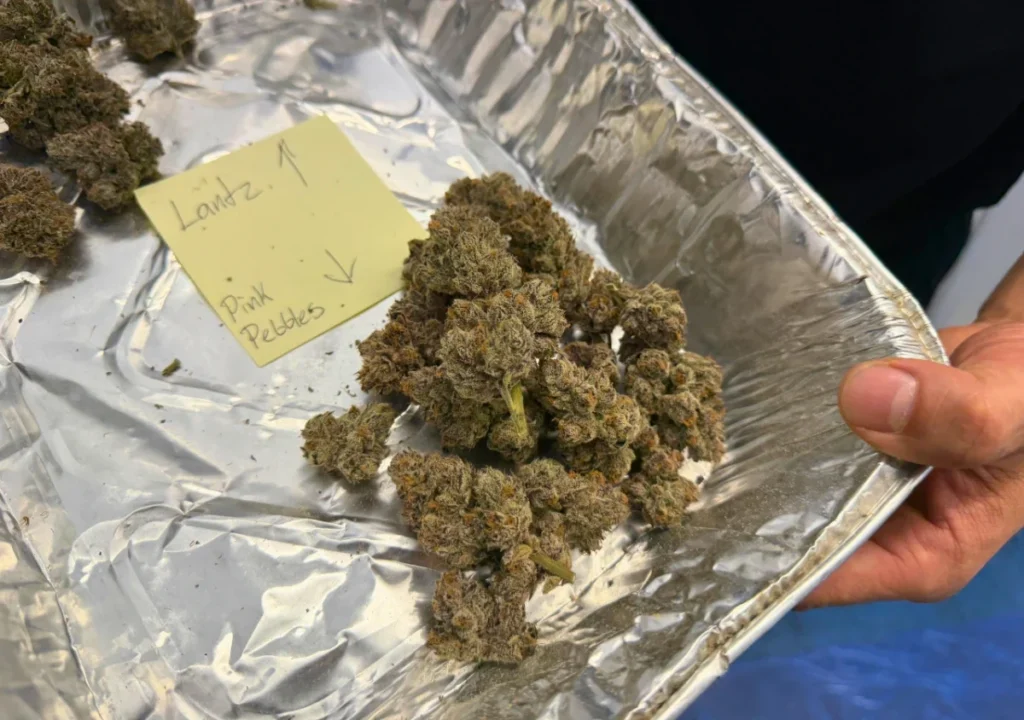
Because frosty, perfectly trimmed weed isn’t just a preference. It’s the whole marketing plan.
And it’s not hard to understand why.
Kyle Kaminski/The ‘Gander Newsroom
Once a fresh harvest leaves Paw Paw, it’s at the mercy of time—how long it sits in the back of a van, on dispensary shelves, and how it’s stored along the way. To combat this, Growing Pains is also laser-focused on their distribution and pushing retailers to move older products faster—either through discounts, promotions, or simply pulling it from shelves altogether.
It’s all part of the same end goal: make sure Michiganders are experiencing the product the way it was intended. Because once it’s dried out or degraded, that experience is gone.
The bottom line
Today, Growing Pains operates out of a 17,000-square-foot facility and produces roughly 250 pounds of cannabis each month—numbers expected to climb as new grow rooms come online. Its products are now carried in more than 100 retail locations across Michigan.
But for Miller, growth only matters if the standard holds.
“If we can’t get enough talent in here that can hold the standard, we’ve gotten too big,” he said.
At Growing Pains, that standard all comes down to consistency—delivering the same experience, harvest after harvest, even as the operation expands.
And in a market flooded with options, that might be what matters most. Because these days, good weed isn’t hard to find. Weed that’s handled right all the way to the shelf? That’s still rare.
READ MORE: One man rolls thousands of joints to help Michigan crown its best weed

Want more Michigan cannabis news, product picks, and culture? Click here to sign up for The MichiGanja Report, our free weekly newsletter about all things marijuana.
Author

Support Our Cause
Thank you for taking the time to read our work. Before you go, we hope you'll consider supporting our values-driven journalism, which has always strived to make clear what's really at stake for Michiganders and our future.
Since day one, our goal here at The 'Gander has always been to empower people across the state with fact-based news and information. We believe that when people are armed with knowledge about what's happening in their local, state, and federal governments—including who is working on their behalf and who is actively trying to block efforts aimed at improving the daily lives of Michigan families—they will be inspired to become civically engaged.


Why more Michiganders are ditching melatonin for this cannabis compound
More cannabis consumers are turning to a lesser-known cannabinoid called cannabinol—or CBN—for better sleep. But the science behind it is still...

One man is rolling thousands of joints so Michigan can crown its best weed
A new weed competition is ditching sloppy pre-rolls, standardizing everything, and handing Michiganders the power to decide the winners....

8 quick hits of cannabis news from across Michigan
MICHIGAN—Hash Bash is back, weed taxes are stirring up fresh drama, and someone in Macomb County recently got busted with more than 1,000 pounds of...
Two Michigan strains that reminded me what good weed is supposed to be
Two strains from Local Grove prove that high-quality Michigan flower is still out there—if you know where to look. MichiGanja in Review is a column...

9 quick hits of cannabis news from across Michigan
MICHIGAN—A probation pot case headed to the state Supreme Court, a confusing new tax nobody seems to understand, and Chicagoans still lining up for...