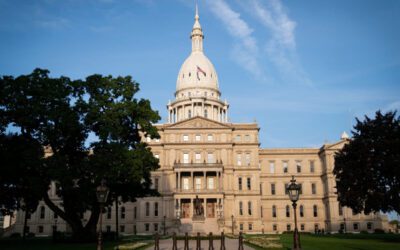
(Photo via Marek Studzinski on Unsplash)
BY KYLE DAVIDSON, MICHIGAN ADVANCE
MICHIGAN—A slate of bills from the Senate’s “clean energy future plan” are set to move to the governor’s desk after further consideration from the House and Senate.
Last week, the House voted to approve Senate Bills 271, 273, 502 and 277, which would establish updated clean energy and waste reduction targets, allow farmers to lease their land to solar energy developers while maintaining farmland preservation standards, and instruct the Michigan Public Service Commission (MPSC) — which regulates energy utilities in the state — to consider factors like equity, environmental justice, affordability and public health when considering energy companies’ plans for future operations.
According to a report from Gongwer News Service, members of the House accidentally passed the wrong version of Senate Bill 273 as it rushed to pass two packages of renewable energy bills.
The bill was returned to the House from the Senate, so that lawmakers could re-vote and send their proper versions to the Senate.
The Senate concurred with the changes made by the House. The bills will now head to Gov. Gretchen Whitmer’s desk.
Senate Bill 519, which passed the House on Friday without amendment, will also be sent to Gov. Gretchen Whitmer for signature. The bill would create a new Community and Worker Economic Transition Office aimed at facilitating the shift from fossil fuel to clean energy jobs.
While the Senate added a carveout to the Senate Bill 271 allowing incinerators in operation before Jan. 1 to be considered renewable energy sources, the House added restrictions limiting the definition to incinerators which do not expand and requiring the facility to be decommissioned no later than Jan. 1, 2040.
Whitmer issued a statement cheering the passage of the bills.
“With passage of these game-changing bills, Michigan will become a national leader on clean energy,” Whitmer said. “These bills will help us make more clean, reliable energy right here in Michigan, creating tens of thousands of good-paying jobs, and lowering utility costs for every Michigander by an average of $145 a year. Getting this done will also reduce our reliance on foreign fuel sources, while protecting our air, water, and public health.”
This coverage was republished from Michigan Advance pursuant to a Creative Commons license.
Author


Trio of Michigan Senate Democrats introduce policy to address data center water usage
BY KYLE DAVIDSON, MICHIGAN ADVANCE LANSING—Following a groundswell of opposition to data center projects throughout the state, a trio of Democratic...

Michigan Dems say $645M work project cuts are ‘cruel’
BY BEN SOLIS, MICHIGAN ADVANCE LANSING—Organizations that have relied on Michigan state agency work project funding learned Thursday that the House...

Michigan Senate passes petition collection, election disinformation reforms
BY BEN SOLIS, MICHIGAN ADVANCE MICHIGAN—The fight against election disinformation and changes to Michigan’s petition circulation process cleared the...
Michigan OKs landmark regulations that push up-front costs to data centers
Michigan regulators on Thursday adopted landmark standards for the booming data center industry with a plan they say tries to protect residents from...

Q&A: Why this 29-year-old Detroiter thinks he can make Michigan government work again
Democratic state Senate candidate Justin Onwenu says he wants to rebuild trust, invest in neighborhoods, and help deliver a new generation of...