EAST LANSING, Mich. (AP) — Researchers at a Michigan State University facility dedicated to protecting honey bees are enlisting a four-legged ally to sniff out danger to the prized pollinators.
The Pollinator Performance Center’s wide range of projects includes developing a training program for dogs to use their sensitive noses to uncover a bacterial disease called American foulbrood that threatens honey bee larvae.
Bees and other pollinators have been declining for years because of disease, insecticides, climate change and lack of a diverse food supply. A considerable portion of the human diet comes from plants pollinated by bees.
Maple, who once served as a human remains detection dog for the St. Joseph County sheriff’s office, has created quite the buzz.
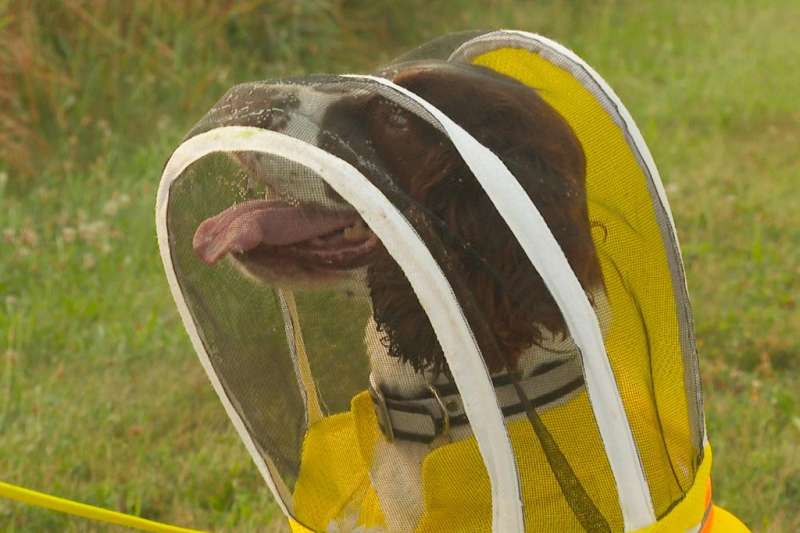
The panting 9-year-old English springer spaniel stood patiently on a recent weekday as Sue Stejskal, her longtime owner, trainer and handler, slowly placed the retired K-9 in a yellow protective suit. The garment includes a veil for her head and four booties worn on her paws in case Maple steps on a bee.
“Much like with humans, we recognize that if a dog is going to be in an active bee yard, they need to wear the same personal protective equipment as people do,” said Stejskal, a Michigan State graduate who has been training dogs over a quarter-century for law enforcement and other uses. “You can’t buy them on Amazon for dogs. So, there’s been some altering and testing.”
Maple suffered an injury while on a case in Ontario, forcing her to retire as a detection K-9 in 2024. But fate intervened.
Meghan Milbrath, an MSU professor whose lab studies risk factors that affect honey bees’ health, was working to establish diagnostic and screening tools for honey bee diseases. A veterinarian who participated in a training about honey bees put Milbrath in touch with Stejskal.
They met, and the dog detection plan was born.
Stejskal then set about teaching an old dog a new trick. New to Maple, anyway. Maryland’s agriculture department has also used canine detection methods in beehives.
Michigan State’s objective is to train many more dogs to join the ranks. Milbrath said she is documenting Maple’s training and plans to write a book with Stejskal to educate other teams about their strategy.
Maple, clad in her yellow suit, raced between hive boxes during a recent demonstration. When she found the scent clue left for her, Maple stopped at the box and coolly looked up at Stejskal.
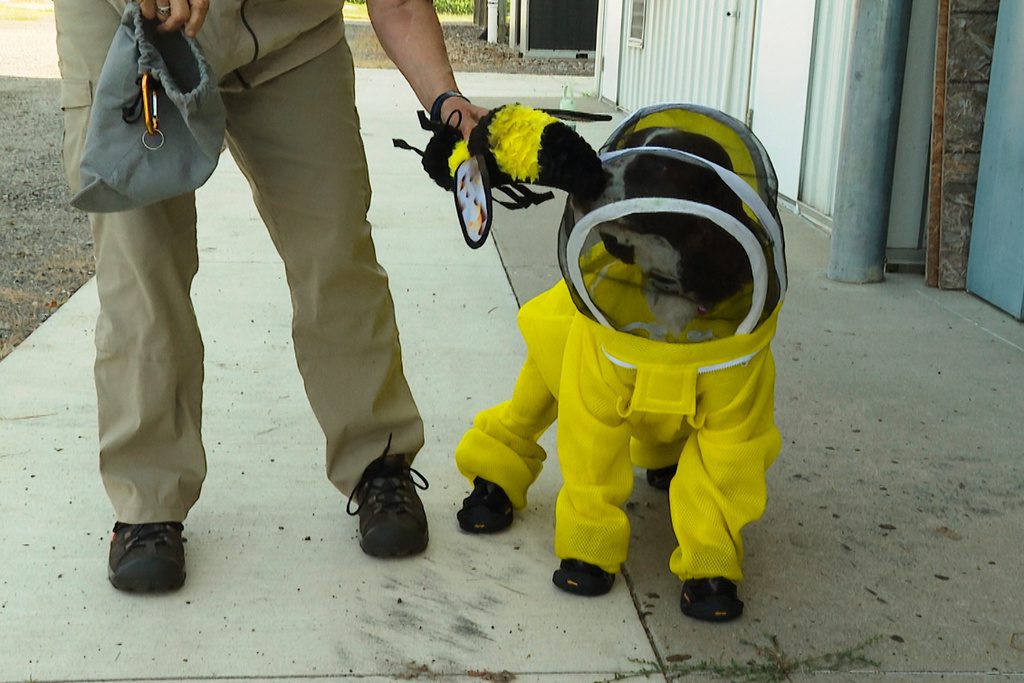
“Good girl. Yes,” Stejskal enthusiastically said, before removing Maple’s veil and tossing a green, Michigan State-branded toy her way.
Stejskal recognizes the work they’re doing is important.
“It’s a cool project,” Stejskal said. “But I was over-the-moon excited, because my dog would still have joy in her life and would still be able to work.”