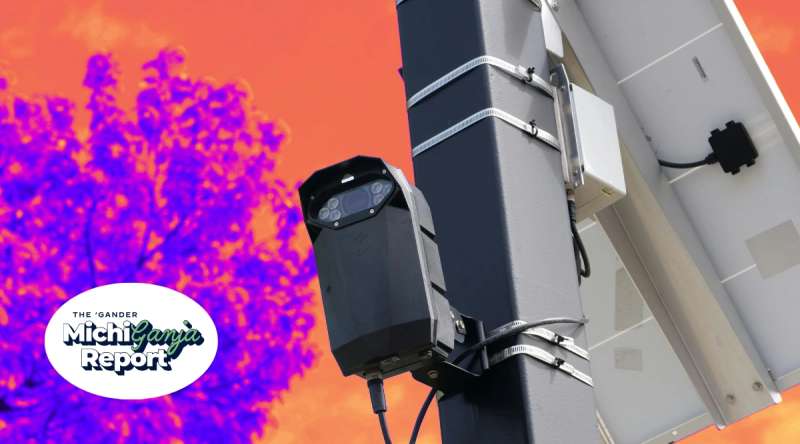
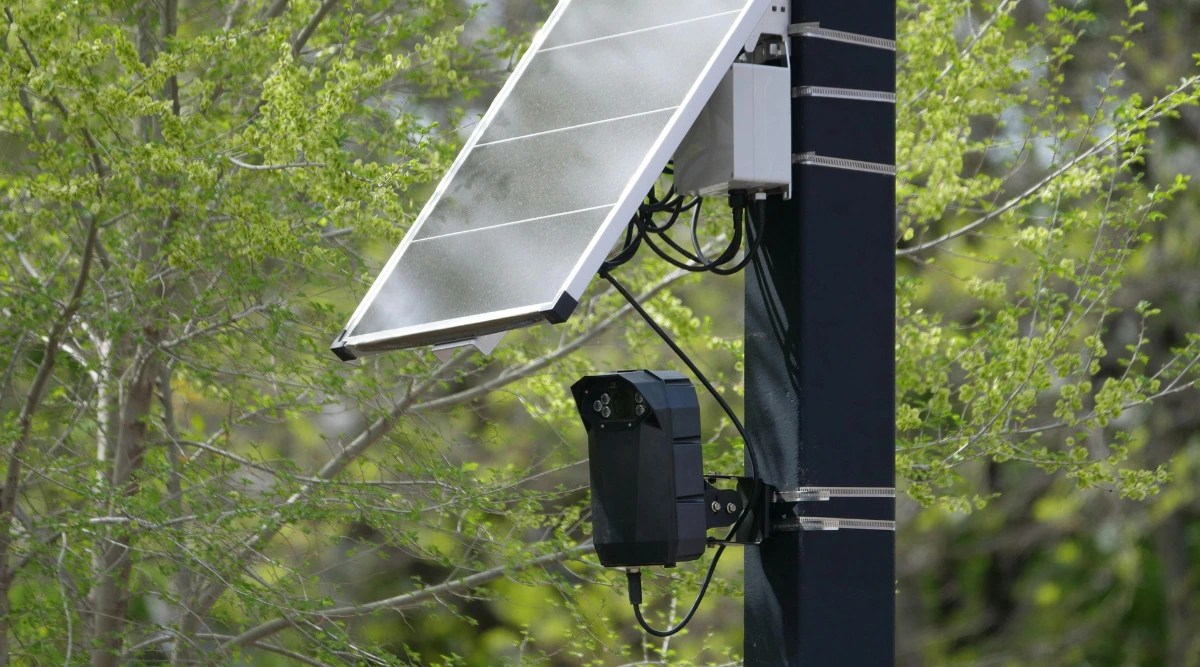
MICHIGAN—Between the state line and the nearest dispensary, there are cameras mounted to poles along Michigan’s highways, intersections, and shopping plazas.
They don’t look like much. And most drivers zip by without noticing them. But every vehicle that passes gets photographed anyway: the license plate, the time, the direction of travel—all dropped into a searchable database that cops can access anytime.
That surveillance affects anyone driving in Michigan, including people doing something perfectly legal: buying weed.
Last year, Wisconsin deputies reportedly tapped into this camera network to track a man driving into Michigan, then used the trip itself to justify searching his car for weed. And here in Michigan, one dispensary agreed to install a license plate camera in its own parking lot—and let cops access the feed anytime—as part of a deal to do business in the city.
Over the last year, Michigan’s legal cannabis market and the surveillance industry have fully collided. People are already being arrested. And yet, nobody in Lansing has decided what the rules should be.
A camera on every corner
Most license plate cameras are made by Flock Safety, an Atlanta company founded by an engineer who built his first plate reader because “crime felt too easy to get away with.”
Flock has since branched into drones and audio detection devices, but its license plate cameras are what put the company in 6,000 communities nationwide—and, increasingly, on the receiving end of angry public comments at city council meetings across Michigan.
More than 180 Michigan law enforcement agencies now operate these cameras. Nationally, the crowdsourced tracking project DeFlock has mapped more than 128,000 automated license plate readers, with more being discovered and logged every day.
Almost none of those agencies have disclosed what they do with the data they collect. The Michigan numbers that do exist have largely come from reporters filing public records requests.
Sterling Heights reportedly runs 24 plate readers and logged more than 1 million unique plates in a single 30-day stretch. Kalamazoo’s 39 cameras were searched more than 140,000 times in six months.
Flock says it holds data for 30 days and that outside agencies—like US Immigration and Customs Enforcement (ICE)—cannot directly access data collected from a local police department’s cameras unless that agency “expressly and deliberately” allows it.
But direct access isn’t the only way to get the information.
Reporting by 404 Media has found local police nationwide running searches on behalf of federal immigration agents. And in Kalamazoo, where department policy prohibits it, audit logs obtained by MLive showed at least nine searches listing “immigration” as the reason.
No one at ICE needed access to the city’s cameras; a local cop with a login was enough.
And that’s the bigger problem facing Michigan: State law is totally silent on retention, access, sharing, and what counts as sufficient reason to search a plate. In practice, that means the state’s biggest surveillance network runs largely on the honor system and the discretion of whoever is using it.
The drive that became probable cause
The clearest example of what that discretion can produce comes from across the state line.
Last year, deputies in northeastern Wisconsin were looking for Edward Abrams-Phillips, who was wanted on a bail-jumping charge connected to a domestic violence case. According to court records reviewed by 404 Media, they found him through Flock.
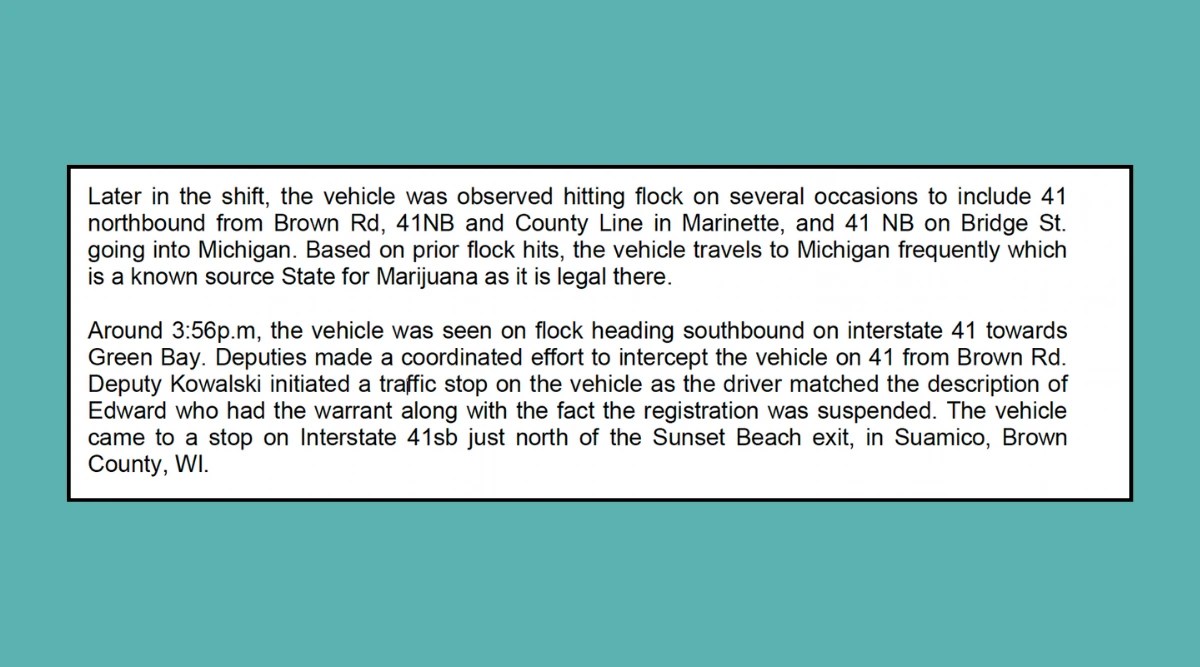
The complaint reads like a flight tracker. His vehicle hit cameras northbound on US-41 out of Brown Road, again at County Line in Marinette, and again on Bridge Street heading into Michigan. Around 3:56 p.m. they tracked him southbound on US-41, pointed back toward Green Bay. Deputies coordinated an intercept and stopped him on the way back.
And here’s the part worth reading twice:
The complaint didn’t just log the trip. It interpreted it.
Prior Flock hits showed the vehicle traveled to Michigan frequently, which cops described as a “known source state for marijuana.” Abrams-Phillips’ round trip itself became part of the probable cause used to justify searching the car. The bail-jumping charge was ultimately dismissed. And Abrams-Phillips was reportedly convicted of marijuana possession.
In short: Repeatedly driving into a state where marijuana is legal became an investigative lead in another state where it isn’t. Police didn’t need informants or a warrant to pull that travel history. They had a pattern of movement—assembled automatically and waiting in a database.
“Once this level of surveillance is normalized, it becomes incredibly hard to roll back,” Jon McCray Jones, policy analyst for the ACLU of Wisconsin, told the Wisconsin Examiner. “Today it’s license plates—tomorrow it could be forced search and seizure or checkpoints on the road.”
‘No Flock Zone’
Sometimes, the surveillance isn’t waiting on the highway.
Sometimes, it’s at the dispensary.
In 2022, Madison Heights denied JARS Cannabis a retail license. The company sued, and the two sides eventually reached a settlement that allowed the store to open in 2025.
Among the conditions tied to that agreement: Before it could sell anything, JARS had to install a Flock license plate scanning system at the entrance of the customer parking lot, and give local cops “unhindered live access” to the camera, the footage, and all the data it collected.
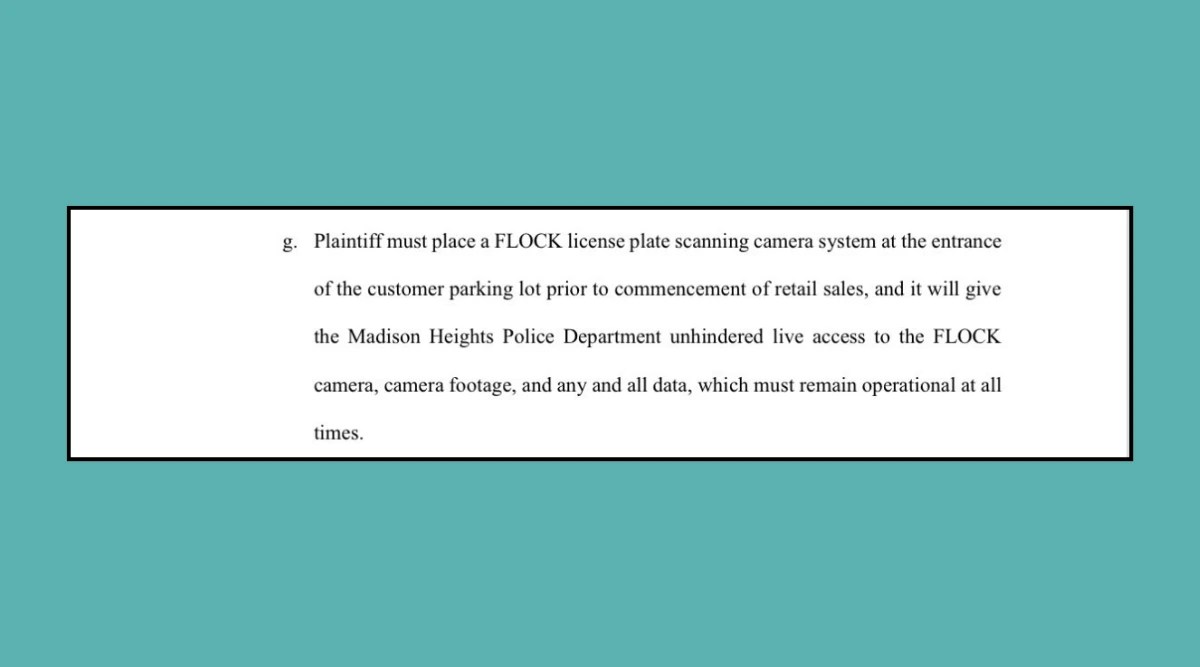
A few weeks ago, customers noticed the camera. JARS put up a sign reading “NO FLOCK ZONE” directly in front of the pole to block the lens. Video of the sign went viral. Then the city gave the company 48 hours to take it down or face unspecified sanctions.
In a statement, JARS said it shares its community’s concerns about surveillance, which is why it blocked the camera, and stressed that it neither controls the device nor has access to what it captures. It also pointed customers toward its 32 other Michigan stores that don’t have one.
In Reddit forums, some Michigan stoners praised JARS for taking a stand.
Others pointed out—not unreasonably—that the company willingly signed a written agreement handing police live access to its own customers in exchange for permission to open its doors, and apparently only re-discovered its principles a year into the arrangement.
“So basically the no flock zone sign was a publicity stunt and you have no ability to stop the police from actively investigating your customers,” one user commented on Instagram.
Still, the argument over the hypocrisy overlooks the bigger problem at play: A Michigan city made license plate surveillance a condition of doing business.
For roughly a year, customers who pulled into that lot had their plates logged simply because they stopped to shop at a legal dispensary. And none of them agreed to any of it.
Lansing takes notice
There’s rare agreement in Lansing that something has to change. There’s just no bill sitting on the governor’s desk yet.
State Sen. Jim Runestad—who also chairs the Michigan Republican Party—introduced Senate Bill 1131, which would require plate reader data to be deleted after 14 days and require a warrant to access it outside criminal investigations and missing persons cases.
Runestad said guardrails are needed to curtail a “complete wild, wild west,” where there are few limits on who obtains the data, who sells it, who shares it, or how long anyone keeps it. He says the technology can be genuinely useful in emergencies, and everything else is overreach.
His proposal closely resembles House Bills 5492 and 5493, introduced earlier this year by Democratic lawmakers. Separately, 15 lawmakers also sent the Michigan Department of Transportation a letter in July demanding the department end contracts that let federal agencies—including ICE—to mount surveillance equipment along the state highways.
“We are doing everything we can here in the state of Michigan to protect our residents, protect our communities,” said state Rep. Natalie Price, who signed the letter.
The ACLU of Michigan has been pushing for limits for months. Meanwhile, police agencies aren’t uniformly opposed to new regulations, but they’ve been wary.
Ron Wiles of the Michigan Association of Chiefs of Police told Michigan Public some oversight may be needed while cautioning against rules that would make the cameras “totally ineffective.” Even Flock says it would support additional state regulations.
So, virtually everyone is on record wanting rules for these cameras.
The problem is getting those rules passed.
Runestad is a Republican pushing a bill through a Democrat-controlled state Senate, while House Bills 5492 and 5493 are Democratic proposals sitting in a Republican-controlled state House. For now, all three appear stuck. Runestad’s bill was referred to a committee several weeks ago. The House bills have been parked in a legislative committee since February.
The bottom line
Michigan lawmakers are still writing the rules for a surveillance network that was already up and running before they got there.
But the pushback is real. More than 60 cities nationwide have rejected or canceled plate reader contracts this year—including several in Michigan—all citing privacy and data-sharing concerns. Some communities, like Kalamazoo, have organized formal campaigns to get them removed.
For Michiganders who want to know what’s happening in their own community—or weigh in on what happens next—there are a few places to start::
- DeFlock maintains a crowdsourced map of license plate readers across the country, including cameras that have been identified in Michigan. Public resistance has led to Flock contracts being canceled, as well as these cameras being removed.
- New Flock cameras are approved at city council meetings, which are public, often sparsely attended, and where several Michigan communities have already killed deals.
- State legislation is still alive in Lansing. And with bipartisan leaders pushing in the same direction, it might be worth calling your state representatives and senators—especially state House Speaker Matt Hall and state Senate Majority Leader Winnie Brinks.
READ MORE: 6 quick hits of cannabis news from across Michigan

Want more Michigan cannabis news, product picks, and culture? Click here to sign up for The MichiGanja Report, our free weekly newsletter about all things marijuana.