MUSKEGON—Every Michigan stoner over 60 has the same speech, and I’ve sat through it a 100 times. Weed was better back then. You kids don’t know. We had Panama Red.
These are usually the same folks who think music sounds better on vinyl and insist Coca-Cola tastes better in glass bottles. As a millennial who’s now been smoking licensed dispensary weed longer than I’ve shopped the black market, I’ve never fully understood the concept.
That all changed last month after I spent an afternoon in a 114-year-old warehouse in downtown Muskegon. And I’m pleased to report that your old stoner uncle is at least partly correct.
Weed might not have been better back in the 1970s and 1980s. But it was different.
That’s because commercial grow operations have spent years breeding out an entire generation of classic marijuana strains in favor of whatever produces the biggest harvest, the fastest, at the lowest possible cost. And the old school stuff usually loses on all three counts.
But those classic strains live on at IndiGrow, the only licensed cannabis microbusiness in Muskegon—and one of the only cannabis cultivation operations in Michigan that’s dedicated almost exclusively to growing the same strains your dad used to smoke back in the 1970s.
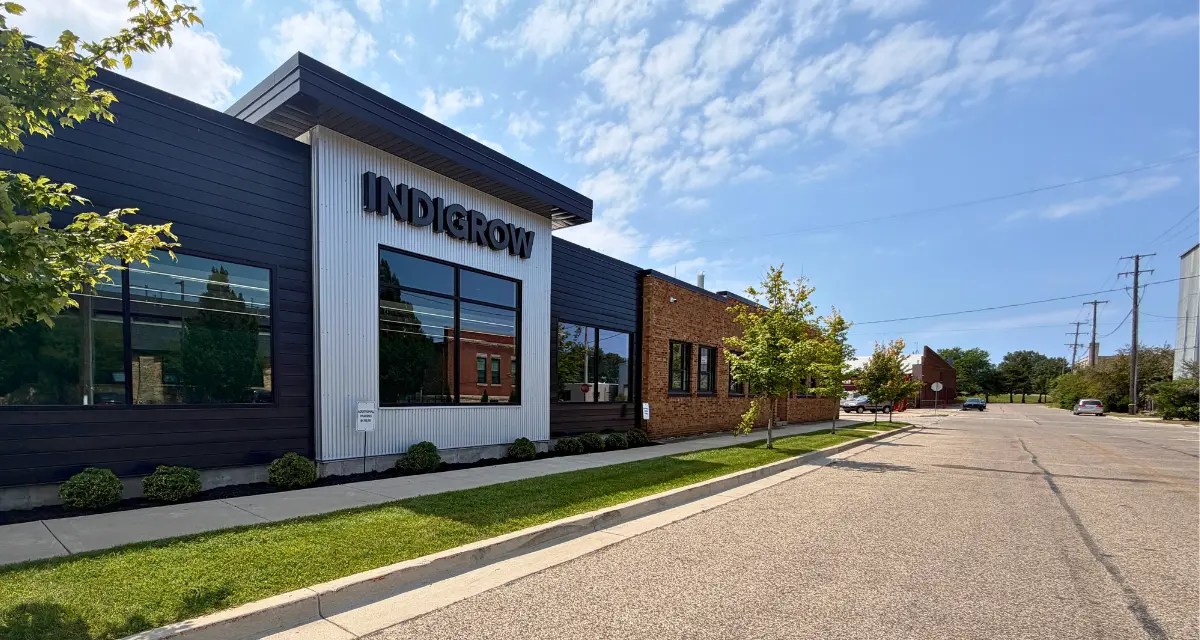
“This industry has spent the last 10 years or so selectively breeding what’s easy to grow, not what is good to smoke,” said Steven Kekelik, who founded IndiGrow alongside his wife Karen and her father Dr. Paul Lomeo, in 2021. “We really wanted to start from the basics.”
Pins on a map
There’s a map of the world hanging in the lobby with flags stuck in it. Afghanistan. Thailand. Pakistan. Hawaii. Every pin marks the origin point of a real strain growing inside the building.
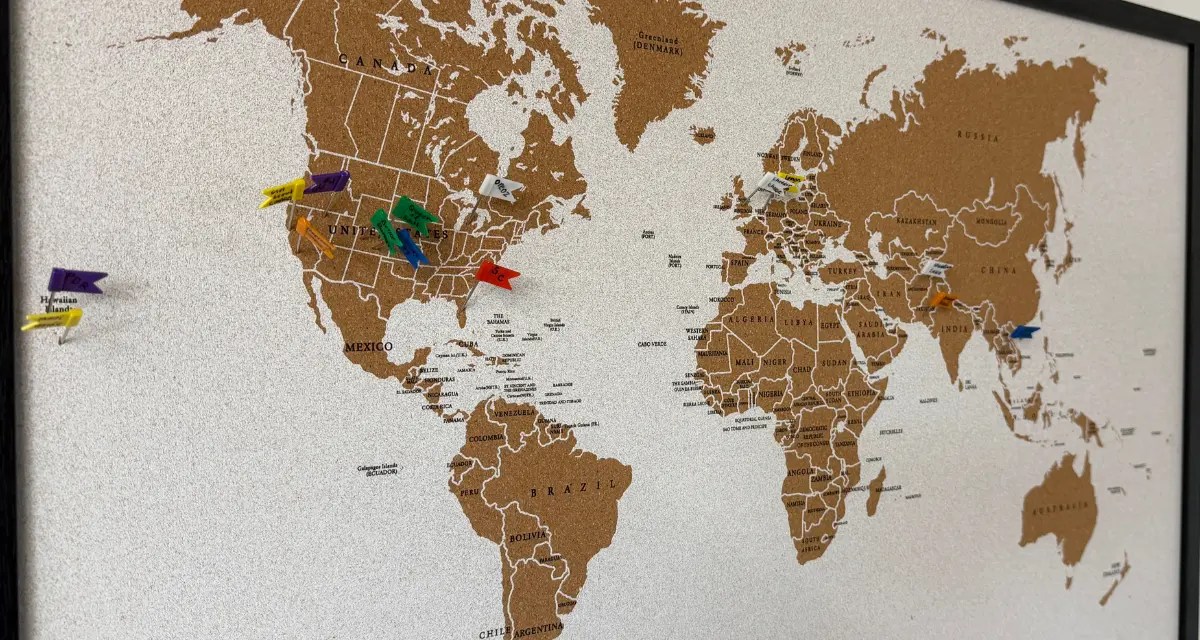
Because weed used to be named after real places. Acapulco Gold. Panama Red. Thai Stick. Durban Poison. Maui Wowie. Afghan Kush. The name was the address, where iconic cannabis strains used to spend a few thousand years adapting to one specific corner of the world.
The industry refers to these regional originals as “landrace” strains, and every hybrid strain in every jar on every shelf in Michigan, at some point, descended from them, Steven explained.
The Kekeliks started walking me through lineages, and about two minutes into the tour, I stopped feeling like I was in a grow room and started feeling like I was in a Traverse City winery.
Steven talks about his plants the way a winemaker talks about vineyards—where the genetics come from, what the climate in that particular corner of the world did to them, why plants from one region smell nothing like plants from another. Provenance actually means something here.
“I think there’s a big movement in the country to go back to local farm-raised, non-GMO products,” Steven said. “And I think cannabis is much the same.”
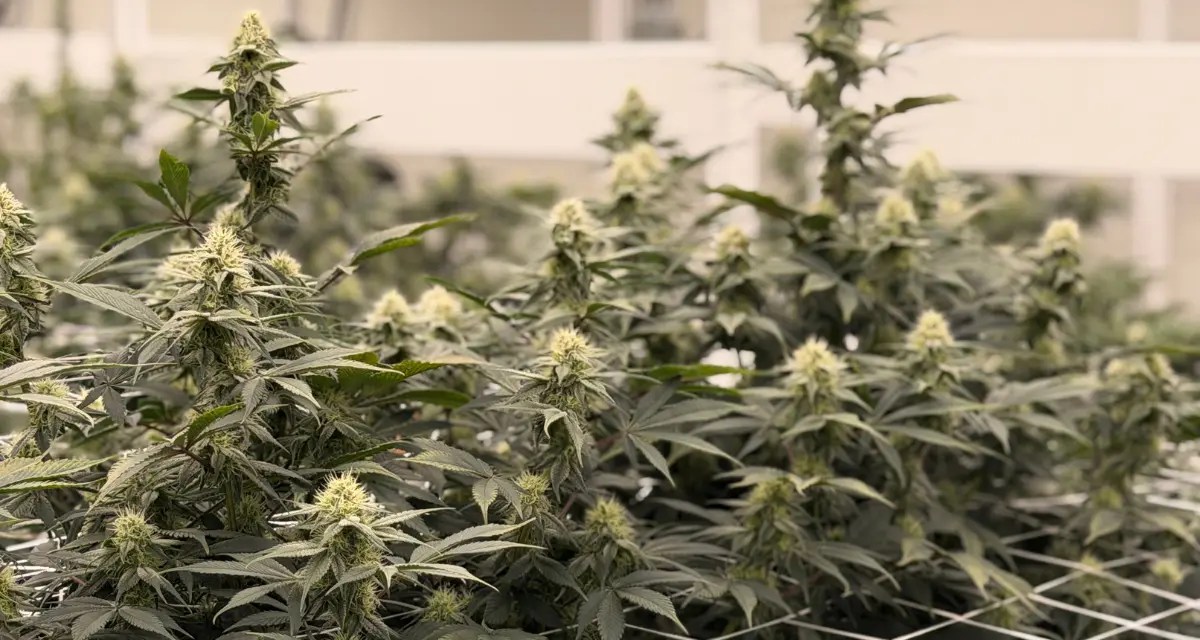
That’s where IndiGrow started in 2021, and it’s still the foundation of the menu. Some of what they’re growing today is true landrace, sourced from the places on that map. Other strains are one or two generations younger, like AK-47, Trainwreck, White Widow, and Maui Wowie.
They’re mostly from what Steven calls the “heirloom” era of the late ’90s and early 2000s—when growers were still selecting strains for what a plant actually did instead of what it could yield.
He treats the whole range as one continuous line, because functionally it is: This is the weed that existed before the market went off the rails chasing THC numbers and harvest efficiency.
“It’s kind of like you don’t go to the bar and order a shot of Everclear,” Karen told me. “You’re trying to drink a craft beer and maybe play darts with your friends, or you’re noticing the notes in the wine varietals. You’re having that full experience versus just trying to get drunk.”
Slow weed
Heirloom seeds aren’t easy—and that’s the point.
Old school genetics tend to run tall and lanky. These plants take their time from seed to harvest. They also carry no particular resistance to the microbes that thrive in a grow room, and they don’t respond to heavy feeding and nutrients the way modern plants have been bred.
IndiGrow runs them anyway. Their head grower, Chris Zimmer, is a former medical marijuana caregiver. He knows growing good weed takes time—and that the THC number printed on the label is an entirely overrated and inaccurate measure of the real cannabis experience.
“I’ve never met someone in my professional career that is trying to improve so constantly,” Steven said of Zimmer. “It’s never enough for him. It’s just never good enough.”
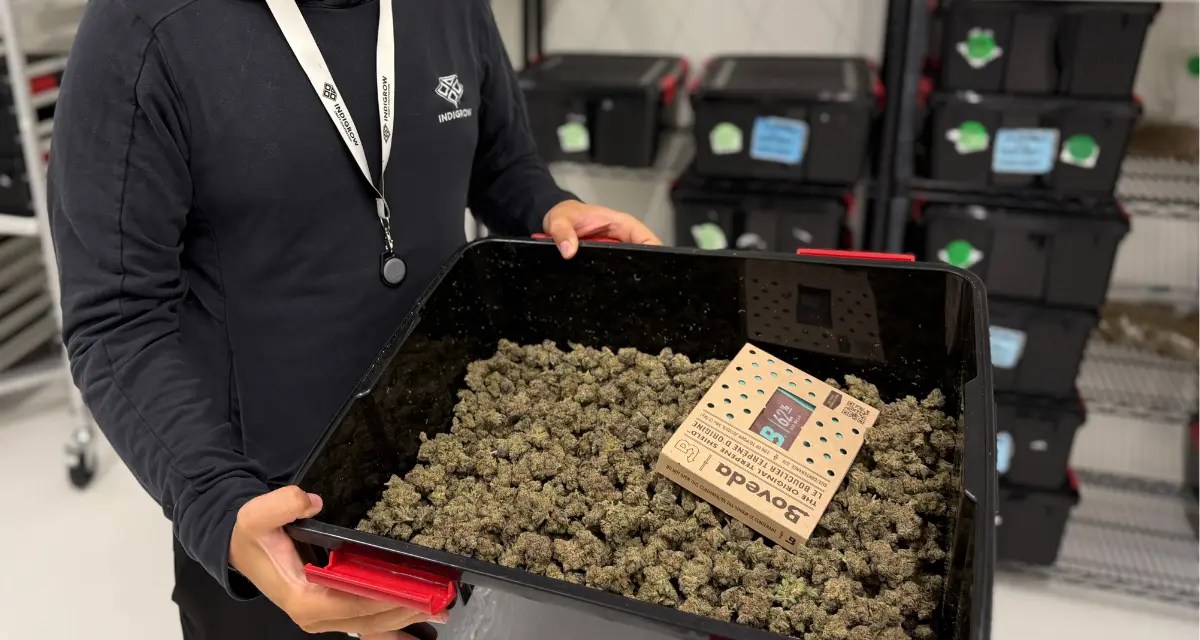
For the uninitiated: THC is one compound among dozens in the plant. Terpenes—the aromatic stuff that makes a jar smell like pineapple or diesel or pine—shape the character of a high as much as raw potency. And they’re often the first casualty when weed gets rushed onto a shelf.
In short, a 32% THC flower with no terpene profile might get you stoned, but not in a particularly memorable way. A carefully grown 18% strain that’s allowed to finish on its own schedule will usually deliver a far more robust experience.
That’s the trade-off IndiGrow makes on purpose.
“I usually like the 18-20% THC range. It gives that terpene expression,” Steven said. “Anything higher isn’t necessarily a good customer experience. It’s just marketing.”
Verifying these old school genetics is its own challenge. Some seeds have come from customers who travel overseas and bring them back. Others have been dropped off by local growers who have been keeping the same strain alive for decades.
Zimmer takes his genetics wherever he can find them.
And then there’s the panel of longtime stoners old enough to have smoked the real thing. When something new comes in, Indigrow hands it over for a ruling. And it only makes the dispensary shelf if the old potheads vouch for its authenticity.
“They’ll be like, ‘Yeah, it tastes just like it,’” Steven said.
A surgeon, a lawyer, and a salesman
Despite the focus on old school weed, Steven, Karen, and Lomeo are not old school stoners.
Steven worked in sales since he was 15. Karen practiced law in Indiana. And Lomeo, Karen’s father, was a surgeon in Muskegon for more than 30 years before retiring and floating the idea of a family business in 2019. The microbusiness license offered them the ability to handle everything from seed to sale, so they took it—licensed April 2021, open by that November, and funded entirely with family money and law firm proceeds, with no outside investors.
“We decided that we weren’t going to be beholden to someone that is more concerned about timelines than quality,” Steven said. “An independent operation was the only way to do this.”
With just 10 employees, five grow rooms, and 150 plants growing at any given time, IndiGrow produces about 30-50 lbs. of weed every month. And attached to the retail floor is a processing lab where Steven personally mixes up his own gummies, concentrates, drink mixes, and more.
He estimates doing it in-house saves about $80,000 a year he’d otherwise be paying somebody.
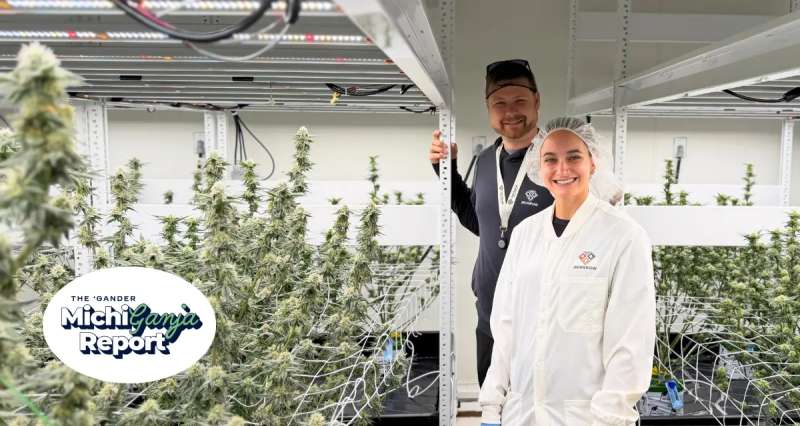
The facility itself is spotless, and getting into it is a production. I had to gown up head to toe—suit, gloves, hairnet—and then stand in a blower chamber for good measure.
Which brings me to the part most Michigan stoners don’t realize: you can do this, too.
Tours at IndiGrow aren’t a courtesy for reporters. They’re part of the business model. Anyone can book a time, suit up, get blasted with air, and walk the entire chain from clone to counter with somebody explaining every step. There’s also an outdoor consumption area out back.
No shortcuts
Three weeks before I showed up, IndiGrow threw 75 perfectly good clones in the trash.
Nothing was wrong with them. The other plants simply weren’t finished, there was nowhere to put the new ones, and nobody in the building was willing to chop early to fit a hard schedule.
“I’m never going to sacrifice the quality of my product to make production easier,” Steven said.
That’s the whole operation in one gesture. And it shows up everywhere once you start looking.
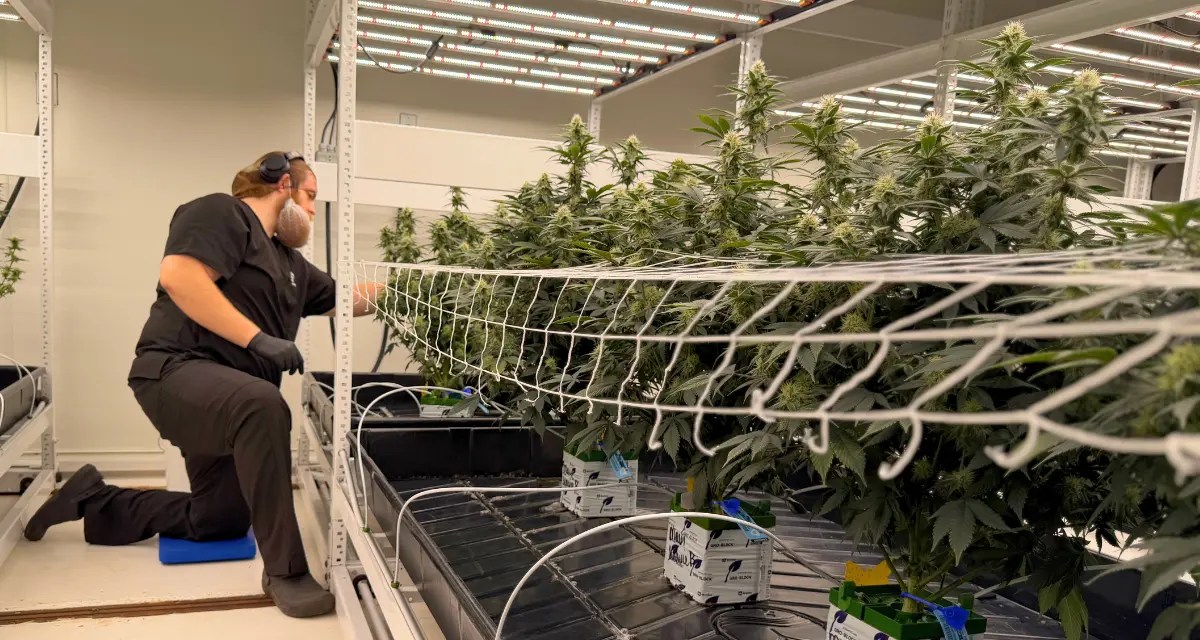
Take the harvest. Most grow operations cut down whole plants and call it a day. IndiGrow takes the tops off, waits another three days, then comes back for the rest of the harvest. It’s an unusual but thoughtful step—simply to guarantee that your last joint matches the first one.
“I want to make sure that no matter what part of the plant is in your jar, the high is exactly the same,” Steven said. “Because if it’s not consistent, you’re essentially giving away the farm.”
Then, there’s the dry and cure, which is where most Michigan weed falls short.
IndiGrow weed spends 14 days drying in a humidity-controlled room, followed by at least two weeks curing in storage containers. The moisture content is monitored the entire time.
“Everybody has had weed that tastes like hay,” Steven said. “That’s from rushing it. If you just spend 10 more days, or 20 more days, and check, you’ll end up with a much better product.”
When it comes to packaging, the staff is just as obsessive. Steven only packs 10 jars a day, so nothing sits on a shelf getting dried out. Zimmer, the head grower, signs his name on them. And at least once a month, the two of them randomly pull products off the shelf to try for themselves.
“I don’t wanna just think it’s good,” Steven said. “I want to know that it’s good.”
Resist corporate weed
IndiGrow has a clear point of view when it comes to the rest of the industry.
Steven says that large, corporate weed operations are leading a race to the bottom in Michigan. Because once you’re big enough to answer to investors instead of customers, price becomes the only lever you’ve got—and quality is often the first thing out the window, he said.
So, I asked Steven to name the enemy.
“It’s the large-scale growers that have no accountability to their communities,” he explained. “There’s no passion. There’s no art. They don’t smoke their products. They don’t care about it. It’s just a cash crop for them, and they will step on anyone and anything to make more money.”
It’s a bold position for a shop this small to take.
Multi-state operators with vastly deeper pockets have already packed up and fled Michigan, laying off a couple hundred employees at a time—sometimes locking the doors without warning.
If companies 100 times IndiGrow’s size couldn’t make the math work in this market, it’s fair to ask how 150 plants growing in a Muskegon warehouse are supposed to outlast them.
“It’s the people,” Steven said. “There’s such pride in being a Michigander. When people realize that you’re here and you’re one of them, you’re part of their community. You can’t buy that.”
IndiGrow earned that the hard way, and mostly by refusing to hide.
Early on, they hauled 65 Rotary Club members through the building and stuck a four-foot cannabis plant in the middle of the room so everyone could touch it. Four years later, people still bring it up. They also run “CannaParent nights” for parents who don’t consume but want to know what their kids are doing. And they’ve given tours to the Prosecuting Attorneys Association of Michigan, because prosecutors had honest questions about what impairment actually means.
“Muskegon is the biggest small town I ever lived in,” Steven said. “At the end of the day, if you truly are part of the local community and show up and live here, they will support you.”
IndiGrow also runs one of only about five veterans programs in the state that have opted into the Cannabis Regulatory Agency’s Task Force 1620—offering 75% off an eighth or a pack of gummies every month, expanded from 30 veterans to 60 after demand blew past the cap.
“These are veterans who have given their lives for our country. They may have come home with PTSD or pain, and we want them to have safe and affordable access to medicine,” Steven said. “It’s a small thing that we’re doing to give back to the veterans who gave so much for all of us.”
The bottom line
The next move for IndiGrow is pursuing a Class A license, which would allow them to run 300 plants instead of 150, plus get their weed on shelves at other dispensaries across the state.
I asked Steven whether that betrays everything he’d just told me about staying small.
He doesn’t think doubling a facility he already built puts the integrity of the brand at risk. The danger, as he sees it, is scale that outruns the attention each plant gets—and 300 plants is still small enough that nothing would change about the loving way in which each plant is grown.
“At the end of the day, I can only grow 300 plants,” Steven said. “If I was going to 10,000 plants or becoming some giant grow, then 100%. I’m just maximizing the facility that we built.”
Before I left, I took home an ounce of the Maui Wowie—which is apparently a local favorite because they moved five pounds of it in ounces on the day it dropped earlier this summer.
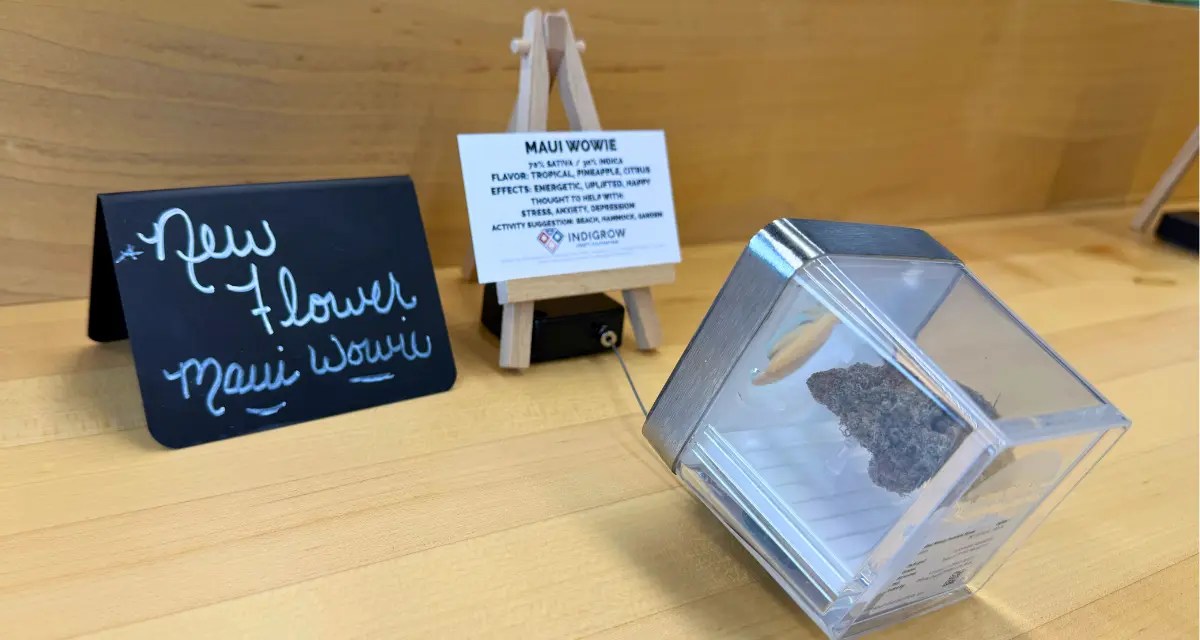
At 20% THC, this strain won’t impress anybody chasing numbers on a label. But it’s the first time I’ve smoked something from a dispensary and actually understood what I’d been missing.
This was smoother than anything I’ve smoked in years.
Steven ranks smoothness first, flavor second, and effects third. And after blowing through a full ounce of this over the last two weeks, I totally understand why he refuses to re-order that list.
“I want people to walk away from here and think to themselves, ‘This is what all cannabis should be,’”Steven said. “It’s not a warehouse full of weed. This is what I think the state [legalization] law intended all along. It should have all been small, little farmers just doing their own thing.”
So, if you’re chasing a number on a label, there are roughly 900 other licensed grow operations in this state that would love to have your business. But if you want to know what these old stoners have been talking about, it’s growing at an old warehouse in downtown Muskegon.
Book the tour—and bring your uncle, too.
READ MORE: 5 quick hits of cannabis news from across Michigan

Want more Michigan cannabis news, product picks, and culture? Click here to sign up for The MichiGanja Report, our free weekly newsletter about all things marijuana.