
MICHIGAN—Michigan’s 7th Congressional District is one of the most closely watched races in the country this year and one of a handful that could decide which party runs the US House.
Here’s what voters need to know ahead of Election Day:
The race
Republican US Rep. Tom Barrett ran unopposed in the Aug. 4 primary election. Democrat William Lawrence won a three-way contest with about 44% of the vote, defeating former US Ambassador to Ukraine Bridget Brink and retired Navy SEAL Matt Maasdam—both of whom were backed by influential Democratic leaders and had outraised Lawrence roughly two to one.
The general election is Nov. 3.
The district
The 7th Congressional District is anchored by Lansing and covers Clinton, Ingham, Livingston, and Shiawassee counties, most of Eaton County, and parts of Genesee and Oakland counties.
It’s home to roughly 800,000 people.
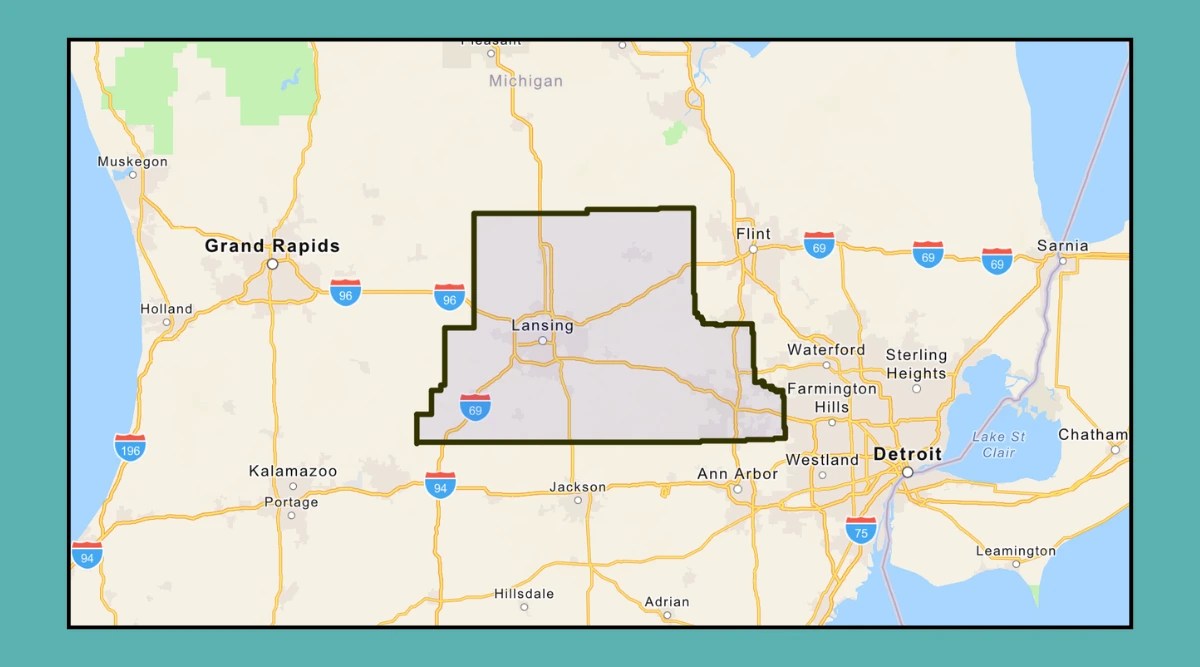
The Cook Political Report rates it a toss-up and the numbers explain why: Elissa Slotkin beat Barrett for this seat by 20,000 votes in 2022; Barrett gave it another shot in 2024 and won by 17,000 votes after Slotkin left to run for US Senate. Lansing leans Democratic. But the district gets more conservative the farther you get from the Capitol and Michigan State University.
Tom Barrett (R)
Barrett is finishing his first term in Congress. He served 22 years in the US Army and another eight years in the state Legislature. He currently sits on the Transportation and Infrastructure and Veterans Affairs committees and chairs the Technology Modernization Subcommittee.
Barrett has broken with his party more than almost any other Republican on the war with Iran.
He was one of just four Republican members of Congress to vote against the Trump administration’s authorization of military operations, and he has voted three separate times for resolutions to limit the president’s war powers. He’s also the only Republican to introduce a measure authorizing force in Iran while capping its scope and setting a clear deadline to end it.
Just a few days after introducing that war powers resolution, Barrett stood beside President Donald Trump at a rally in Michigan and accepted his endorsement; Republican operatives have described the arrangement between them as a “marriage of political convenience.”
“He’s going to have a tough race. You got to help him,” Trump said at the rally.
On most everything else, Barrett has voted with his party. He backed the Republican reconciliation law that cut roughly $1 trillion from Medicaid and reduced food assistance, and voted against extending the Affordable Care Act tax credits that expired in January. Michigan marketplace enrollment has since plummeted by more than 130,000 people statewide.
In June, Barrett voted in support of the Secure America Act, which fully funded the Trump administration’s federal immigration enforcement efforts through 2028—including $38 billion for US Immigration and Customs Enforcement (ICE) and another $26 billion for Border Patrol.
Barrett has also defended Trump’s tariffs, telling voters during a telephone town hall that he wasn’t ready to give up on them and that the stock market “isn’t the entire American economy.”
His campaign finances have drawn scrutiny. Politico reported that Barrett’s campaign and affiliated committees paid more than $50,000 to two firms that employ his wife, a campaign finance attorney—including a law firm his campaign had never paid before she was hired there.
The Detroit Metro Times also found Barrett reimbursed himself about $22,000 in campaign mileage between January 2024 and March 2026, far more than others in Michigan’s delegation.
On abortion, Barrett has billed himself as “100% PRO-LIFE—NO EXCEPTIONS” as a state legislator and sponsored a 2019 bill that would have criminalized a late-term procedure with no exceptions for rape or incest. He has called Michigan’s voter-approved constitutional protections “pretty extreme.” His current campaign website lists no policy positions (on anything) at all.
On data centers, Barrett has said that local communities should decide whether they want them. But he also supported legislation that created tax incentives for these projects, and his campaign has accepted at least $13,000 from electric utilities so far this election cycle.
It’s worth noting: Barrett has not hosted an in-person town hall event since taking office.
William Lawrence (D)
Lawrence is a progressive organizer who was born and raised in East Lansing.
He co-founded the Sunrise Movement, the youth climate group that pushed the Green New Deal, then spent four years organizing around housing—founding the Mid-Michigan Tenant Resource Center and helping build the Michigan Rent Is Too Damn High Coalition.
His platform has four planks: lowering the cost of living, protecting Michigan’s water and farmland, ending US involvement in the war in Iran, and restoring the rule of law. In practice, he says that means taxing the wealthy to shore up Social Security, a 12-month federal moratorium on new data centers, halting arms sales to Israel, and banning congressional stock trading.
He also supports Medicare for All and refuses corporate PAC money.
Lawrence raised the least of the three Democratic primary candidates but received more donations from inside the district than his two opponents combined. He’s backed by US Sen. Bernie Sanders and US Rep. Rashida Tlaib, as well as US Senate candidate Abdul El-Sayed.
On the campaign trail, Lawrence has leaned on presence as much as policy. He held a food drive outside Barrett’s district office that collected 5,000 meals, retired $130,000 in local medical debt through a fundraiser, and spent eight hours taking questions from anyone who showed up.
What’s at stake?
Republicans control the US House by a handful of seats. A shift of just a few districts flips the chamber—and with it, control of what legislation reaches the floor, which nominees get confirmed, and whether Congress takes action to investigate the executive branch.
The 7th Congressional District is one of the few seats that could make that difference.
READ MORE: How many AI data centers are planned in Michigan? We counted.
Don’t miss Michigan’s biggest stories—follow The ‘Gander on Instagram.