
MICHIGAN—Ask William Lawrence about the approximate location of Michigan’s 7th Congressional District, and he won’t reach for a map. He’ll hold up his hand.
Tattooed on the back of his hand is a small asterisk—ink he got while away at college in Philadelphia, he says, as a promise to come back home. The gesture now does double duty as a campaign pitch. Because of the three Democrats running to unseat Republican Tom Barrett in November, Lawrence is the only one who actually grew up in the district he wants to represent.

“My community is the love of my life,” Lawrence told The ‘Gander. “I was raised here. I grew up going to church here. My parents live here. My wife is here, and so many dear friends are here.”
A national battleground in Mid-Michigan
Michigan’s 7th Congressional District is one of the most closely watched swing districts in the country. It’s anchored by Lansing and home to roughly 800,000 people across Clinton, Ingham, Livingston, and Shiawassee counties—plus slices of Eaton, Genesee, and Oakland counties.
The 7th District is rated as a pure toss-up by the Cook Political Report. It is also, by reputation, a district that rewards moderation. Lansing and East Lansing lean Democratic, but the district grows more conservative the farther you get from the Capitol and Michigan State University.
Barrett flipped it in 2024, beating Democrat Curtis Hertel by about 17,000 votes, for the seat Elissa Slotkin gave up to run for US Senate. Slotkin carried the same ground two years before.
With control of the US House up for grabs this year, both parties are already pouring millions of dollars into this race. And for voters across Mid-Michigan, the Aug. 4 primary is the first real say in who represents them—and ultimately, whether Barrett is re-elected in November.
From organizer to candidate
Lawrence, 35, made his name as an organizer long before he sought office.
He co-founded the Sunrise Movement, the youth-led climate group that pushed the Green New Deal into the Democratic mainstream, and his campaign credits him with helping “pass the largest green jobs program in US history,” the Inflation Reduction Act. Lawrence said it has since steered hundreds of millions of dollars in clean energy investments into the 7th District.
He spent the next four years on housing, founding the Mid-Michigan Tenant Resource Center and helping build the Michigan Rent Is Too Damn High coalition—an effort he says has since won new statewide protections for renters and fresh investment in affordable housing.
“I saw that in DC and in Lansing, people would say, ‘We can’t do that.’ And that’s a lie. It’s a self-serving lie that the corporate lobbyists and their allied politicians tell. And that’s how they get away with maintaining the status quo,” Lawrence said. “I saw that there was an opportunity for somebody like me to put my name forward to actually represent the people of my home.”
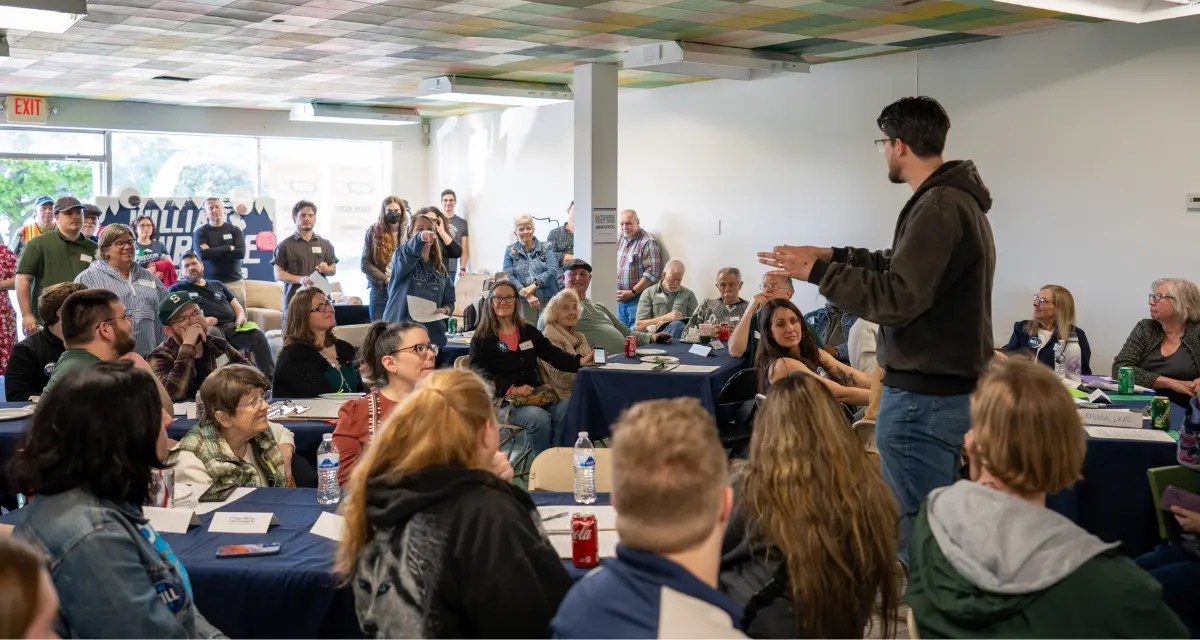
When asked about what issues are dominating his attention on the campaign trail this summer, he pointed to one that has been drawing attention across party lines: data centers.
He says he backs a 12-month federal moratorium on new construction, and he’s blunt about who he blames for Michigan’s building spree—not just Republican President Donald Trump, but also Democratic Gov. Gretchen Whitmer, for “rolling out the red carpet” to Silicon Valley.
“People are so angry at these billionaire tech guys coming in and trying to determine the future of our cities and towns by building these megalithic data centers. They feel betrayed,” Lawrence said. “I hear from Democrats, Republicans, and independents that they are equally fed up with Big Tech, data centers, and money in politics, which is allowing them to bulldoze into our state.”
Where he stands
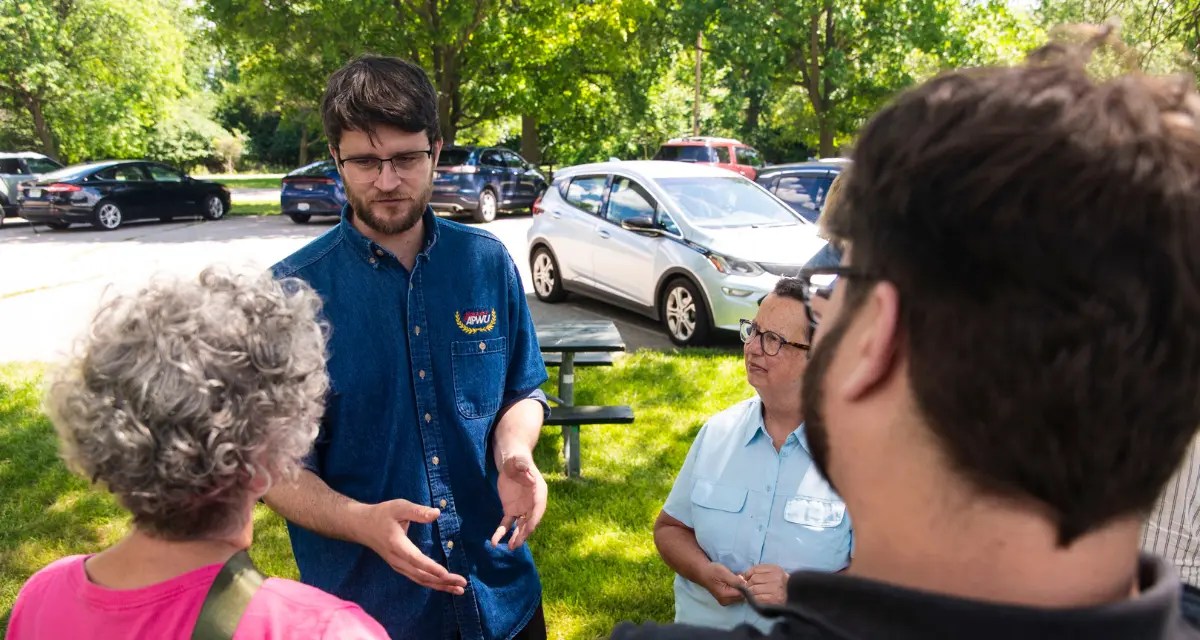
On his campaign website, Lawrence sorts his platform into four priorities. He leads with lowering the cost of living—protecting Social Security by taxing the wealthy, building affordable housing while cracking down on corporate landlords, and guaranteeing healthcare for all.
Next comes “Protect Pure Michigan,” a platform built largely around the data center moratorium, restoring the state’s wetlands and rivers, and holding polluters accountable for the damage.
Third is ending “endless war,” including pulling out of Iran and halting arms sales to Israel. In Congress, he also wants to “restore the rule of law,” including through a ban on congressional stock trading and criminal prosecutions for what Lawrence calls “the Epstein class.”
“The chance to win as a pro-working class, anti-billionaire, anti-war candidate in a district like this has potential not just to deliver representation to the people, but to show that this kind of politics can be popular and successful in other swing districts around the country,” he said.
A few of those positions set him apart from his primary rivals. On healthcare, he’s the only candidate in the race backing Medicare for All—though he says he’d also be willing to support smaller, incremental steps like lowering the Medicare eligibility age nationwide.
He also wants US Immigration and Customs Enforcement agents to stop patrolling Michigan communities altogether, calling their recent enforcement efforts “lawless and unconstitutional.”
“What we’ve seen from ICE around the country is a lawless paramilitary force disappearing people, snatching people into unmarked vans, shooting people,” Lawrence said. “The people who are responsible for this, from the president on down, have to be held accountable for the crimes they’ve committed against humanity and the Constitution. … This is Gestapo shit.”
Showing up for Greater Lansing
Lawrence says his contrast with Barrett has as much to do with presence as it does policy. Barrett hasn’t held a public town hall; Lawrence says he’s logged more than 100 public events.
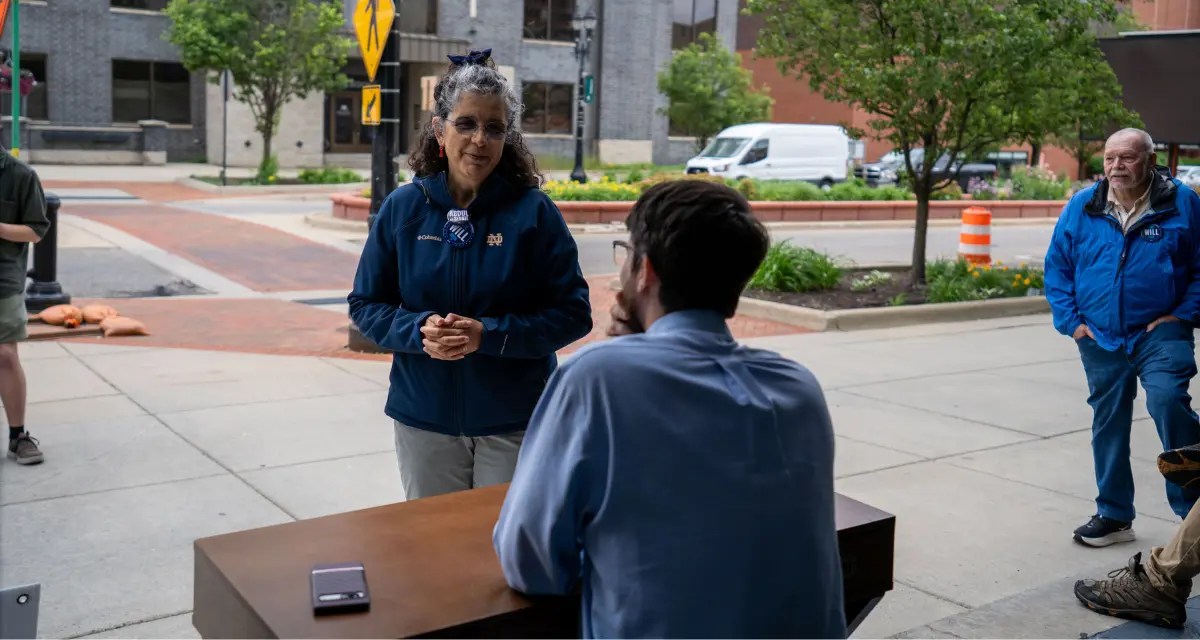
When federal food aid lapsed during the shutdown, Lawrence ran a marathon food drive outside Barrett’s district office that gathered 5,000 meals for the Greater Lansing Food Bank. After Barrett’s vote to roll back the Affordable Care Act, Lawrence’s campaign held a fundraiser that retired $130,000 in local medical debt. And most recently, he parked outside Barrett’s office for an eight-hour, open-air “ask me anything” event with anyone who wanted to show up.
“My commitment from the beginning has been to show up in the places [Barrett] refuses to and serve in the ways he is incapable of. And I’ve done that repeatedly,” Lawrence said.
But before Lawrence has a chance to take on Barrett, he has to survive the primary election.
So far, he’s been outraised by both of his Democratic opponents, former Ukraine ambassador Bridget Brink and former Navy SEAL Matt Maasdam. But at the same time, he says he’s pulled in more individual donations from within the 7th District than the two of them combined.
Lawrence is also counting on a different, younger, angrier electorate turning out on Aug. 4.
“This is how Trump won—not once, but two times—by presenting himself as the candidate of change while Democrats allowed themselves to be painted as the status quo,” Lawrence explained. “The last thing that people want right now is more of the political status quo. And that’s what my two Democratic opponents and Tom Barrett all represent: more of the same.”
Asked at the close of the interview to finish a sentence: “The thing worth fighting for in Michigan is ___.” Lawrence didn’t hesitate. “Our water and our people.” Whether enough of those people show up for him at the polls in August is the question that will decide what happens next.
The primary election is Aug. 4, 2026. The general election is Nov. 3, 2026. Click here to ensure you’re registered to vote ahead of Election Day.
READ MORE: How many AI data centers are planned in Michigan? We counted.
Don’t miss Michigan’s biggest stories—follow The ‘Gander on Instagram.