MICHIGAN—Democratic US Sen. Gary Peters is retiring after serving two terms, leaving Michigan voters with an open US Senate seat for the second election in a row.
And ahead of the November election, all eyes will be on Michigan—namely because the race will play a pivotal role in determining which political party takes control of the US Senate.
Here’s what voters need to know ahead of Election Day:
The race
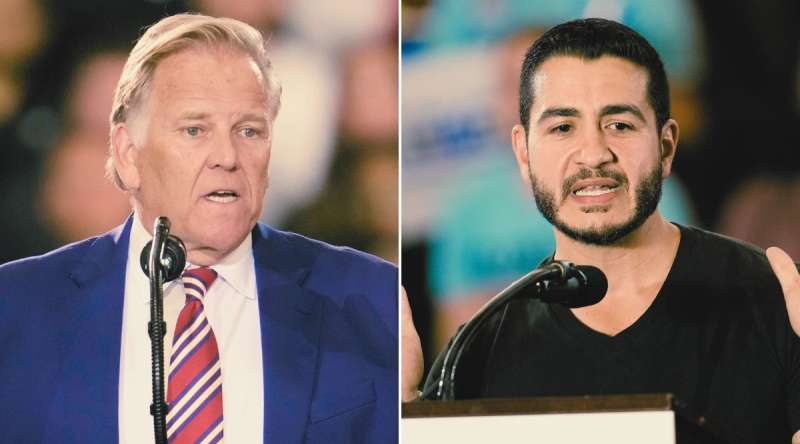
Republican Mike Rogers and Democrat Abdul El-Sayed both won their primary elections on Aug. 4. Rogers ran unopposed. El-Sayed narrowly defeated US Rep. Haley Stevens in a contest that drew more than $60 million in outside spending, much of it from groups aligned with the American Israel Public Affairs Committee (AIPAC) on Stevens’ behalf. It was, by some counts, the most expensive primary election in US history. The general election is Nov. 3.
Mike Rogers (R)
Rogers is a former FBI special agent and US Army officer who served in the state Senate before winning Michigan’s 8th Congressional District in 2000. He spent seven terms in the US House, including as chairman of the Intelligence Committee, and left Congress in 2015. He lost the 2024 Senate race to Elissa Slotkin by about 19,000 votes—less than a single percentage point.
By his own account, Rogers is running for US Senate again because President Donald Trump specifically asked him to do so. His campaign team now includes several of Trump’s own operatives, and the Senate Leadership Fund has pledged $45 million to back him this fall.
After leaving Congress, Rogers moved into corporate consulting, including a stint at AT&T and raking in more than $460,000 over two years as a risk analyst for Nokia. Reporters have tracked how his wealth grew substantially after leaving Congress—enough to help him afford a waterfront home in Florida, where he lived for years before returning to run in Michigan.
On healthcare, Rogers backed the Republican reconciliation law that cut roughly $1 trillion from Medicaid, calling its passage a major win, and he opposed extending the Affordable Care Act tax credits that expired in January. Michigan premiums more than doubled on average for many marketplace enrollees this year, and federal data shows 130,000 fewer Michiganders signing up. Rogers has said he would phase out subsidies to insurers and has floated copays and high-risk pools instead. Health policy researchers who reviewed his ideas are skeptical.
On abortion, Rogers has compiled a lengthy anti-abortion record across his seven terms in Congress—including a 2012 vote for a national ban and co-sponsoring “fetal personhood” bills.
On elections, Rogers claimed without evidence that a van full of ballots in Detroit ended up costing him the election in 2024—something he never alleged when he conceded.
Rogers has also defended the Trump administration’s mass deportation agenda and has pushed to keep the US Department of Homeland Security fully funded. He has also accepted more than $20,000 in campaign donations from companies that hold ICE detention contracts.
And on the war in Iran, Rogers has been one of its loudest Michigan defenders, telling Jewish Insider he could not have supported the strikes more and arguing the US should keep further attacks on the table. When a voter raised the topic of increased gas prices as a result of the conflict, Rogers reportedly insisted that Michiganders were “gonna be fine.”
Abdul El-Sayed (D)
El-Sayed is a physician and epidemiologist who ran Detroit’s health department and later led Wayne County’s health, human, and veterans services department. He lost the 2018 Democratic gubernatorial primary election to Gov. Gretchen Whitmer.
El-Sayed is running an explicitly anti-establishment campaign that has garnered support from US Sen. Bernie Sanders and US Rep. Alexandria Ocasio-Cortez. He refuses to accept corporate PAC money. And if elected, he would be the first Muslim member of the US Senate.
His platform rests on three key ideas: getting money out of politics, lowering costs, and passing Medicare for All—a policy he co-authored a book about, and which would extend Medicare to every American without requiring them to pay any premiums, copays, or deductibles.
On data centers, El-Sayed has proposed a set of “terms of engagement” he wants written into federal law—including no utility rate hikes for residential customers, enforceable job guarantees, water and environmental protections, and new requirements for community transparency. He opposes the Saline Township data center project and has called for state and local moratoriums until federal guardrails exist, telling supporters that no more should be approved until then.
El-Sayed also supports abolishing US Immigration and Customs Enforcement, building more affordable housing, creating federal protections for clean air and water, and abortion rights.
His sharpest break with much of his party is on foreign policy. El-Sayed says he opposes unconditional US military aid to any country—including Israel—and has plainly described Israel’s conduct in Gaza as a genocide. He does support aid to Ukraine, which he frames as conditional. He rejected the antisemitism charge that followed, and says he is not a socialist.
What’s at stake?
A US Senate majority controls what legislation gets a vote, which nominees and judges are confirmed, and whether the chamber conducts oversight of the executive branch.
Republicans hold 53 seats in the US Senate. Democrats—who hold 47 seats—need a net gain of four US Senate wins to take the majority since Vice President JD Vance can break a tie.
If Rogers wins, Democrats would need to net five seats elsewhere on a map that runs through places like Ohio, Alaska, and Maine. The Cook Political Report rates Michigan a toss-up, and both parties are treating it as one of the most competitive and expensive races in the country.
READ MORE: ICE contractors fund Mike Rogers US Senate campaign in Michigan
Don’t miss Michigan’s biggest stories—follow The ‘Gander on Instagram.