Whether you’re a budding bird enthusiast or an ornithologist, here’s how you can tell the difference between each of Michigan’s weird winter ducks.
If you live near a body of water that doesn’t completely freeze over during the winter, you’ve probably seen—or at least heard—a variety of Michigan’s winter waterfowl.
While other birds head south for the winter, these quirky fowl quickly seize the opportunity to feast on the sudden surplus of tasty aquatic plants and pests.
Gadwalls
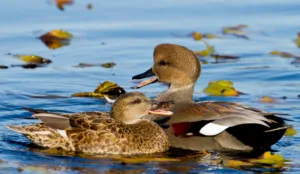
Known as a “dabbling duck”, the gadwall forages mainly while swimming. They mostly feed on aquatic plants that they can snatch on the water’s surface. Their nests are usually near the water, on dry land, and are surrounded by dense weeds.
While other ducks may show off patches of color, gadwalls prefer a more subdued look. Gadwalls are intricately patterned with gray, brown, and black feathers that make it easier to blend in with their surroundings.
RELATED: Birdwatching in winter? Yes! Here are 10 favorite places in Michigan
Buffleheads

Named after their odd, puffy, round-shaped “buffalo heads,” the bufflehead can be found swimming in pairs or small groups on lakes, slow-moving rivers, and ponds around Michigan. These small but mighty ducks will dive underwater—sometimes simultaneously—to feast on aquatic insects, mollusks, and plant material.
The ducks usually build nests in holes made by woodpeckers, but they’re happy to call any open tree cavity home.
Redheads

While ducks often lay eggs in the nests of others, the redhead takes invading personal space to another level. These ducks will regularly parasitize—or take over—each other’s nests, which can be found in dense marshes. However, they’ll also invade the nests of at least 10 other duck species—including the gadwall. Awkward.
Male redheads can be spotted by their cinnamon-brown colored heads. Redheads like to deep dive into a body of water to eat aquatic plants and insects.
To learn more about these winter waterfowl and other Michigan birds, check out the MI Birds program.