By Bauyrzhan Zhaxylykov, Capital News Service
LANSING — Surrounded by busy roads, neighborhoods and businesses, Ken-O-Sha Park doesn’t look like one of Michigan’s most valuable forests.
But a new study by researchers with Calvin University’s Emma Cole Grand Rapids Flora Project found the 100-acre park in Grand Rapids is home to one of the state’s highest-quality remaining forests.
The park takes its name from the Ottawa word “Ken-O-Sha,” meaning “Water of the Walleye,” the historic name for Plaster Creek.
Researchers documented 322 plant species, nearly 80% of them native, and found the park’s Floristic Quality Index was 70.1, well above the level considered significant statewide.
“It’s a forest that looks pretty much like it did before white people moved into the state,” said David Warners, a professor of biology and director of Plaster Creek Stewards at Calvin University.
Warners was a co-author of the study.
“There are very few places like that left in the state anymore,” he added.
Warners said the Floristic Quality Index measures how much of a place’s original natural habitat remains.
In Michigan, a score above 50 is considered significant statewide.
The study focused on the 2024 growing season and drew on earlier plant surveys from 2012, 2015 and 2022.
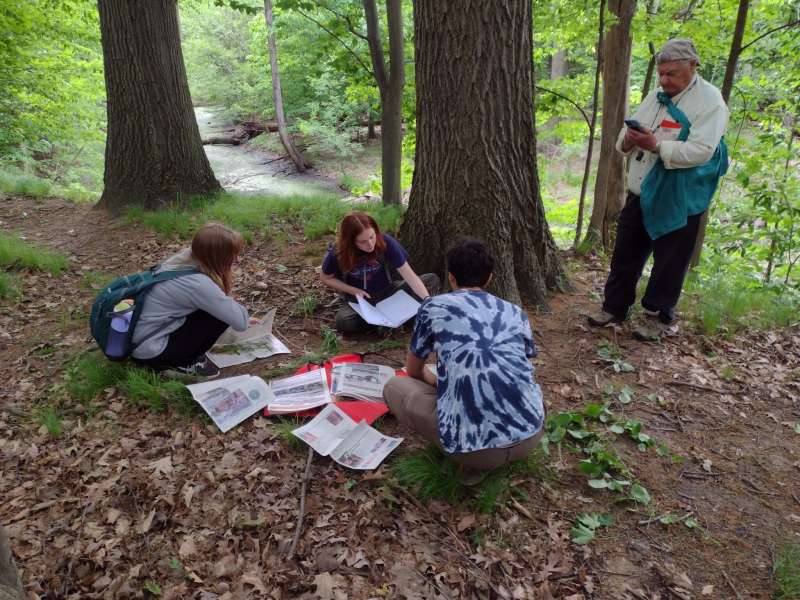
Warners said the team surveyed the park using a method called a “meander search” – walking through different habitats and paying close attention to areas with the greatest plant diversity.
“When we notice plants, we try to document every plant that is in flower or fruit,” he said.
The park’s value goes beyond plant diversity.
The study found several trees estimated to be more than 200 years old and five state-listed plant species, including two considered threatened in Michigan.
Melanie Manion, the conservation manager with Friends of Grand Rapids Parks, said biodiversity benefits more than plants.
“Our parks are little oases for migratory birds,” Manion said.
“In order to really help those birds, you have to have high biodiversity of native plants because native plants are essential for insects, which are what feed the birds.”
Several factors helped preserve the forest over the years.
While its wetlands and steep ravines made much of the land difficult to develop, researchers say local schoolchildren played a key role in preserving it.
In the 1960s, they convinced city leaders to protect the forest instead of selling it to a developer.
“The students all wrote letters to the mayor of Grand Rapids,” Warners said.
“The mayor invited them to a city planning meeting, and the students were able to speak on behalf of the forest.”
That protection continued for decades. Manion said community members had been removing invasive plants long before organized conservation efforts began.
“I think volunteers have been out there maintaining it without having an official organized group like we are now,” Manion said.
“Without those invasives, it has kept its biodiversity, which is amazing.”
Despite those efforts, invasive species remain the biggest threat to the park. Warners said many spread into the forest from nearby neighborhoods, often through yard waste dumped along the park’s edges.
The study, which was published in the academic journal Rhodora, is already being put to use.
Manion said it helped identify invasive species that need immediate attention, including lesser celandine, which is spreading in some parts of the park and threatening native wildflowers.
She said the report has helped prioritize where restoration work should begin, allowing volunteers to remove invasive plants and better protect native species.
The study is part of a broader effort to inventory and restore natural areas in Grand Rapids parks.
Researchers from Calvin are working with Friends of Grand Rapids Parks and the US Forest Service to guide future conservation efforts.
Manion said the goal is to remove invasive plants, restore native species and protect the park’s biodiversity.
“That restoration work has already begun, and hopefully will accelerate in future years,” Manion said.
Bauyrzhan Zhaxylykov writes for Great Lakes Echo.