Over 1.3 million Michiganders have student loan debt. As of July 1, they also have fewer repayment options, as do first-time student loan applicants for the 2026-27 academic year.
More than 1.5 million Michigan households rely on food assistance. In the last year, one in 10 have lost those benefits.
Also since then, hospitals serving one out of every six rural Michiganders are facing closure and health premiums across the state have jumped by as much as 28%.
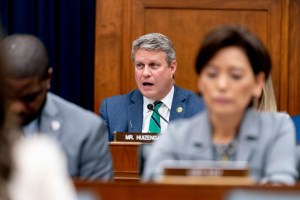
These are direct results of President Trump’s One Big Beautiful Bill Act (OBBBA), which passed into law on July 4, 2025. Every Republican US Representative for Michigan supported the OBBBA and voted it into law, including Bill Huizenga (R-4th Congressional District).
Their votes came after Gov. Gretchen Whitmer received over 15,000 letters from Michiganders explaining how the bill would devastate their lives.
“My office shared all these stories with members of our Congressional delegation, including Representatives John James, Tom Barrett, and Bill Huizenga,” Whitmer said in a statement. “Those representatives voted against their constituents, leaving them with higher costs and without the healthcare they need.”
However, Huizenga’s support for the OBBBA has had one notable local beneficiary: himself. Since it passed into law, Huizenga’s worth has soared even as he continues to request zero dollars in earmarked funding for improvement projects in his community—a reflection of his last 15 years in office.
OBBBA food aid cuts devastate Michigan families
The OBBBA has rolled out in phases since becoming law and will continue to do so through 2029.
On November 1, 2025, food stamp restrictions were enacted, affecting millions of Americans receiving food assistance under the Supplementary Nutritional Assistance Program (SNAP). Now, to continue qualifying for SNAP benefits, more adults must prove they’re working, in school, or volunteering. Nearly 160,000 Michiganders have since lost SNAP benefits.
Again, Huizenga’s support for the OBBBA came after—and despite—warnings from colleagues. Sen. Elissa Slotkin (D-Mich.) co-signed an open letter three months before the bill’s signing, decrying the cuts it would make and the harm it would do to Americans across the nation.
“Congress should not give tax breaks to the wealthiest Americans by taking away food assistance from millions of Americans,” the letter read. “SNAP supports 42 million Americans, including nearly 8 million seniors, 16 million children, 4 million people with disabilities, and 1.2 million veterans, in putting food on their tables each month.
“Cuts of this magnitude—or anything close to it—would be devastating to American families in every state.”
Similar work requirements will begin for Medicaid next year.
OBBBA ‘plays politics with people’s lives’ as Huizenga benefits
Since July 1, Michiganders with student loan debt can no longer enroll in a repayment plan known as Parent PLUS, which is designed to help borrowers stay afloat. As reported by Detroit Free Press, “Until now, Parent PLUS loan borrowers have been able to consolidate and enroll in the only income-driven repayment plan, which offers repayments based on the borrower’s income with a monthly cap of 20% of discretionary income.”
In other words, eligible borrowers couldn’t be asked to repay more than they could handle every month.
Until now.
President Biden’s Saving on a Valuable Education (SAVE) repayment plan also ended on July 1, thanks to Huizenga and the OBBBA. Americans enrolled in the SAVE plan have 90 days to enroll in other plans. Without the SAVE plan
The OBBBA also left out provisions extending the Affordable Care Act health care subsidies, allowing them to expire at the end of 2025. Since the expiration of those subsidies, Michigan healthcare premiums have shot up by as much as 28%. Healthcare is becoming so expensive in the Great Lakes State that an estimated 392,000 Michiganders will lose the ability to afford it this year.
“It’s time to stop playing politics with people’s lives,” Whitmer said.
Michigan Republicans’ votes for the OBBBA are also putting rural Americans in a bind when it comes to healthcare needs. Due to the bill’s drastic cuts to Medicare and Medicaid, the hospitals that serve one out of every six rural Michiganders are at risk of closing their doors.
The OBBBA has slashed government spending Michiganders need for food security, academic pursuits, and healthcare. In addition to supporting that spending, Huizenga has tightened Michigan’s belt more directly.
In 2021, Congress revived congressional earmarks, or federal funding state legislators can request for community projects that would help their constituents. Projects like these include housing rehabilitation, upgrading water treatment facilities, or grants to build or repair community and recreation centers. Since then, Huizenga is the only Michigan congressional delegate not to request any such funds for his community.
He has different opinions about helping himself. The tax law in the OBBBA that Huizenga voted for earned him $50,000 in tax breaks this year. Additionally, in February, The Michigan Independent reported that Huizenga has tripled his total assets and increased his net worth five times over compared to when he took office in 2011.
Huizenga also co-owns and operates Huizenga Gravel Company, Inc., which is set to receive financial incentives due to the OBBBA. C-Corporations in manufacturing and mining, like Huizenga Gravel Company, are receiving some of the largest corporate tax reductions in the bill. The bill also allows immediate, 100% tax write-offs for business expenses like heavy machinery and vehicles. Previously, write-offs would be available incrementally over several years.
A year after the One Big Beautiful Bill Act, Huizenga seems to be the only one receiving a big, beautiful payday.
See More: These Michigan lawmakers get a tax cut. You get the bill.