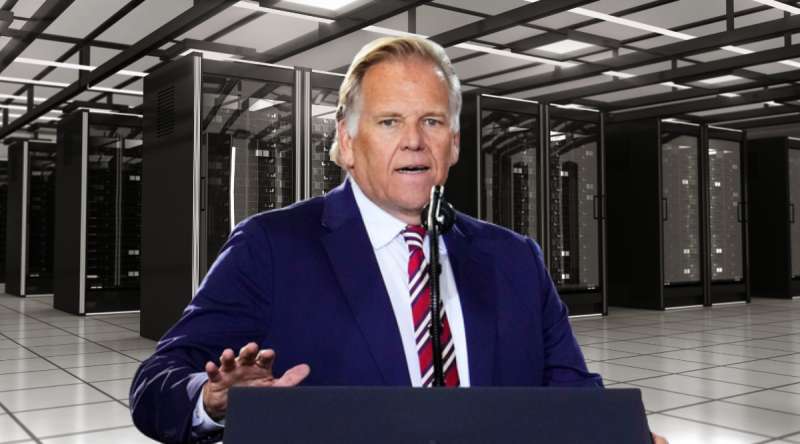
While the Lorax speaks for the trees, some Michiganders believe that Mike Rogers speaks for the wealthy elite.
Throughout his political career, the Republican US Senate hopeful has received millions of dollars in contributions to his campaigns and political action committees from wealthy elitists like former US Secretary of Education Betsy DeVos and Texas oil tycoon and Christian Nationalist Tim Dunn, as well as private-sector organizations in the pharmaceutical and oil and gas industries.
Related: Did Mike Rogers forget that Betsy DeVos is one of his campaign’s biggest donors?
In turn, Rogers has voted against opportunities to lower prescription drug costs for Michigan seniors and federal environmental protections designed to keep the rest of Michigan, including the state’s natural resources, healthy.
Rogers has also received over $90,000 in corporate political action committee (PAC) contributions from AT&T, Verizon, and CTIA—the trade association representing wireless communications in the US—throughout his various campaigns, including his current bid for the US Senate.
From 2011 to 2015, while receiving these contributions and representing Michigan’s eighth district in Congress, Rogers served as chairman of the House Intelligence Committee, which oversees several federal agencies like the Department of Justice, the CIA, and the FBI.
During this time, Rogers introduced the Cyber Intelligence Sharing and Protection Act (CISPA). This bill proposed that telecom companies and internet service providers be legally allowed to hand over large amounts of private user data, including personal customer information, to the federal government without judicial oversight.
While CISPA passed the US House, it stalled in the Senate amid backlash from various civil liberties groups and others who opposed it, citing concerns that the bill’s language was too vague and would allow the government to access vast quantities of personal information without a warrant. However, that didn’t stop Rogers from reintroducing the bill, only to face the same resistance that had stalled the proposed legislation in the Senate a second time months later.
After leaving Congress in 2015, Rogers continued to benefit financially from his connections within the technology industry. While he has repeatedly dodged questions about his work as chief security advisor at AT&T, public records show he’s spent years advising, investing, and serving on the boards of several technology companies that do business with the federal government.
Rogers has also invested in the artificial intelligence (AI) and data center industry.
According to his most recent financial disclosure, Rogers holds between $1.7 million and $2.6 million in companies that stand to benefit from tech-friendly policies and permitting processes for AI-related developments, including Trump’s national policy framework for AI (which Rogers previously endorsed). Rogers also has hundreds of thousands of dollars in the Blackstone Real Estate Income Trust, the same company that has been rapidly investing in data centers across the Great Lakes State—including a 1.6 million-square-foot data center they’re currently helping develop near Ann Arbor.
Earlier this year, Rogers said that it should be up to local communities to decide whether or not to build data centers, and that data center tax revenue should be used to help pay down property taxes for the community. However, Rogers has recently backtracked and is now claiming he supports a one-year moratorium on data center construction in Michigan.
Watch: Mike Rogers has millions riding on data centers
Rogers is slated to take on Democrat Abdul El-Sayed during the general election on Nov. 3. To check your voter registration, see your ballot, or find your polling location, go to gandernewsroom.com/voter-registration.
Related: Michigan’s US Senate candidates weigh in on data centers and AI