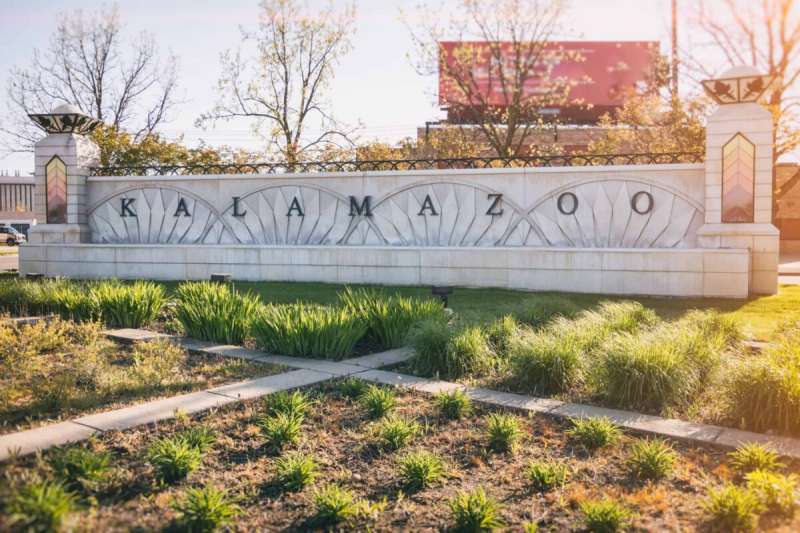
With a history of settlers dating back over 11,000 years, Kalamazoo and its river have a rich history that may have influenced its name.
If you’re a native Michigander, or even just a visitor, you may know Kalamazoo for its famous Air Zoo (fun fact: the world’s largest indoor, hand-painted mural just so happens to be located in the Air Zoo, and it’s definitely worth a visit) or for being the birthplace of Gibson Guitars, but do you know how Kalamazoo came to be Kalamazoo?
Like many uniquely named Michigan cities, Kalamazoo has a few interesting stories and lore about how it earned its moniker. Here’s a closer look at the theories and history behind Kalamazoo’s name.
The Kalamazoo area stretches back over 11,000 years
First things first, to understand how Kalamazoo got its name, it might help to understand its history. According to Western Michigan University, which led teams of anthropologists to study along the Kalamazoo River, humans have been present near the river’s basin for over 11,000 years. The anthropologists found artifacts that represented every prehistoric era, pointing to the importance of the river to early humans.
The school’s history of the Kalamazoo River noted that while the soil at that time did not support permanent settlers, the waters were still crucial for seasonal food sources like hunting, fishing, and maple sugar production. By the early 1300s, however, Native Americans did initiate farming near the river.
The Kalamazoo River area remained largely uninhabited by non-Native Americans, but sometime in the 1700s, it began to be inhabited by fur traders. By the 1800s, fur traders, farmers, and businessmen shipping goods down the river were all predominant enterprises that led to the creation of several towns, including Kalamazoo, along the river.
A name shrouded in mystery
The Kalamazoo Public Library explains that even with a rich indigenous history and despite being one of Michigan’s most well-known areas, no one knows for sure how Kalamazoo got its name.
One of the first similar versions of today’s spelling of the area first appeared in an 1823 atlas, which dubbed the area, then settled only by indigenous peoples, “Kikalemazo.” Discover Kalamazoo notes that the most widely accepted theory of how the name, even its early form, originated is from a Potawatomi legend about a warrior named Fleet Foot who was tasked with running to the river from his settlement and back, all before the water in a pot boiled away. If he was successful in his mission, he ‘won’ the prize of a bride.
The Native American game was immortalized in a mural by a Hungarian-American artist and is associated with translations involving boiling water or a pot of boiling water. A version of Kalamazoo, “kikalamezo,” roughly translates to “boiling water” and “place where the water boils,” which is where the name is thought to be connected to the story. (Also, in all my research, we couldn’t actually find if Fleet Foot made it back in time—curious minds want to know!)

Other theories about the name “Kalamazoo”
While the boiling water warrior story is one of the most popular theories about how Kalamazoo was named, it’s not the only one. Discover Kalamazoo provides additional speculation that the area got its name from other tribal variations:
- It could derive from the Potawatomi word “negikanamazo,” which translates to “otter trail,” referencing the wildlife that most likely inhabited the river. The name can also translate to “stones like otters,” which could refer to the river’s appearance.
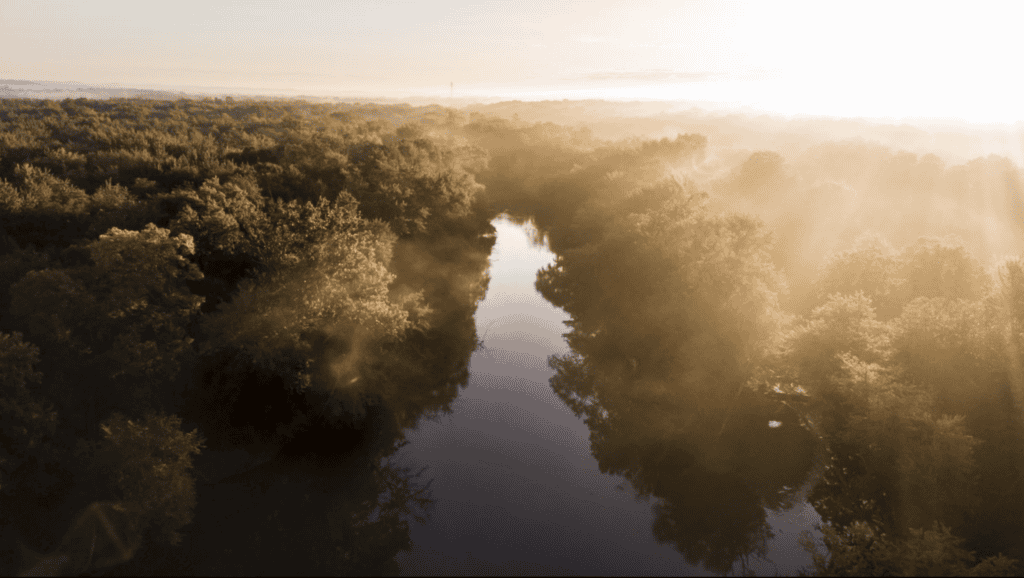
- The Ojibwe tribe refers to Kalamazoo as “Giikanaamozoog,” which translates to “they have been smoked/cured.” Some say this name was given because the Kalamazoo River appears dark and smoky in color.
- Similarly smoky, the word ‘Kikanamsoso’ in Ojibwe means “it smokes” or “he is troubled with smoke,” which references a legend about a Native American who survived a harrowing brush with a forest fire.
- Another Ojibwe name, “Kikikamagad,” means “it goes fast,” which some say could describe the river’s speed.
- Kikalâmoza may be one of the closest variations. The ancient Ojibwe word means “he is inconvenienced by smoke in his lodge.”
- Pure Michigan also says there are some theories that the name translates to a “mirage” or “reflecting river,” and may even reference the view of the river from the hills above.

With all the variations of today’s version of Kalamazoo, it’s also interesting that the first white-settled city was not known as Kalamazoo. The white-settled version of the town was originally called “The Village of Bronson” by settler Titus Bronson in 1831. However, Bronson was not a popular fella because he was vehemently opposed to alcohol, tobacco, dancing, and playing cards, so the townspeople ran him (and accused him of stealing a cherry tree from a neighbor, which was very un-George Washington of him) and renamed the town Kalamazoo in 1836.
The name (if not Bronson) stuck, but in the end, no one may ever fully know how and why Kalamazoo got its name. Most experts agree that the modern-day moniker is most likely a version that’s been changed from its original indigenous roots. So even if we knew the original name, we may not recognize it with its modern-day spelling or pronunciation.