By Kim Kozlowski/Bridge Michigan
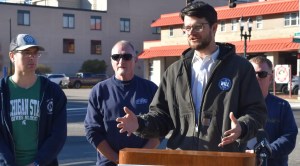
Ask any history teacher in Michigan how their lessons could be better and they will tell you that they need to incorporate more current events into the curriculum, East Kentwood High School history teacher Matt Vreisman insists.
State standards require social studies teachers to cover pre-Columbian history to the present, and incorporating modern historical events—such as the Jan. 6, 2021 insurrection—is a challenge, adds Whitehall High School history teacher Brian Milliron.
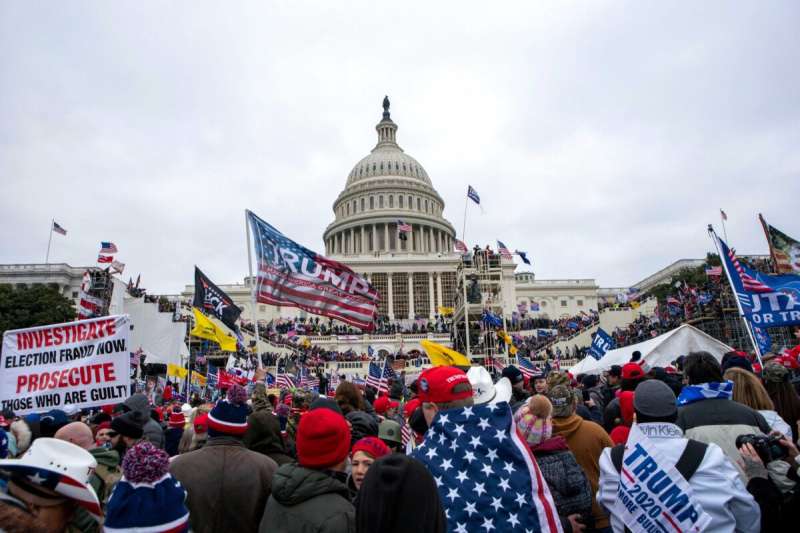
Though Tuesday is the five-year anniversary of the event, Vriesman, Milliron and other teachers found a way to weave the insurrection into their advanced placement history classes months ago when they taught about the American Revolution, the establishment of the Constitution and the contentious presidential election in 1800.
John Adams, the nation’s second president and a Federalist, was the incumbent candidate but lost to Thomas Jefferson, the nation’s third president and the Democratic-Republican Party candidate. It was the nation’s first exchange of presidential power between rival political parties, and it was peaceful, and that established a precedent for a peaceful change of power every election since.
It’s during that lesson that Vreisman and Milliron teach their students about the anomaly after the 2020 election, when then-incumbent Republican President Donald Trump lost to Democrat Joe Biden and violence erupted at the US Capitol building on Jan. 6, 2021, as members of Congress met to certify the election results.
Milliron asks junior and senior students in his class what they remember and then fills in the blanks about what they don’t know.
“By connecting the present day event that kids literally saw to the stuff in their curriculum it helps them understand why we have a peaceful transfer of power and the negative effects when we don’t,” said Milliron.
Vriesman, who was the 2023 National History Teacher of the Year, also asks his students what they know about Jan. 6, shows them a PBS documentary about the day, talks about democracies that have failed throughout history and asks them to write a reflection about why a peaceful transition is important to a democracy.
“Connecting historical content to current events gives students authentic practice evaluating evidence, recognizing different viewpoints, and disagreeing respectfully about the most relevant issues of today,” said Vriesman.
He regularly weaves in major events that occurred during his students’ lifetimes that connect to different parts of American history.
“Our goal as social studies is to create informed citizens who are ready to engage in matters of substance. And current events hook students so much more.”
‘A neutral stance’
Michigan’s most recent curriculum standards, issued in 2019-20, became less prescriptive on the topics teachers are expected to teach so it’s likely many history and government teachers are weaving Jan. 6 into their lessons, said Nick Orlowski, executive director of the Michigan Council for History Education. At the same time, standards require teachers to cover wide time frames of history, so there is a lot to cover.
The American History Association recently issued a report that touched on how politics affects history instruction, Orlowski said.
“It showed that teachers are teaching from a neutral stance,” said Orlowski, adding that many teachers build inquiry into lessons — where students are presented with a historical question and do the work of historians. “They gather sources on the topic to reach their own conclusion. That seems to be how teachers are teaching. They are not bringing their own politics into the classroom.”
Vriesman is working to help other teachers have tools to incorporate contemporary history into their lesson plans. In November, he launched a nonprofit, Empowering Histories, which provides free, inquiry-based history lessons to teachers across the country.
This is important, Vriesman said, because scholarship settled long ago about how race, racism and slavery shaped American institutions is now being framed as “opinions” or “one side of the story.” He noted that 20 states have recently passed laws restricting classroom discussions of race or history and most teachers said in a poll that political pressures lead them to modify lessons.
“Historians and the public are not having the same conversation,” said Vriesman. “Within the academic field, certain truths about the past are not up for debate. But in many communities, those same truths are framed as controversial. That disconnect has real consequences in classrooms. It leaves teachers without support, and students without the tools they need to analyze evidence, evaluate claims, and make informed contributions to our democracy.”
___
This story was originally published by Bridge Michigan and distributed through a partnership with The Associated Press.