The story of Belle Isle.
Just a short journey away from the hustle and bustle of Michigan’s largest and most populated city is an island brimming with activity. But it took quite an effort to transform this area into what it is today—echoing the grandeur of New York’s Central Park. And there’s actually an interesting connection there. Let’s dive in.
From Hog Island to Belle Isle
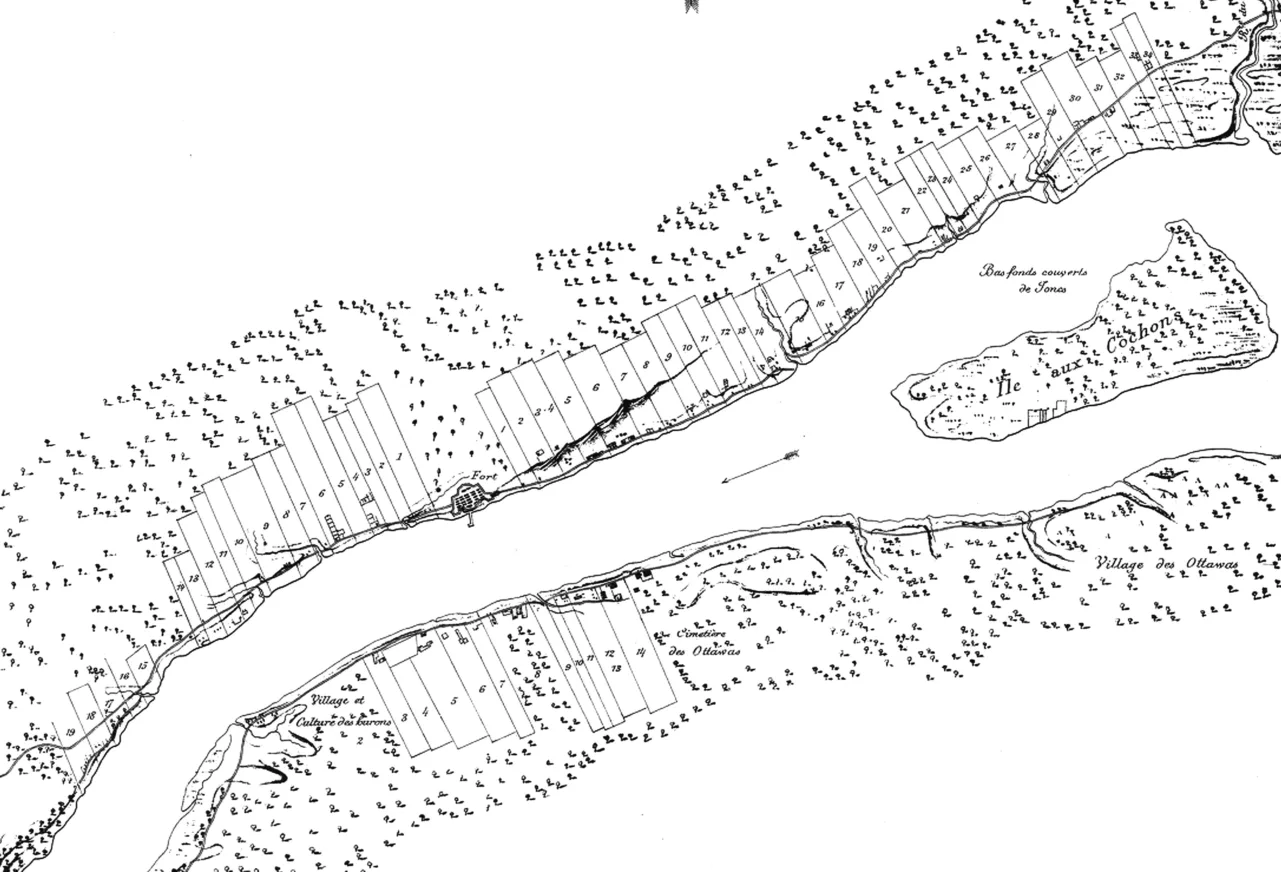
The French were the first European settlers to call the Detroit area home. In 1701, they established Fort Detroit after noting that the north bank of the Detroit River would be ideal for a trading post.
Nearby, on the Detroit River itself, was an island where French colonists also settled. They used the space for their livestock and named it Île aux Cochons—literally, “Hog Island.”
Over the decades, the area would see dramatic changes in ownership. Following the Seven Years’ War in the mid-18th century, Great Britain took ownership of Detroit from the French. Just before the turn of the century, Great Britain passed Detroit over to the United States in 1796 as part of a deal to avoid going to war (as we know from the War of 1812, that agreement wouldn’t last very long).
The island became the estate of American General Alexander Macomb, Jr. following the War of 1812, until five years later when the island was once again purchased. This time, by Barnabas Campau—a local merchant and fur trader.
The island would receive its current name about three decades later. In 1845, a picnic was held on the island where attendees elected to rename it in honor of Isabelle Cass—the daughter of Governor Lewis Cass. Retaining the French language origins of its previous name, Belle Isle (or Belle Île in French) gives the destination a much more elegant meaning: “beautiful island.”
During a period of rapid industrialization in the latter 19th century, officials in Detroit were looking for a place where residents could relax, and they found that in Belle Isle. In 1879, the City of Detroit purchased the island from the Campau family—and opened it to the public the following year.
Designing the island

With the purchase of Belle Isle complete, the city now had larger ambitions—turning the space into a public park. To complete the task, the city looked to Frederick Law Olmsted—a key figure in post-Civil War American architecture who also happened to have designed Central Park in New York City.
Olmsted’s design aimed to allow people to access the island and gather at its public facilities without compromising its natural state. It included a ferry dock at one end with all the public facilities. To deal with flooding, Olmsted also proposed an intricate system of pipes and steam-operated pumps.

Ultimately, Olmsted’s full design vision was not completed due to its complexity and disagreements with city officials. According to the National Park Service, some elements from his design are still seen in the final version of the park, though, including in its canal system and its design principle of containing three zones: A formal zone meant for social gatherings, an active zone with attractions and space for exercise, and a natural zone where nature is preserved.
At 982-acres, Belle Isle became the largest city-owned island park in the United States—surpassing even the 843-acre Central Park.
Before 1887, when the first bridge connecting Belle Isle to Detroit was built, the only way to get to the island was by boat. This bridge lasted until 1915, when it was destroyed in a fire. After a temporary bridge serviced the island for several years, the city finished the MacArthur Bridge, which is still in operation today.
A city escape
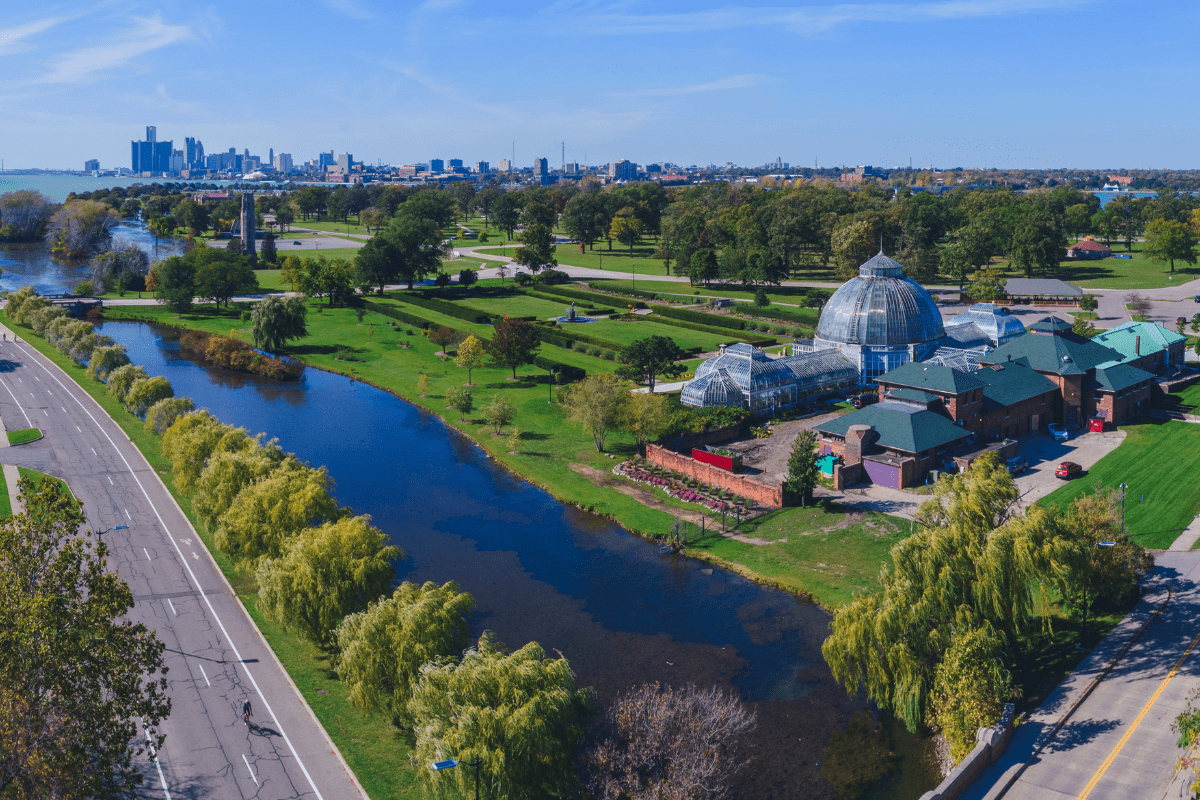
The 1900s onward have been a time of incredible growth on the island, with a great deal of attractions being constructed.
Nature lovers have flocked there to visit the Belle Isle Aquarium, Anna Scripps Whitcomb Conservatory, and Belle Isle Nature Center—among other offerings.
The island is one of the best spots in the state for cycling, fishing, swimming, and other outdoor activities.
Being in the Motor City, it’s fitting that Belle Isle has been the site of the Detroit Grand Prix.
One of the island’s most famous features is the James Scott Memorial Fountain. As the story goes, James Scott was a rich, unlikable man described as a “vindictive, scurrilous misanthrope.” When he died heirless in 1910, Scott left his estate to the city of Detroit—on the condition that they build a fountain in his name. While community leaders argued with the city over whether the fountain should be built, the estate’s value continued growing. By the time the fountain was built, it was worth more than $1 million.
In 2013, as Detroit faced serious financial woes, Belle Isle began falling into a state of disrepair. After the city declared bankruptcy, state officials proposed turning Belle Isle into a state park. On October 1, 2013, then-Governor Rick Snyder signed an agreement to lease Belle Isle from the city for 30 years. One condition that was part of the deal? The state would make $20 million in improvements to the park over three years. Since February 10, 2014, Belle Isle has been formally recognized as a state park.
 |
|
That One Time in Michigan is a special edition of our weekly newsletter. Know a story we should explore or want to send me a note about the newsletter? You can write to me by clicking here! |