In the coming weeks, college students will pack up their lives and move into dorm rooms, apartments, and houses.
If you’re one of those students, you already know the basics: You’ll need bedding, shower shoes, approximately 30 damage-free Command strips, and a laundry bag that can handle serious overflow.
But after years of working as an OB-GYN physician assistant—and frequently caring for adolescents and young adults—I recommend a few additions to your college packing list. Let’s talk about what belongs in your back-to-school medicine kit.
Start with the basics:
- Tylenol for headaches, body aches, and fevers.
- Advil for pain, inflammation, and swelling—like menstrual cramps or a twisted ankle.
- Bandaids and Polysporin for minor cuts and scrapes.
- A reusable cold pack for injuries.
- A heating pad for menstrual cramps or muscle aches.
Then, think about any prescription medications you take. Write down the name, dosage, and frequency on your phone. Know how many refills you have left and make a plan for getting more.
Do you need an appointment before you leave your hometown? Can your prescription be transferred to a pharmacy near campus? Will your insurance cover a 90-day supply instead of one month at a time? These questions are much easier to answer now than when you have two pills left and your prescriber is unavailable for the weekend.
While you’re at it, figure out where the nearest campus health center, urgent care, and pharmacy are before you need them. Add that information to the note on your phone.
Now, let’s talk about the other items I stand 10 toes down on—the lesser-known supplies every college student should have in their medicine kit.
Narcan (naloxone)
After seeing the viral video of an off-duty EMT using Narcan to revive a man during the Knicks championship parade, Narcan became an absolute must for me.
Narcan is a brand name for naloxone, which can rapidly reverse an opioid overdose. You do not need to use opioids or even know that someone else does to keep it on hand. But you just might be the person who has it when someone is in a life-or-death crisis.
You can learn how to administer it in about 30 seconds. Michigan residents can also find out how to have free Narcan mailed to them or locate free naloxone in newspaper-style distribution boxes throughout the state
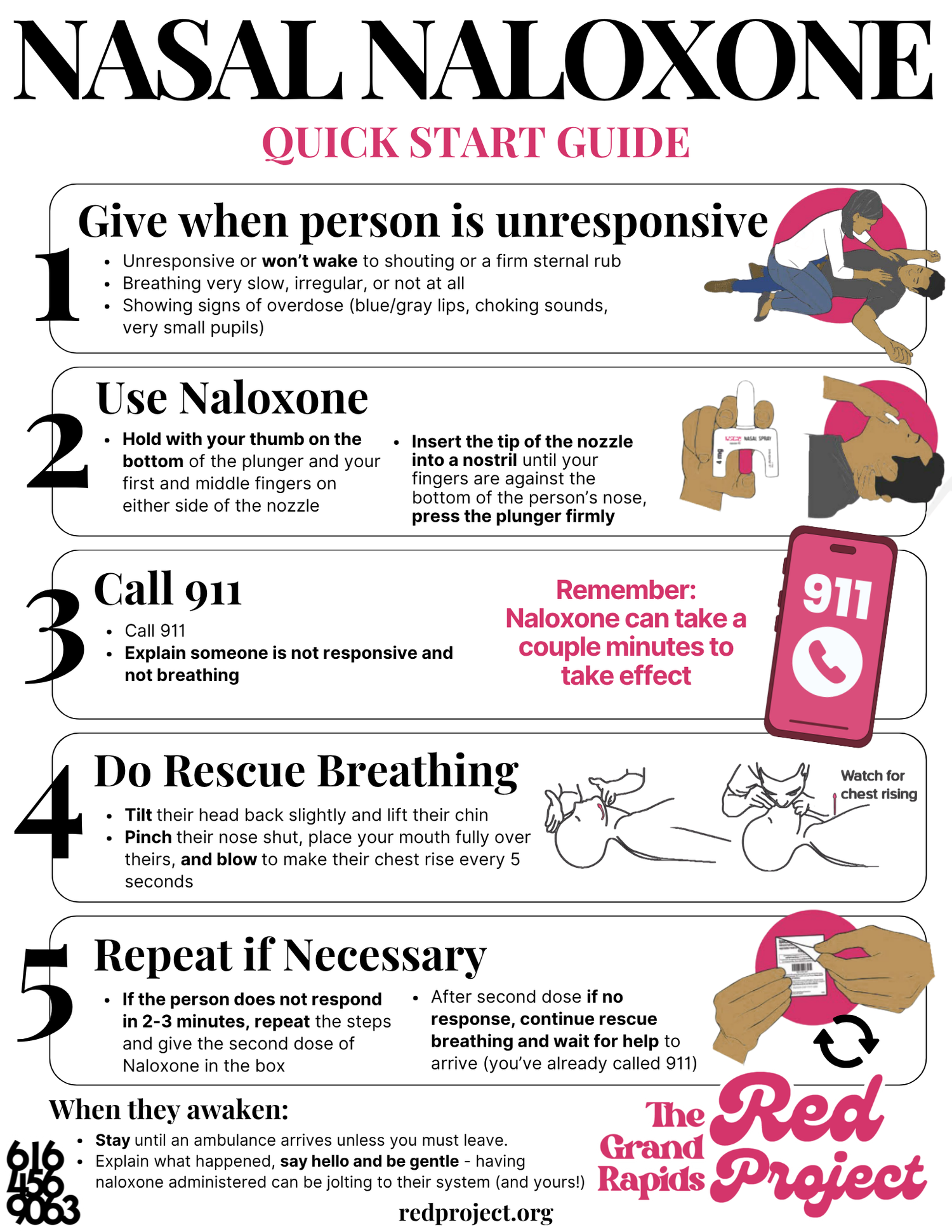
Source: Grand Rapids Red Project, redproject.org/naloxone-boxes
Plan B (emergency contraception)
Regardless of your gender, Plan B is a great thing to have in your kit.
Plan B and its generic equivalents (such as MyWay or levonorgestrel) are emergency contraception. They can reduce the chance of pregnancy after unprotected sex or when birth control fails—and they work best when taken as soon as possible.
You do not need to be a woman to buy it, carry it, or keep it handy. Maybe you’ll need it for a partner, a friend, or a roommate. I believe that reproductive healthcare should not solely be the responsibility of the person who can become pregnant.
In Michigan, you can buy Plan B over the counter at almost any local pharmacy or grocery store without a prescription, age restriction, or ID requirement. You can also order it online for same-day home delivery on the Plan B website, and other sites like Wisp will send it in packs of six. Costco pharmacies often carry affordable generic emergency contraception, and you do not need a Costco membership to use the pharmacy.
Generic alternatives include brands like Take Action, Aftera, and Econtra EZ.
Keep in mind that Plan B is most effective when taken as soon as possible—ideally within three days after unprotected sex.
Mifepristone and misoprostol
Did you know you can get abortion pills before you need them? It’s called advance provision. You can obtain mifepristone and misoprostol before potentially finding yourself in the midst of a stressful, possibly emotionally charged situation, trying to access medication abortion as quickly as possible.
Advance provision does not mean you expect to have an abortion, just as keeping a fire extinguisher in your kitchen does not mean you are planning a fire. It means you understand that when something time-sensitive happens, it helps to have a plan.
College may be the first time you are fully responsible for managing your own healthcare. That means knowing which medications you take, planning for refills, knowing where to get care, and being prepared to help yourself—or a friend—when something unexpected happens.
So pack the essentials you know you’ll need, but make room for a smart and useful medicine kit, too.