The general election will be held on Nov. 3, and we’re sure you’ve seen enough campaign ads on television to make sure you don’t forget it. But beyond the high-profile races between candidates of opposing political parties, nonpartisan issues are also on Michiganders’ ballots this year.
The nonpartisan section of the ballot is clearly labeled and separate from the partisan section, but voters may still have questions. Here’s what to know before Election Day rolls around.
What is the nonpartisan section of a ballot?
The nonpartisan section of a ballot features races wherein candidates don’t have particular political party designations. Mostly, these are candidates for judicial offices, such as the Michigan Supreme Court and local courts of appeals, circuit courts, district courts, probate courts, and school board members. Depending on your location, you may also see candidates for other local communities.
While parties are not defined, the nonpartisan section of a ballot can still be political in nature. Candidates’ professional backgrounds, endorsements, campaign positions, and prior public statements show voters what their overall beliefs and philosophies are, which can affect their official roles.
Preparing to vote
The Michigan Department of State has an exhaustive website of information to help you cast your vote. It’s called the Michigan Voter Information Center and it can tell you how to register to vote, where your polling place is, how to apply for an absentee ballot, and acceptable forms of identification. The site will even generate a sample ballot based on your location that shows exactly who and what will appear on the real ballot.
A sample ballot allows voters to research the candidates and issues that will be decided on Nov. 3. It may be the best resource for the nonpartisan section of the ballot, since those elections are rarely as publicized as major political races like governor or attorney general.
To research a candidate you may not know, you can look up their campaign pages and official statements, professional biographies, campaign-finance records, court records and opinions, and any times they’ve appeared in the news.
Always bring a valid form of ID to vote.
What to know as you vote
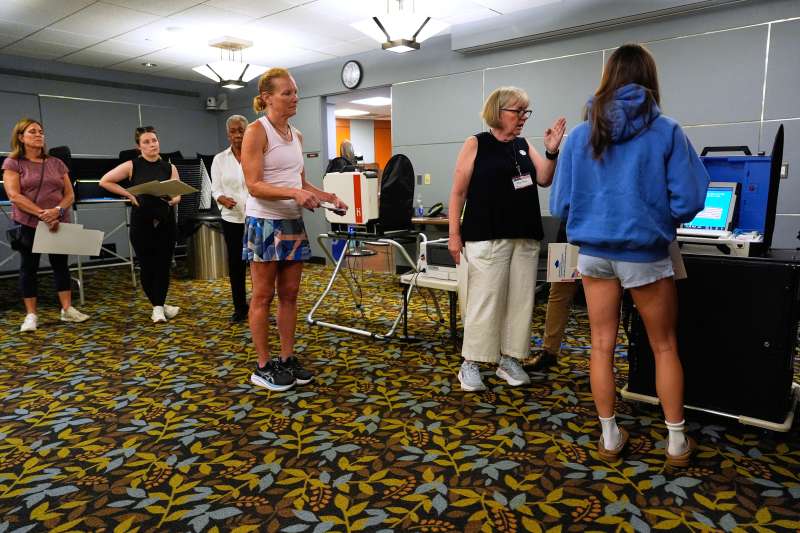
Since the nonpartisan section of the ballot is separate from the partisan section, it must be filled out even if you vote “straight-ticket.” Straight-ticket voting means you automatically choose one party’s entire slate of candidates with one mark on your ballot. The nonpartisan section is not included in a straight-ticket vote, so leaving that area blank will not count as any vote.
For some nonpartisan roles decided in the election, like supreme court justice or local school board member, you’ll see the phrase “Vote for not more than” followed by a number. This means you can vote for any number of candidates up to and including the number listed, but voting for more than that will invalidate your vote for that race. For example, the Detroit Community School District has more than 30 candidates listed for school board members and the ballot reads, “Vote for not more than 4.” Voters can pick zero, one, two, three, or four candidates, but if they add in a fifth or any more, their vote for school board members won’t count.
You also don’t need to fill in a vote if you feel insufficiently informed about certain races. Leaving a space blank will not invalidate the rest of your ballot.
If you make a mistake, return the ballot to the election official and obtain a new one instead of trying to fix the error yourself—yes, even if you make a mistake at the very bottom and you have to start over.
To write in a candidate who is not listed on the ballot, the Michigan Bureau of Elections says to “write or place the name of that candidate in the blank space provided and completely darken the voting target area.” It also specifies not writing in a candidate whose name already appears on that section of the ballot.
Review both sides of your ballet and confirm that you have filled out all sections before turning it in.
Important dates
· General election: Nov. 3
· Early voting: Oct. 24—Nov. 1
· Absentee ballots available: Sept. 24
Click here to check your voter registration and get ready to vote.