The cost of living and the need for good jobs will be top of mind as Michigan voters head to the polls next month. In West Michigan, where manufacturing jobs have taken major hits over the past decade, that’s especially important.
While Michigan as a whole is doing better than the national average when it comes to the jobless rate, and West Michigan is doing better than the state at large, the region relies heavily on manufacturing jobs—a sector that continues to take hits with national tariffs. That’s according to the 2026 Annual Planning Information and Workforce Analysis Reports by the Michigan Center for Data and Analytics.
About 22% of jobs in the region are in manufacturing, compared to the state rate of 15%. Even still, West Michigan has seen a slight improvement compared to the state at large with an employment increase of 1.4% for a six-year period from 2019 to 2025 compared to the state’s average of 1%.
Economics professor Paul Isely, who also serves as Associate Vice President for Academic Affairs at Michigan’s Grand Valley State University in Allendale, said tariffs have had a major impact on this sector, and the economy does best with political leaders who have a clear and consistent approach to fostering a healthy business environment.
“If (business owners) think that the game is going to completely change next year, it’s very hard for them to understand whether they should take a risk,” he said.
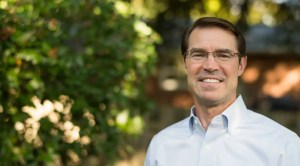
The ‘Gander spoke to State Sen. Sean McCann about his plans to help locals as he campaigns for a new position: US Congressman for Michigan’s 4th Congressional District.
“I think we have to start with undoing the damage that’s been done, and then we can get back to the basics that help us with economic development, which is investing in education, trying to cut red tape out of the way for people to be successful, and making sure that job opportunities are available for people,” McCann said.
McCann’s plans to support the workforce
As a state senator and vice chair of the Senate Appropriations Committee in Michigan, McCann has made efforts to invest in workforce development and skilled trades.
“We now, in Michigan, offer a free two-year community college opportunity to basically anyone and everyone, and that is what I’ve heard over decades from employers saying that they need to develop a workforce,” he said.
McCann has also supported collective bargaining rights for labor organizations, helping workers to get their fair share.
McCann criticized his opponent, Congressman Bill Huizenga (R-Holland), saying he would zero in on tax incentives for major corporations.
“The way the ‘One Big Bill’ set up tax incentives for large corporations is unnecessary and backwards,” McCann said.
In the meantime, McCann has criticized the Trump administration’s tariff policies and conflicts in the Middle East, which have affected both small businesses and the average consumer with increased costs on everyday goods, including fuel. Those policies are ones that McCann believes Huizenga supports.
“He’s just sort of, like, at least said that, you know, tariffs are appropriate and needed. And secondly, I haven’t really heard anything from him about this more recent specific tariff trade war with our closest neighbor and ally, Canada,” McCann said.
When it comes to creating jobs, McCann said the most important quality of a leader is consistency and a clear plan.
“The tariffs of the Trump administration that Congress and the congressman (Huizenga) have supported have deeply disrupted that predictability, that ability to know, sort of, what the future might hold, and that makes hiring decisions more difficult,” McCann said. “It makes investment decisions more difficult. It just basically makes everything harder to do. It shrinks profit margins. It drives up cost.”
When it comes to agriculture, McCann has pushed for the feds to pass the Farm Bill Reauthorization, which would develop that workforce with new training while prioritizing clean energy options.
McCann’s plans to lower costs
As he works to improve job prospects for Michiganders, McCann acknowledges that the cost of living remains high. To that end, he plans to work toward more affordable healthcare and lower utility costs—causes he’s championed as a state senator.
“I would hope that would help us get to a better place on healthcare costs and what could be done about that. I would hope that would get us to a better place on the tariffs, and I would hope that would get us to a place where this war gets concluded somehow in Iran,” he said.
McCann spoke about a voter he met in Battle Creek during a recent campaign stop, whose story about the increased costs has stuck with him.
“She had been on the Affordable Care Act tax credits, which Congressman Huizenga refused to renew, and her premiums went up 300 percent,” he said.
As a state senator for District 19, McCann helped seniors by finalizing a Lowering MI Cost Plan to overhaul the state’s retirement tax and pension benefits, giving retirees bigger tax refunds while withholding less income tax from their pensions. He also helped expand the Working Families Tax Credit, which increased the state’s match of the Federal Earned Income Tax Credit from 6% to 30%.
He’s made efforts locally to reduce utility costs for Michigan households as well and worked to make more families eligible for the Michigan Energy Assistance Program. This year, he co-sponsored a bill proposing a three-year freeze on utility bills. He’s also called on Trump to close the West Olive coal plant that he’s kept open, which McCann said is leading to increased utility costs.
When it comes to younger families, McCann was part of a group of state lawmakers that passed the MI Tri-Share Child Care program, which reduced child care costs for parents in the state by dividing the cost equally among parents, the state of Michigan and employers.
McCann has outlined his overall approach to cutting costs in Congress on his campaign site, listing 10 ways he plans to cut costs, from capping the price of insulin and investing in clean energy to providing better worker training in the age of artificial intelligence. A key factor in all of it, he said, is reigning in corporations and monopolies.
“For too long, politicians like Bill Huizenga have been focused on rigging the economy for corporate special interests, instead of helping hardworking families who want to achieve the American Dream,” McCann wrote on his website. “I’m running for Congress to lower costs for the regular people of Southwest Michigan so they can raise a family, find a good-paying job, buy a house, and retire with dignity.”