Here’s the deal: Michigan has more than 250 villages, and a village isn’t a city, it sits inside a township. That usually means if you live in one, you get taxed twice. Once by the village, once by the township. In exchange, the village handles things like your streets, your parks, and sometimes your water and sewer.
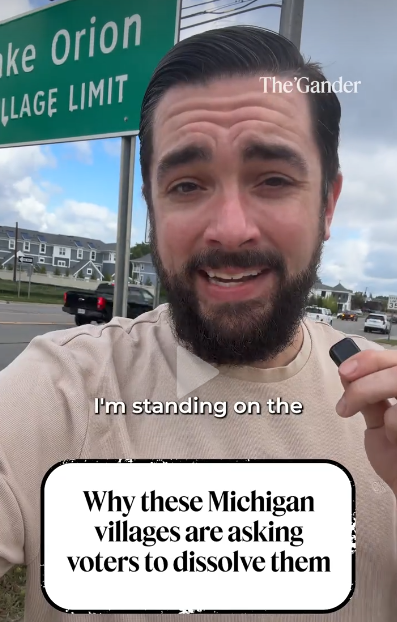
Dissolving a village, in theory, means all of those duties get handed over to the township and the county. Your address stays the same. The village government just goes away. In Lake Orion, a resident collected signatures from 15% of voters to force the question onto the ballot. The council voted 7-0 to let it go straight to a vote. It now needs a two-thirds majority vote of village residents in November to pass.
And Lake Orion isn’t alone. For the past 20 years, roughly one Michigan village every three years has put this question on the ballot. This year, there are four. Sand Lake voted in May. More than half of voters said yes, but it wasn’t enough. Fife Lake, up near Traverse City, voted in August and narrowly kept its village. And Baroda, down in Berrien County, votes the same day as Lake Orion.
It’s worth noting no Michigan Village has ever voted itself out of existence, though a council member in Lake Orion told The ’Gander he thinks this one might have a shot. Taxes are just too high in Lake Orion, and people here don’t feel like they’re getting much back for them. And the numbers back that up. A University of Michigan survey found just 39% of village leaders now say their community is in good financial health. Two years ago, it was 61%.
So what? Well, this is what running out of options looks like in small-town Michigan. Costs keep climbing. The tax base doesn’t. And the people holding it all together are running on fumes. Up in Pellston, for instance, the village president is 87 years old, makes $14,000 a year, and has been trying to retire since the 90s because nobody will replace him.
At the end of the day, Lake Orion probably won’t clear that two-thirds vote. Nobody ever has. But that’s not really the story here. The story is that in a state with 250-some villages, four of them asked this question in a single year. And the fact that they’re asking at all should be setting off alarms in Lansing.
See the full story in this edition of so what? Michigan.