
The Benton Harbor Water Filtration Plant can be seen through dune grass from Lake Michigan. (USA Today Network)
Benton Harbor residents’ class action lawsuit against the state of Michigan took a step forward last month when a state court sided with residents who sued over high lead levels in the city’s water.
The Michigan Court of Appeals on Jan. 29 denied the state’s appeal of a Court of Claims decision, allowing residents’ case to proceed toward trial.
The decision moves forward one of three cases residents are pursuing because of the lead crisis in Benton Harbor, where lead levels in water reached as high as 889 parts per billion at a time when the action level was 15 parts per billion.
“Our position is the state knew the whole time, the whole three years that the water was toxic,” said Annika K. Martin, an attorney representing the Benton Harbor claimants. “(The state knew) that filters weren’t working, that flushing wasn’t working and they never told people not to drink the water until basically Gov. Whitmer in October 2021 issued her state of emergency declaration.”
In addition to the state, residents have sued the city of Benton Harbor and two consulting firms that worked with the city’s water treatment plant.
Emma Kinnard, an 82-year-old Benton Harbor resident and at-large city commissioner, said lead in the city’s water left her skin with a reddish hue after bathing. She also lost hair and a test at the doctor’s office revealed there was lead in her bones, she said.
Kinnard first noticed something was wrong when her daughter turned on the bathtub after the pair spent a long day cleaning. The water was amber in color and sizzled like Alka-Seltzer as it poured from the tap, she said.
She collected samples and helped galvanize other community members into creating a community water council to help tackle the crisis. The response from city and state officials was lacking, Kinnard said. Benton Harbor residents were told about high lead levels in the city’s water and sometimes were told to boil the water, but they were not warned the water was dangerous to drink.
“I love my community, totally,” said Kinnard, one of the Benton Harbor residents pursuing the case against the state. “When there’s something that’s harmful going on, those that are in charge should be accountable to make sure, especially if it’s brought to their attention, that they get on it to make sure harm is not happening to the community. That’s my main concern.”
The City of Benton Harbor collected water samples from homes in 2018 that had levels of lead that were higher than state drinking water samples. The city’s lead levels exceeded state and federal water safety standards for three years into 2021.
The Benton Harbor residents and business owners who filed lawsuits against the state say the Michigan Department of Environment, Great Lakes and Energy and Michigan Department of Health and Human Services failed to respond appropriately to the city’s water crisis and “ultimately caused thousands of people to drink and use unsafe, lead-contaminated water” from a system that had higher lead readings than Flint’s, they wrote in their original complaint. Their lawsuits have been consolidated into the class-action suit.
EGLE spokesman Dale George referred comment to the Michigan Attorney General’s Office.
“The Court of Appeals majority declined to dismiss the case as untimely, but it did not decide or consider the merits of the case, which is still in only early stages,” Attorney General Press Secretary Danny Wimmer said in an email.
The state failed to fix its corrosion control methods even when it was evident those methods weren’t working, the residents alleged. They also say the state “carelessly misled the community about the severe health risks posed by Benton Harbor’s lead-contaminated water and what could be done to mitigate those risks.”
The city notified residents of the high lead levels repeatedly from 2018-2021, recommending they take steps such as use cold water, clean faucet aerators, flush pipes before drinking water or purchase bottled water. The city also hired a consulting company to address corrosion problems in its water system, court filings state.
In September 2021, residents petitioned the US Environmental Protection Agency stating the state and city’s response to the lead levels was “grossly inadequate,” according to court filings in their case against the state. They asked the federal agency to deliver emergency bottled water and study the effectiveness of water filters.
An email exchange between officials in Whitmer’s office and lobbyist Andy Leavitt in late September shows Leavitt said bottled water should be provided to residents for drinking and cooking because filters may be ineffective for such high lead levels. That warning was passed from the governor’s team to EGLE and DHHS. A few days later, the two departments announced they were making bottled water available to Benton Harbor residents “out of an abundance of caution,” according to the Jan. 29 Court of Appeals opinion.
The Court of Appeals decision means Benton Harbor residents will be able to get more information from the state about officials’ handling of the city’s lead levels, Martin said.
Benton Harbor residents suing the state say neither the city nor EGLE told them the water was unsafe for drinking or bathing until October, 2021, when Gov. Gretchen Whitmer issued an executive order declaring the water unsafe and authorizing a bottled water emergency.
Benton Harbor residents’ filed cases against EGLE and DHHS in 2021 and another group filed them in 2022. The cases were consolidated in 2022.
State attorneys argued the residents should have filed their claims earlier, given the media attention paid to the lead crisis and notifications from the city, court records show. They moved for summary disposition, trying to get the case resolved without moving forward. Residents countered that the harms they suffered as a result of the lead exposure compounded over time and because state officials downplayed the extent of the lead dangers.
The Court of Claims sided with the Benton Harbor residents, saying residents had presented evidence that raised questions that should be explored in future case proceedings. State attorneys appealed that decision, but two on a three-judge Court of Appeals panel also sided with residents on Jan. 29.
The case was before Michigan Court of Appeals judges, Daniel Korobkin, Allie Greenleaf Maldonado and Christopher Murray. Maldonado and Korobkin wrote the majority opinion Jan. 29. Murray wrote a partial dissent, contending the Court of Claims should have allowed part of the case to be dropped against the state because residents were warned of elevated lead levels in 2018.
Residents in December also secured a settlement in their case against the city of Benton Harbor. The city agreed to enter into a consent judgment for $25 million and will allow the plaintiffs to take over the city’s case against its insurance company. The residents will try to get the $25 million settlement from the insurance company.
“The city and its officials have denied any wrongdoing,” Benton Harbor Mayor Marcus Muhammad said in a December press release on Facebook.
This article originally appeared on The Detroit News: Lawsuit over lead-tainted water in Benton Harbor can proceed, court rules
Reporting by Carol Thompson, The Detroit News / The Detroit News
USA TODAY Network via Reuters Connect
Author

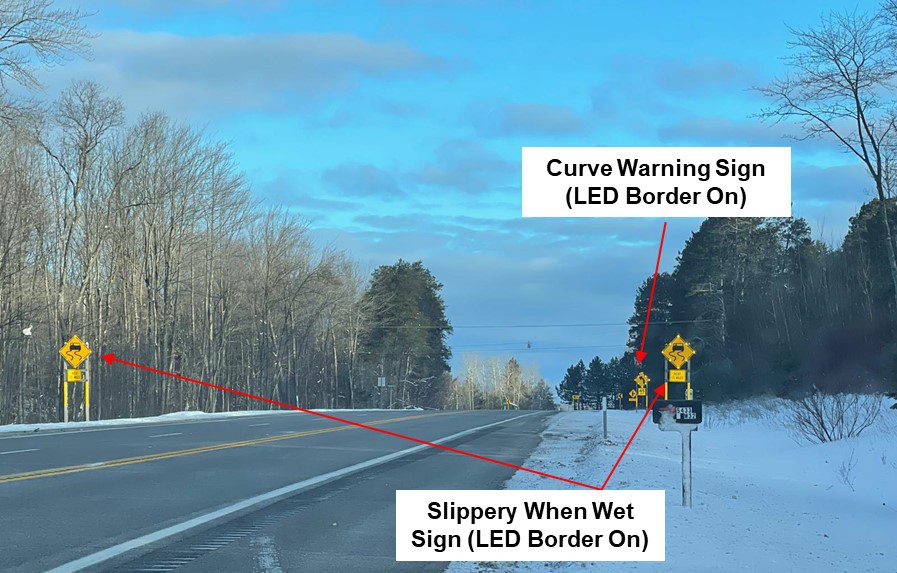
Winter makes curved roads dangerous; researchers seek solutions
By Eric Freedman, Capital News Service LANSING—Winter—skid season—is almost upon us, making curves slipperier and more dangerous. Now a new study...

Upper Peninsula communities join forces to push back against Big Tech
From Keweenaw to Sault Ste. Marie, communities across the Upper Peninsula are working together as AI data centers and bitcoin mining operations...

Michigan’s pothole predicament: waging war against the weather
By Clara Lincolnhol, Capital News Service LANSING — Michigan is anecdotally famous, or some might say infamous, for the poor quality of its roads....

New passenger train route between Holland and Detroit to be explored
LANSING – The Michigan Department of Transportation is developing a plan to potentially construct the state’s fourth passenger rail route. The...

Ann Arbor residents plan ballot initiative to dump DTE and shift city toward public power
BY KYLE DAVIDSON, MICHIGAN ADVANCE MICHIGAN—A group of Ann Arbor residents are taking the first steps toward removing DTE Energy as their electrical...