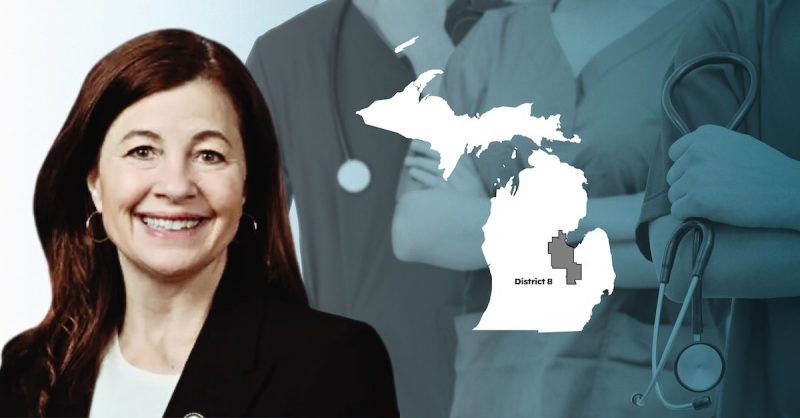
The district includes Flint and the Tri-Cities, and faces some of the most severe challenges in the state as a result of Trump’s tax bill. The congresswoman who represents the region said it’s the “last thing” her community needs.
President Donald Trump’s Republican-backed “One Big Beautiful Bill Act” was signed into law on the Fourth of July. It cuts taxes for billionaires and the wealthiest people in the US, and is projected to create a $1.1 billion annual budget shortfall for the state, with an estimated 700,000 Medicaid beneficiaries losing coverage across the Mitten.
Local health officials warned that Medicaid cuts could overwhelm rural hospitals and disrupt care for seniors and low-income families. Despite these concerns, every Republican from Michigan voted in support of the bill.
Meanwhile, Michigan Democrat Rep. Kristen McDonald Rivet—who represents Bay, Saginaw, and parts of Genesee, Midland, and Tuscola counties—voted against the tax bill.
Rep. McDonald Rivet has spoken out against the bill alongside US Sen Elissa Slotkin, noting that it will result in thousands of her constituents losing access to health care through Medicaid, and soaring premiums, deductibles, and co-pays for other Michiganders who aren’t on Medicaid.
“It is already way too hard for families in Michigan to make ends meet. The last thing they need is hundreds of dollars added to the cost of their health insurance,” McDonald Rivet said in a statement.
Related: Trump’s tax bill passed—How many Michiganders will lose Medicaid benefits?
How many people will lose Medicaid benefits in Bay County, Saginaw County, and nearby towns?
In Michigan’s 8th Congressional District, which includes Bay, Saginaw, and parts of Genesee, Midland, and Tuscola counties, 219,400 residents are enrolled in Medicaid—around 29% of the district’s population. They’re from Pinconning, Midland, Bay City, Saginaw, Fordney, Flint, Fenton, and other nearby towns.
Under Trump’s tax bill, which introduces strict work requirements and paperwork verification for Medicaid enrollees, many adults will be forced to prove they meet certain criteria every six months, particularly affecting low-income populations like the working class, seniors, people with disabilities, and those living in rural areas.
The work requirements target people whose working hours fluctuate from week to week, whose school schedules change from term to term, or who are newly out of work. They’ll especially impact employees working for small businesses, and in hospitality, retail, or gig work.
They’ll also seriously affect older adults—who are less likely to be employed consistently and face more difficulties finding new work due to age discrimination—and family caregivers.
Michigan has experience with this. In 2018, then-Gov. Rick Snyder, a Republican, signed similarly restrictive requirements into law. The state spent over $30 million implementing them, and the requirements lasted around two months before a federal judge blocked them, ruling them unlawful.
Experts have found that many people who will lose Medicaid as a result of these latest cuts will do so because of administrative burdens—not ineligibility.
At least 24,000 enrollees in District 8 are at risk
In Rep. McDonald Rivet’s district, at least 24,000 Medicaid enrollees are at risk of losing coverage altogether, resulting in an estimated 76 extra deaths per year, according to the Center for American Progress.
Additionally, the “big beautiful bill” formally ends a variety of federal subsidies under the Affordable Care Act (ACA). As a result, Michiganders who get their health care through the federal marketplace—like the 66,200 ACA adult residents in District 8—are set to see their premiums increase by over $700 a year, according to estimates released by state officials.
Rep. McDonald Rivet is running for reelection in 2026 and wants to help move an agenda that uplifts the working people in her community.