Byron Osborn has spent almost 32 years inside Michigan’s prisons, and these days the stories he hears from corrections officers sound the same. People are working at least 12-hour shifts four or five days in a row. Spouses are giving ultimatums. Officers who once planned to retire on the job are walking away instead.
“Just complete frustration is what we’re hearing from our members,” said Osborn, president of the Michigan Corrections Organization, the union for the state’s roughly 5,000 corrections officers. “And it’s well warranted.”
What makes the frustration hit harder is this: the Michigan Legislature already passed a plan meant to help. Three bills, House Bills 4665, 4666 and 4667, would move corrections officers into the same retirement system as the Michigan State Police, a change Osborn says would give burned-out workers a reason to stay. They cleared the House and then passed the Senate in a late-2024 session. They were supposed to go to Gov. Gretchen Whitmer’s desk for her signature. They never got there.
And the reason has been the same for 17 months.
Following a period when Democrats had a trifecta in the state—in other words, they had the majority in the state House, Senate, and governor’s office—Republicans took back control of the Michigan House in January 2025. That’s when the new Speaker of the House, Matt Hall (R-Richland Township), ordered the House clerk to stop sending nine already-passed bills to the governor. The corrections retirement bills were among them. Hall argued the new majority was not obligated to finish work left behind by the previous one. Seventeen months later, the bills are still sitting in the clerk’s office.
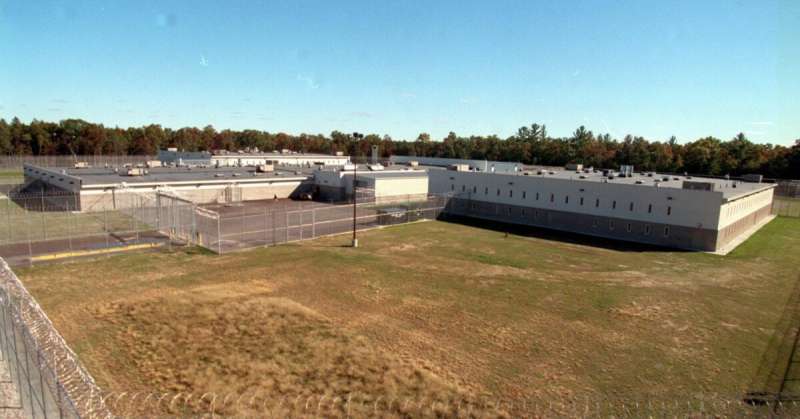
The state’s own numbers show what’s at stake while they sit there. As of January, the average officer vacancy rate across Michigan’s 26 prisons was 15.8%, and 10 of those facilities were short at least 20% of their officers. In the Upper Peninsula it’s worse: as many as one in three positions are empty at some prisons. There were 355 assaults on prison staff in 2025, up from 299 the year before, according to Bridge Michigan.
Osborn describes a system stretched past its limits. When a prison runs out of people to force into overtime, he said, it starts shutting down posts that are supposed to be staffed.
“If there’s a housing unit with 240 prisoners in it, and there’s supposed to be three officers assigned to that building each shift, and they’re running it with two officers, that’s a dangerous scenario for us,” he said. Fewer officers also means inmates lose yard time, phone time and recreation, which raises tension on both sides of the bars.
State Rep. Dave Prestin (R-Cedar River), whose district includes several Upper Peninsula prisons and who once watched an inmate assault an administrator during a prison tour, has called the situation “a death spiral,” Bridge Michigan reported. The same reporting found, through a state audit, that 61% of staff at one U.P. facility were thinking about quitting because of mandated overtime.
That is the hole the stalled bills were written to help fill. Right now, Osborn said, a new officer has little reason to build a career in corrections. Michigan stripped pensions for new state employees in 1997 and ended retiree health care in 2012—both times under Republican majorities—so officers can take a portable retirement account to any employer and leave. The retirement bills would offer something to stay for.
“We 100% believe that the immediate impact would have been on retention,” Osborn said. “This would have kept people from leaving, because now these bills would have established some sort of light at the end of the tunnel.” Once word spread, he said, he believes recruitment would have followed.
Instead, the bills became a court case. The Michigan Senate sued the House to force the transmission to the governor’s desk. In February, a Court of Claims judge ruled the House should send the bills, though she stopped short of ordering it. The Court of Appeals also sided with the Senate. The Michigan Supreme Court heard arguments on May 6, and a decision could come as late as July.
The House’s lawyer told the justices that requiring every passed bill to be sent to the governor would upend how the Legislature has long operated. The Senate’s position is simpler: The state constitution says bills that pass both chambers go to the governor, full stop.
Osborn does not lay the whole stall at Hall’s feet. He sees it as a broader failure of the state’s political system, one that stretches across both parties and several years. For Osborn, the throughline is that a simple step the constitution requires still has not happened, and the people paying for it are his members.
“Everybody knows what’s supposed to happen when bills are passed by the Legislature,” he said. “This was a simple administrative task that should have happened, and it didn’t.”
While the lawyers argue, the prisons keep running short. Osborn worries about what it will take for anyone to notice.
“It’s going to take national news in Michigan asking why there’s a prison on fire,” he said. “We’ve been telling y’all for so many years that this pressure cooker has been brewing, and nobody’s listening.”