MICHIGAN—Poll after poll has shown that Michiganders are fed up with data center development. Most voters simply don’t want them in the state, much less their own backyards.
But despite the widespread opposition, only one congressional candidate in Michigan has signed a formal pledge to enact comprehensive regulations on the projects if elected to office.
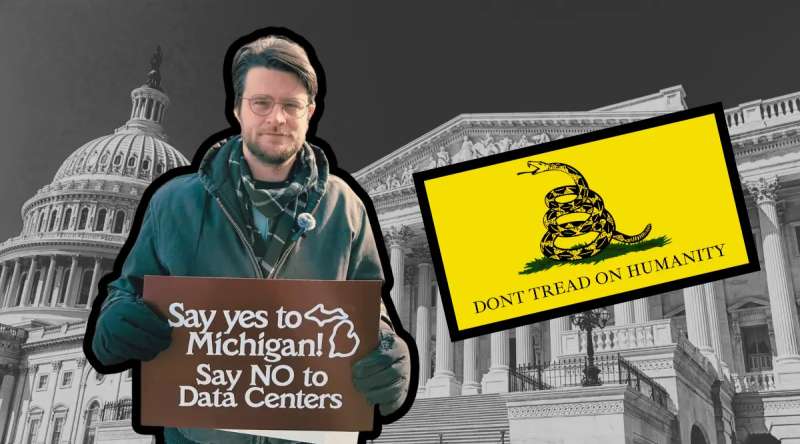
Democrat Will Lawrence, who is running to unseat US Rep. Tom Barrett in Michigan’s 7th Congressional District, is currently the only Michigander to have signed to The AI Pact—a five-point pledge that includes banning tax breaks for data centers, protecting workers from being displaced by artificial intelligence, and supporting policies to bar excessive energy use.
A spokesperson for Lawrence’s campaign said he signed the pledge in August. He was the only candidate in Michigan listed on the organization’s website as having signed it as of Sept. 3.
“I signed the AI Pact because Michiganders shouldn’t have to pay the price for a technology built to enrich Silicon Valley billionaires and the politicians cashing the checks,” Lawrence said.
Specifically the pact requires politicians to pledge they will “support policies that would ban tax breaks, backroom deals, and excessive energy usage for data centers,” including by mandating that data center developers cover the costs of utility rate hikes caused by their energy use.
In signing the pledge, Lawrence also vowed to support a “mandatory, independent safety review” before “every new major AI model” can be released, as well as to fight any federal attempts to block state and local leaders from enacting their own data center policies.
The pledge also calls for an “AI dividend” that would be funded by data center developers and paid directly to workers who are displaced by advancements in artificial intelligence.
“Americans have always had a healthy skepticism of concentrated power, and it’s time for our elected leaders to step up and hold AI companies and data center developers accountable,” Lawrence told The ‘Gander this week. “It’s exactly what I’ll do in Congress.”
In Michigan, opposition to data centers has shown up everywhere from packed township halls and legislative committees to statewide rallies and recall elections targeting local officials who’ve supported them. Still, more than 30 of these projects have now surfaced across the state—backed by billions of dollars in outside capital and tax exemptions to help lure them in.
Compounding the issue: Under state law, local governments are limited in their ability to block these facilities from moving into town. And new proposals for these projects just keep coming.
Michiganders also sent a clear message during the August primary election, electing several Democratic candidates who vocally campaigned against data centers ahead of Election Day—including Lawrence. And in recent weeks, Republicans have climbed on the bandwagon.
Like other Republican candidates, Lawrence’s opponent has recast himself as a data center skeptic in recent weeks, insisting he would support policies that leave the decisions to local communities. Barrett’s record and financial disclosures, however, tell a much different story.
Barrett was among the Republicans who voted for President Donald Trump’s One Big Beautiful Bill Act, which included $83 billion in tax breaks for data centers, as well as earlier provisions that initially sought to block state and local governments from regulating the technology.
Barrett also backed the SPEED Act, which sought to diminish environmental reviews for data center projects. And he’s received thousands of dollars in campaign donations from an array of Big Tech investors, as well as corporate PACs for Google, Amazon, Microsoft, and Oracle.
“Barrett wants to reinvent himself as a data center fighter but his record says the opposite,” Ravi Mangla, a spokesperson for the Working Families Party, told The American Prospect. “He voted to give data center developers billions in tax breaks and left Michiganders holding the bag.”
Lawrence also took aim at Barrett in a statement provided to The ‘Gander.
“Data center developers have spent nearly $1 million to elect Tom Barrett, and it shows,” Lawrence said. “He voted for their tax breaks, and to stop locals from being able to regulate AI.”
READ MORE: How many AI data centers are planned in Michigan? We counted.
Don’t miss Michigan’s biggest stories—follow The ‘Gander on Instagram.