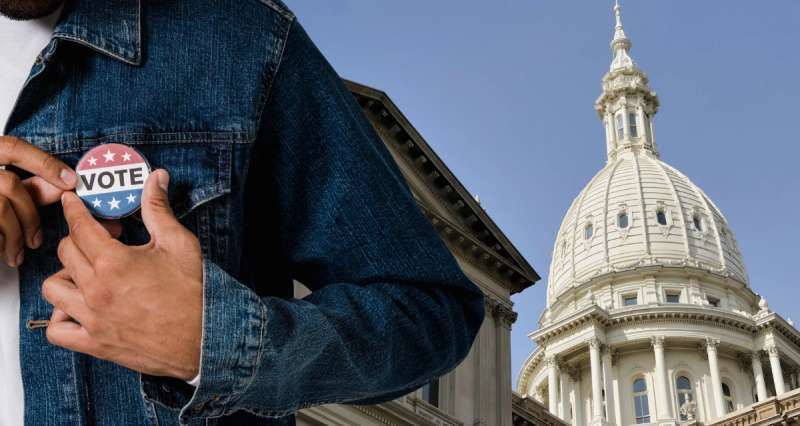
9/8/26 UPDATE: The Nov. 3 ballot is now set and two questions have made the cut. Read more here and visit our voting guide to the 2026 election here.
MICHIGAN—Over the last several months, hundreds of thousands of Michiganders have been asked to sign petition drives to change state laws or amend the state Constitution.
Only two of those petitions have gathered enough potential signatures to make the ballot.
And if the signatures are certified, both of the initiatives could go to a statewide vote on Nov. 3, 2026. Paired with the question of whether Michigan should hold a Constitutional Convention, that means Michiganders could vote three separate ballot proposals in this year’s election.
Here’s a quick guide to the three proposals that could be headed your way:
Constitutional Convention
Michigan’s state Constitution includes a clear requirement that Michigan voters get asked once every 16 years whether or not they want to convene a new constitutional convention—also known as a Con-Con—that could lead to significant changes to the state Constitution.
Every time this question has hit the ballot, Michigan voters have said no—by enormous margins. This year will mark the fourth time Michiganders will vote on the issue.
If voters say yes, Michiganders would elect 148 delegates—one from each state House and Senate district—to open up and potentially revise portions (or all) of the state Constitution.
Everything, including the part that guarantees reproductive rights, would be on the table.
If this passes, the convention would start in 2027. There’d be no set agenda, no guardrails on what delegates can and can’t touch, and no set timeline for how long the process would take.
But here’s one important check: Whatever delegates come up with would still have to go back to voters for final approval before any proposed changes would be allowed to take effect.
A wide variety of groups—including the Michigan Chamber of Commerce, the Michigan AFL-CIO, the Michigan Education Association, Business Leaders for Michigan, the League of Conservation Voters, and the League of Women Voters—are urging Michiganders to vote no.
The Michigan Democratic Party has also come out against the measure, with leaders saying it could essentially roll back years of progress. Meanwhile, some state Republican leaders are backing the Con-Con, arguing the 1963 constitution is outdated and needs to be simplified.
Americans for Citizen Voting
Americans for Citizen Voting has submitted signatures for a petition initiative that would change Michigan’s voting laws—namely by requiring proof of citizenship and photo ID to vote and forcing election officials to drop voters from the rolls if their citizenship can’t be verified.
The proposed amendment would eliminate the affidavit option for voters without ID on Election Day and it would require election officials to verify citizenship during voter registration.
Supporters argue the proposals will prevent voter fraud, despite no evidence of widespread voter fraud in Michigan. Opponents warn they would disenfranchise voters—especially women who’ve changed their names after marriage and people without easy access to government documents. If the signatures are certified, the proposal would go to voters on Nov. 3, 2026.
Michiganders for Money Out of Politics
Michiganders for Money Out of Politics, known as MOP Up Michigan, wants to ban all political donations from the state’s biggest utility companies—like DTE and Consumers Energy—as well as other corporations with large state or local contracts that total over $250,000 a year.
The proposal also aims to add additional disclosure requirements for so-called “dark money” groups that often purchase advertisements focusing on candidates ahead of Election Day.
The group submitted roughly 562,000 signatures last month to put the proposal on the ballot in November—which is about 200,000 more signatures than what was required under law.
Supporters—like Clean Water Action State Director Sean McBrearty—say the measure will help Michiganders “take back their power” from utilities and government contractors who have “used their incredible wealth to purchase power in Lansing that rightly belongs to the people.”
If the signatures are deemed valid, state lawmakers will have 40 session days to vote to enact the changes outright, reject the proposal and send it to the November ballot, or reject it and put forward a separate, competing measure of their own to appear on the ballot in November.
Journalism like this doesn’t happen without reader support. If you want to keep seeing independent Michigan coverage, consider making a contribution to support our work.
That’s it?
Yep.
AxMiTax, a petition that sought to eliminate property taxes in Michigan, reportedly “fell just shy” of the 446,198 valid voter signatures needed to put the measure on the ballot.
Another petition to shift Michigan’s elections to ranked choice voting was suspended in December. Other petition drives—like Invest in MI Kids and Voters to Stop Pay Cuts—halted their signature collection efforts earlier this year and will also not appear on this year’s ballot.
Click here to make sure you’re registered to vote and to find your precinct.
READ MORE: Michigan lawmakers are done waiting for Big Tech to protect kids
Don’t miss Michigan’s biggest stories—follow The ‘Gander on Instagram.