How much would you trust 148 elected delegates from Michigan to rewrite your fundamental rights in the state?
The question will become a reality for Michigan voters on November 3, when they face Proposal 1 on their ballots. The proposal—also called a referendum or ballot referral—comes around every 16 years, and asks Michiganders whether or not they want to convene a constitutional convention, or a “con-con,” to amend the state’s Constitution.
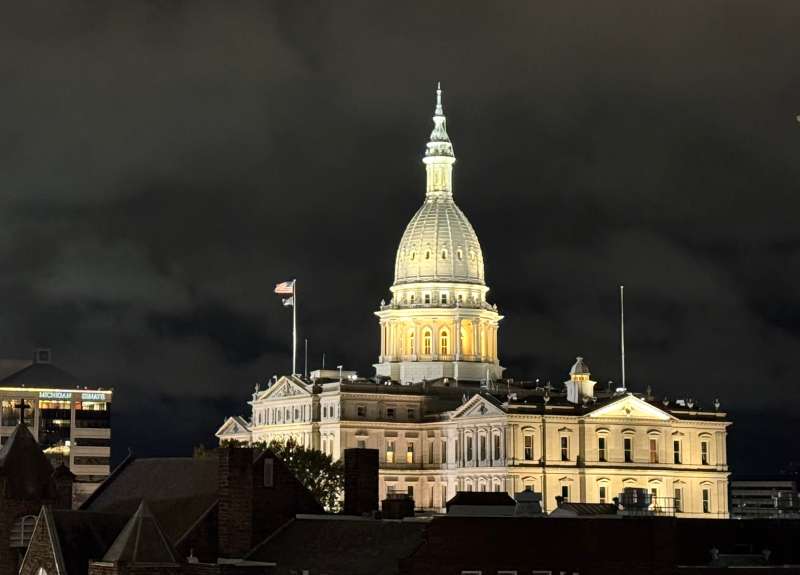
If the proposal passes, it would trigger a convention in Lansing in October 2027. During this time, 148 elected delegates would be able to propose changes to the state Constitution, from minor tweaks to a complete rewrite. There’s no set agenda, guardrails, or timeline for how long the process would take—and when the delegates finish their revisions, Michiganders would be asked to give final approval in a special election.
“Everyone says they care, but when rubber meets the road, it’s hard to get people there in any meaningful way,” said Adam Hazlett of Fenton.
Hazlett, the public relations director for Self-Advocates of Michigan, an organization that works to empower and connect Michiganders with disabilities across the state, said he’s concerned that a potential constitutional rewrite could leave out protections already in place that prohibit discrimination against individuals with disabilities, including their right to vote.
“As a disabled American, I don’t feel represented as it is. To open up the [state Constitution] now? When people are again questioning whether we’re full humans? That is ludicrous,” Hazlett told The ‘Gander.
Hazlett isn’t alone. A large number of groups, organizations, and individual Michiganders are working together to educate voters about the upcoming constitutional convention question, including the group Protect MI Constitution from Special Interests. The growing bipartisan coalition includes allies that Michiganders rarely see agreeing on anything, like the Michigan Catholic Conference and the League of Women Voters of Michigan, all of whom are urging Michiganders to vote no on Proposal 1.
“Honestly, I do believe that [the state Constitution] needs to be changed and rewritten. The problem is the people writing it,” said Tony Johnson of Genesee County. As a single father of three, Johnson worries about how a constitutional convention could strip rights away from future generations, and whether lawmakers will make changes that are in the best interest of their constituents.
“I don’t care if it’s a Republican or a Democrat. I want the person that’s going to speak for the people to give us what we need instead of what they want,” Johnson said.
Special interests may seek an advantage
Strict rules govern just about any election, from local mayor to state governor. But when it comes to electing the 148 delegates who would rewrite Michigan’s Constitution, there’s a distinct lack of rules—no campaign finance regulation, no contribution limits, and no disclosure requirements. Anyone with money, including out-of-state interests and Big Tech billionaires, could spend unlimited and untraceable amounts to install their chosen delegates.
Those delegates would then have an all-access pass to rewrite the rights that many Michiganders hold sacred, including those dealing with reproductive healthcare, public education, environmental protections, and government processes.
While the elected delegates discuss rewriting their rights, Michiganders will be left to foot the bill for the convention. The estimated $80 million expense would come from taxpayer dollars and could require additional state funding to cover the operating costs.
Related: 3 consequential questions are headed to Michiganders’ ballot this November
What happened during the last constitutional convention in the US?
A constitutional convention ballot referral was added to Michigan’s Constitution in 1960, with the requirement that it come up every 16 years on the general election ballot. Since the first convention in 1961, voters have overwhelmingly rejected holding another one.
Elsewhere in the country, similar sentiment exists. The last time a voter-approved constitutional convention actually took place in the US was in Rhode Island in 1986. The convention approved over two dozen amendments, which were bundled into 14 questions to fit on the ballot.
As a result, Rhode Island added several controversial amendments, including two that restricted reproductive freedom and another that barred more people from voting because of a criminal record. Several of the amendments were later overturned after years of work by voting rights advocates.
What you can do as a voter
“I think it really is going to be one of those things that, if people don’t think about it prior to getting into the ballot box, they’re not going to think about the ramifications,” said Hazlett. To prevent this, Hazlett and Johnson both said they hope Michiganders will talk to their family and friends about how Prop 1 could impact communities across the state.
“They’re betting on us not knowing or not caring. The more we learn, the more we are able to stick together and voice our opinion so they cannot take away from us what we deserve,” Johnson said.
“It’s not a partisan thing. When all of these organizations that typically stand on the opposite side of proposals are coming out and saying, ‘We’re not happy with this,’ that’s a huge red flag to me—and we should listen,” said Hazlett.
Related: MEA worries constitutional convention is Republicans’ plan to lock MI into vouchers
To check your voter registration, see your ballot, or find your polling location, go to gandernewsroom.com/voter-registration.