
Gov. Gretchen Whitmer signed a series of new laws that are set to dissolve several long-standing legal barriers to reproductive care across Michigan.
MICHIGAN—Legislation signed into law this week by Gov. Gretchen Whitmer will repeal several “medically unnecessary” restrictions on reproductive health care in Michigan, with the goal of protecting and expanding access to affordable abortion care for more Michiganders statewide.
Whitmer on Tuesday signed eight bills into law—Senate Bills 474, 476, 477, and House Bills 4949, 4951, 4953, 4954, 4955, and 4956—that comprise what state lawmakers have collectively coined the “Reproductive Health Act.” The governor had outlined the legislation as a top priority for lawmakers in a recent speech, and Whitmer said the new laws mark a “huge step forward” in expanding access to health care in Michigan and protecting Michiganders’ personal freedoms.
“The Reproductive Health Act lowers costs for patients and providers and protects every Michigander’s constitutional right to make their own decisions about their own body,” Whitmer said in a statement. “For decades, Michigan has had politically motivated, medically unnecessary restrictions on abortion in state law. These politically motivated, medically unnecessary laws criminalized doctors for providing medical care, jacked up out-of-pocket costs for patients, and imposed needless regulations on health centers, forcing many to close.”
The new laws—sponsored by Sens. Sarah Anthony (D-Lansing), Erika Geiss (D-Taylor), and Sen. Mary Cavanagh (D-Redford Township)—will repeal several old laws, starting in February.
What’s on the chopping block?
Several targeted restrictions on abortion providers—otherwise known as TRAP laws—are set to be erased from the books in Michigan. Under state law, the restrictions had only been applicable to facilities that offer abortion and other reproductive health care in Michigan, and physicians have deemed them as “unnecessary” for providing safe and affordable care for patients.
Here’s a quick overview of the changes:
State Licensing Tweaks
The newly signed laws repeal a raft of unnecessary (and cost prohibitive) state rules that have effectively prevented new clinics from opening their doors in underserved areas of the state—including a state law signed in 2012 by former Republican Gov. Rick Snyder which currently requires clinics to perform at least 120 abortions every year in order to be licensed.
That law has hindered health care by forcing some abortion clinics with less demand to close, and effectively blocked Planned Parenthood of Michigan from offering procedural abortions at 12 of its 15 health centers—making the organization’s northernmost clinic in Flint.
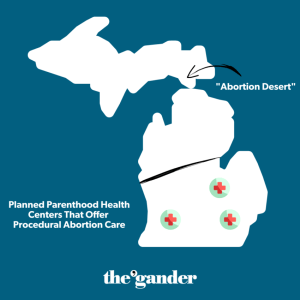
Lawmakers said that dearth of access is an unacceptable inconvenience for patients, and that repealing the licensing limitations—which also included restrictive rules about hallway widths and ceiling heights—will make it easier for providers to expand operations across Michigan.
“This legislation guarantees abortion is treated like all health care, with regulations that reflect current medical standards,” Geiss said in a statement. “The freedom to fully control our bodies, lives and futures is vital to all of us, and Michiganders deserve the freedom to make their own medical decisions.”
The bills also erase various state-mandated screening and exam procedures that only apply to abortions, as well as rules that have prevented the state Department of Health and Human Services from awarding grant money for ultrasound equipment to abortion providers.
Insurance Coverage
Among the other bills included in the Reproductive Health Act was long-sought legislation to repeal the state’s Abortion Insurance Opt-Out Act, which forces Michiganders to purchase separate riders in order to have abortion care covered under their health insurance plans.
That restriction has been criticized by opponents as a “rape insurance” law, including by then-state Sen. Gretchen Whitmer, who called the legislation “ignorant” and “repulsive” in 2013.

Lawmakers have said that private insurers won’t be forced to include abortion care as part of their existing coverage when the law takes effect next year. Instead, it will simply allow them the option to wrap abortion care into their existing health plans without charging a separate rider.
“Michiganders’ ability to get abortion care shouldn’t depend on where they live, what type of insurance they have, or how much money they earn,” Dr. Timothy Johnson, an OBGYN in Ann Arbor, said in a statement. “The Reproductive Health Act is an important step toward reducing disparities in health care access and improving health outcomes across the state.”
Other Changes
The new laws also reportedly lift a ban on what Republicans inaccurately call “partial-birth” abortions, which is usually the dilation and extraction procedure used in late-term abortions.
These procedures are extraordinarily rare—99% of all abortions taking place before 20 weeks, and only 0.2% occur via the dilation and extraction procedure—and often are performed in cases of miscarriages, fetal anomalies, or health risks to the pregnant woman.
The Reproductive Health Act will also allow people to sue if their constitutional rights are infringed, as well as end a ban on colleges and university resources from providing referrals to abortion services.
The new legislation also repeals an old law from 1931 that would have criminalized nurses and doctors for prescribing medication abortion—including one of the most common drugs, mifepristone.
Will of the Voters
Michigan voters turned out in full force last November to support Proposal 3 and cement the right to reproductive freedom—including abortion care—into the state Constitution. And Democratic state lawmakers quickly found more work to be done (and old laws to repeal) to help ensure Michiganders are able to fully exercise their new constitutionally protected rights.
The protections provided by Proposal 3 effectively ensure that nobody will ever be prosecuted with a crime for providing or receiving reproductive health care in the state of Michigan. The amendment also states that all Michiganders have a specific right to reproductive freedom.
That includes the right to make and carry out any and all pregnancy-related decisions (including abortion) and the approved amendment also bars the state from enacting any laws or regulations that would infringe upon those basic human rights without a “compelling state interest in the health” of the patient.

Democratic lawmakers took that a step further in April by repealing a nearly 100-year-old state law that had criminalized abortion care in Michigan, aligning state law with the newly amended State Constitution under Proposal 3—which was passed with about 57% of the overall vote last year.
In doing so, the Democratic-run state government has helped make Michigan a nationwide beacon for choice and bodily autonomy.
Since the US Supreme Court struck down Roe v. Wade last year, abortion has now been banned or more tightly restricted in 21 states, reports the New York Times. Although Michigan is among 21 states that have enacted new protections in the wake of the ruling, Democratic lawmakers and other advocates for reproductive freedom said more work must be done.
“If we have a constitutional right to reproductive freedom, but it’s not accessible for everyone, then it’s not actually a right,” State Rep. Laurie Pohutsky (D-Livonia) told The ‘Gander.
What’s next?
Many advocates for reproductive freedom have contended the laws that were signed this week didn’t go far enough to expand access to reproductive health care in Michigan—especially after some proposed changes were eliminated from a draft of the legislation before it was passed.
Earlier versions of the legislation passed by the Senate sought to repeal a legal mandate that forces patients who seek an abortion to wait at least 24 hours before they can get care. Under this state law, patients must also receive pamphlets of misinformation about alternative options to abortion.
Officials at Planned Parenthood of Michigan said those rules have only created unnecessary delays for patients in need of essential care—especially for those who might not have realized there was a waiting period and already drove hundreds of miles to receive abortion care.
Objections from all Republicans and one Democratic lawmaker also effectively derailed another early plan from the state Legislature that would’ve repealed a longstanding state ban that prevents Medicaid from covering abortions except in cases of rape or incest, or when the life of the mother is at risk.
Whitmer and fellow Democrats have vowed to “continue to take action” to protect access to reproductive health care statewide.
“Michigan is sending a strong message that the right to reproductive healthcare will remain safe and accessible in our state for years to come,” Anthony said in a statement. “This legislation affirms that decision by removing politically motivated restrictions on the right to an abortion and putting power back in the hands of individuals to make their own healthcare decisions.”
READ MORE: Whitmer vows to keep up fight for reproductive freedom in Michigan
For the latest Michigan news, follow The ‘Gander on Twitter.
Follow Political Correspondent Kyle Kaminski here.