A newly released report on 2024 statewide intersection crashes reveals where Michigan drivers face the highest risk.
One southeast Michigan spot, in particular, continues its streak at No. 1.
Read on for the list, including a map, of the 20 most dangerous intersections in the state.
Plus: Why Michiganders are boycotting Target, Home Depot, and Amazon on Black Friday.
|
|
|
Whitmer signs law expanding MI legislative police powers (MLive): Gov. Gretchen Whitmer has signed a new law expanding the jurisdiction of the House and Senate sergeants-at-arms, allowing them to operate anywhere in Michigan to protect lawmakers and investigate threats. Legislative leaders will now have the power to approve protection requests and launch investigations.
Kalkaska data center plans scrapped after negative reception (IPR): A proposed data center in Kalkaska is no longer moving forward. After holding public information sessions this week, developer Matt Rine said strong community pushback, including concerns about water, noise, and environmental impact, led his team to end the project. Rine canceled a third meeting and said the feedback made clear the community wasn’t on board, adding that local input should guide decisions about the area’s future.
Man acquitted in Whitmer kidnapping plot eyes governor run (MI Advance): A man acquitted in the 2020 plot to kidnap Gov. Gretchen Whitmer is now signaling a run for Michigan governor in 2026. William Null’s bid is already drawing skepticism over whether he can even make the ballot, especially with US Rep. John James leading a crowded GOP field. Democrats condemned the move, calling Null a dangerous extremist with no place in statewide politics.
|
|
|
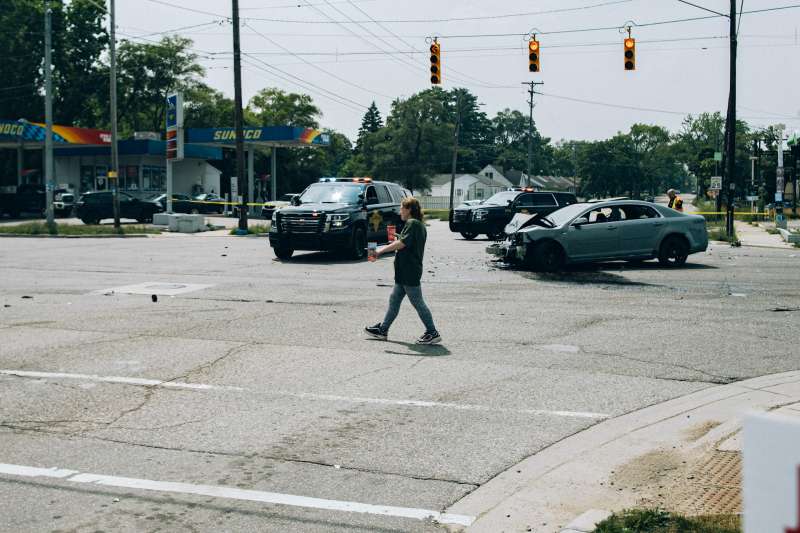
Every year, nearly one-third of all car crashes in Michigan, and approximately 30% of all fatal car crashes, occur at intersections. (Bruno Guerrero/Unsplash)
|
By USA Today via Reuters
A Michigan law firm that analyzed state crash data says the 20 most dangerous intersections for drivers in 2024 are located mostly throughout southeast Michigan.
Michigan Auto Law, in Farmington Hills, which specializes in auto crash cases, compiled a list of “most dangerous intersections,” based upon data from Michigan State Police data.
The law firm says 11 Mile Road/Interstate 696 at Van Dyke Avenue in Warren is the most dangerous intersection in Michigan, with 185 crashes and 26 injuries in 2024. Crashes decreased 15% from 218 in 2023 to 185 in 2024.
“In the No. 1 spot on our list of Michigan’s Most Dangerous Intersections for 2024 is an area where a heavily traveled stretch of road in Macomb County crosses over a busy suburban freeway,” Michigan Auto Law said. “This interchange with multiple traffic signals and merging traffic — which was No. 1 on our Top 20 list for 2023, 2022, 2021 and 2017 — had 26 injuries in 2024, which was a 50% drop from 52 in 2023. In 2022, 2021, 2020, and 2019, there were 41, 38, 33 and 31 injuries, respectively.”
The second-most dangerous location in 2024, in Sterling Heights, was the 18½ Mile Road at Van Dyke Avenue roundabout where there were 162 crashes and 12 injuries in 2024.
Every year, nearly one-third of all car crashes in Michigan, and approximately 30% of all fatal car crashes, occur at intersections, according to Michigan Auto Law.
|
|
|
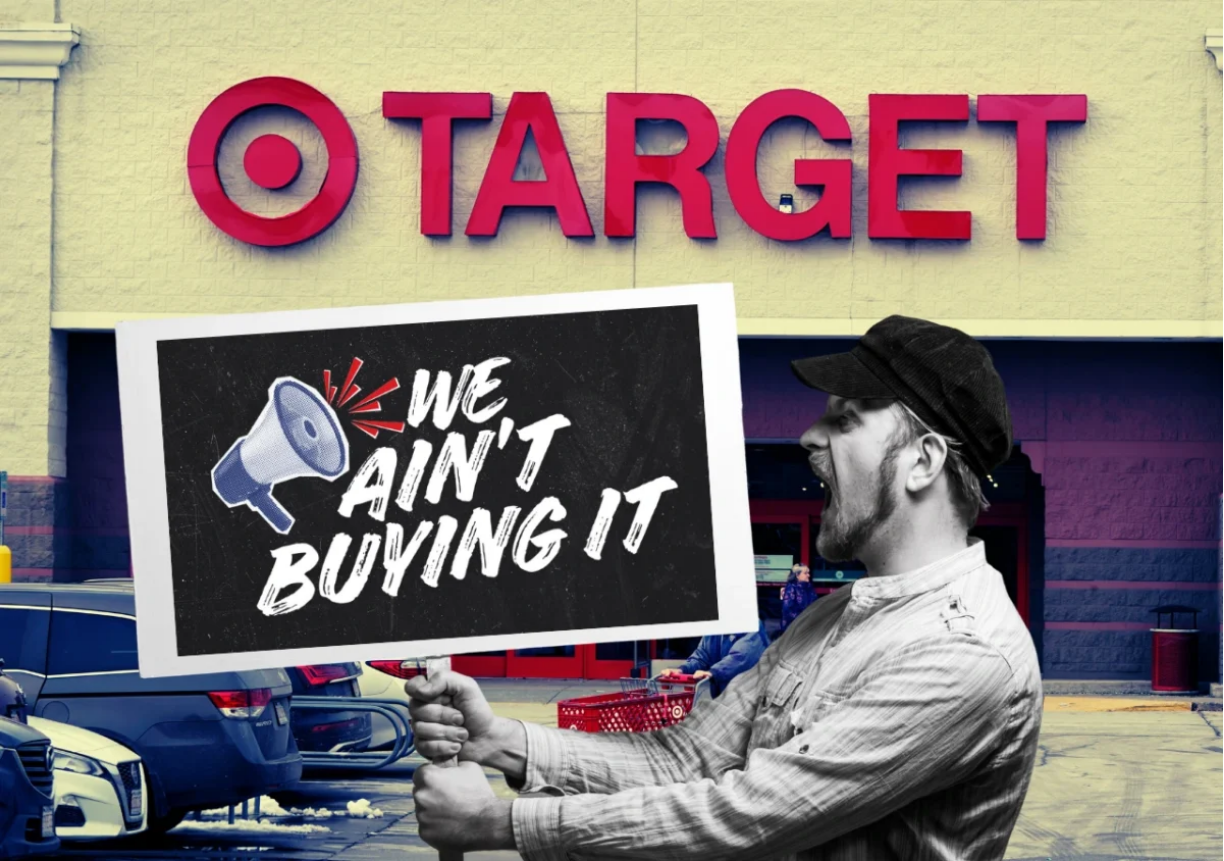
The nationwide “We Ain’t Buyin’ It” campaign is asking Americans to stop shopping at Amazon, Home Depot, and Target for five days—from Thanksgiving through Dec. 1. (Photo Illustration/AP Photo/Charles Krupa)
|
By Kyle Kaminski
This Black Friday and Cyber Monday, some Michiganders aren’t lining up for holiday deals. They’re sitting this one out—at least when it comes to three major retailers.
That’s because a new campaign called “We Ain’t Buying It” is calling for a five-day boycott of Amazon, Target, and The Home Depot from Thursday, Nov. 27, through Monday, Dec. 1.
The organizing coalition—which includes 50501, Black Voters Matter, and Indivisible—alleges that these three companies have enabled or bankrolled “cruel” policies that have been carried out under the Trump administration, and now deserve to lose sales as a consequence.
Organizers say that skipping purchases, even temporarily, is a way for Michiganders to speak up with their wallets during what is typically one of the most profitable weeks of the year for big companies. The Service Employees International Union (SEIU) joined the effort this week.
“SEIU members aren’t rewarding silence or cowardice. We know our power, and we’re using it,” SEIU President April Verrett said in a statement on Wednesday. “We’re choosing our people and our democracy. Corporations need to get on the right side or get left behind.”
|
|
|
A recent report from the University of Michigan’s School for Environment and Sustainability found that Michigan’s bottle return rate has dropped to 18% since 2019.
Since Michigan’s 10-cent returns have historically had strong returns, earlier this week, we wanted to get everyone’s thoughts on what’s causing the dip, so we asked:
|
Why do you think fewer people are returning bottles and cans, and what changes would improve the program?
|
And I have to say, I did not expect you all to be so passionate about this subject. With more than 50 email replies within the first day and over a thousand comments on our socials, there’s no way I can fit in everyone’s thoughts.
THANK YOU to everyone who wrote in. These highlights were chosen based on recurring themes I saw among the responses:
“I think the return machines are antiquated. I have seen one machine where you can put several cans in at the same time. The process is just too slow. I also do not care for the limit maybe vendors place on the number of cans returned. It should be easier rather than being made more difficult.” — Shari Sullivan
“More and more successful (higher income) households are NOT recycling the next can for another dime. I am embarrassed to admit I have many, many, relatively higher income household friends that have begun and/or continue to throw away their returnables instead of recycling them. They don’t like the “hassle” or the “smell” and they have regularly asserted—it’s just a dime, f— it!’—when I’ve asked them about it. When asked about keeping them and donating them to charity—they quickly will state that they would rather just make a donation to the charity than deal with empty cans..” — John VanOphem
“The reason for the decrease in return is working people don’t want to deal with the people that take returns in by the grocery carts full. They monopolize the return bins, leave the store a mess with their cans and bottles that the store doesn’t accept, the return bins get full and the stores don’t have the staff to police the bins or the willingness to enforce the rules of the $25 a day rule. Therefore, people with jobs who want to just return their bottles and cans while doing their grocery shopping choose not to waste their time.” — Vonda Hill
“Increase the types of beverages that have a deposit, i.e. water. The main reason the deposit law was passed was to decrease trash. With water bottles being so ubiquitous, the amount of roadside trash has increased, so why bother with returnables. Also ban the use of those plastic single use bags, that would also reduce trash.” — Roger Prindle
“The deposit hasn’t kept up with inflation.” — Heather Lewis
“I buy beverages in cans and donate the empties to charitable groups. Maybe with rising prices, the number of returned bottles/cans will increase.” — Arlene Westhoven
“When I return bottles the line is so long and then the machines break down and then you have to wait longer They just don’t hire a person just to work on bottles they always pull them to run other stuff. 1 PERSON FOR BOTTLES ALWAYS” — June Planck
|
Wanna to hear more on this subject? Reply to this email and let me know. I might make a web story with more reader comments.
And if you have a question you’d like me to ask our community, send it my way. I might feature it in a future newsletter.
|
|
|
Enjoying this newsletter?
|
|
|
Reach 190,000+ ’Ganders who care about their communities! Sponsor The ’Gander’s Dec. 6 Special Edition, “How to Get Involved and Give Back this Holiday Season.” Book by Nov. 21, 2025, and save 20% off your placement.
Click here to get started.
|
|
|
You are receiving this email because you opted in via our website.
Our mailing address is:
The ’Gander / COURIER Newsroom
611 Pennsylvania Ave. SE
Washington, DC 20003-4303
Want to change how you receive these emails?
You can update your preferences or from this list.
|
|
|
|