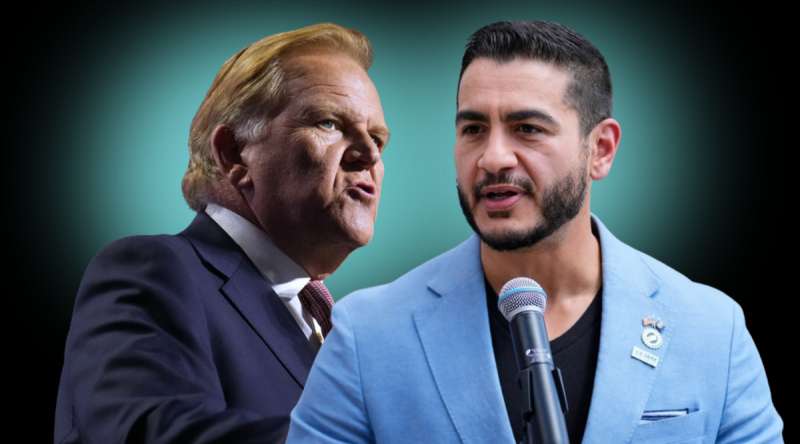
Michigan voters have historically opposed education voucher programs. However, the topic is resurfacing in Michigan’s Senate race after President Trump signed a Republican-backed reconciliation bill last summer, giving states the option to join a nationwide education voucher program through the federal government.
The candidates, Republican Mike Rogers and Democrat Dr. Abdul El-Sayed, stand on opposite sides of the debate regarding the Educational Choice for Children Act (ECCA), which allows individuals to receive up to $1,700 in tax credits for donating to certain scholarship organizations. Those organizations then provide scholarship funding for private school tuition and tutoring. While ECCA supporters say it offers students access to high-quality schooling, financial experts and public education advocates say the program could ultimately divert resources from Michigan’s public schools.
Related: Michiganders say Trump’s voucher push puts Michigan public school funding at risk
So far, 31 governors nationwide have opted their states into the program. While Republican leaders and the Trump administration push her to join the ECCA, and some Michigan public education advocates demand she doesn’t, Gov. Gretchen Whitmer says she’s waiting for more guidance from the federal government before making a final decision.
Meanwhile, whoever Michigan voters elect on Nov. 3 will work alongside other lawmakers to handle their governors’ decisions and pass bills that ensure constituents have access to an equitable education.
Related: Rogers vs. El-Sayed: Michigan could decide which party runs the US Senate
In August, during a youth-led US Senate candidate forum hosted by the Michigan Education Justice Coalition (MEJC) Youth Collective and its Young Adult Student Committee (YASS), high school students and education advocates statewide spoke with El-Sayed to discuss this exact issue.
El-Sayed, a longtime public education advocate who has received endorsements from organizations such as the Michigan Education Association and AFT Michigan, told students during the forum that he is “committed to public schools.”
“I believe in public schools, and I believe that we need to make sure that public schools stay public and that we are not in a situation where we’re empowering a few very powerful folks to profiteer off of public dollars,” said El-Sayed.
If elected, the Metro Detroit native said it would be his duty to make sure Michigan schools get the federal funding and support they need, including for students with disabilities. El-Sayed specifically cited research showing that voucher and tax-credit programs often benefit families already enrolled in or able to afford private education. Meanwhile, many students with disabilities sometimes face barriers because participating public schools may lack the capacity, or choose not to enroll or adequately serve them.
“The consequence of not funding [public education] to the level it needs is that we ask teachers to do more with less to provide the educational necessities to students with special needs,” Abdul said, adding that funding public schools would help districts afford paraprofessionals, social workers, school nurses, and other resources.
“I think it’s really important for us to champion public schools, to build public schools, and to invest in public schools. When you teach somebody, it doesn’t go away in your own mind. It is one of the single most important investments we can make,” said El-Sayed.
Republican candidate Mike Rogers was invited to attend the forum alongside El-Sayed, but MECJ leadership said he did not respond. However, during a press conference in Detroit on Sept. 10, Rogers—who has supported school voucher programs throughout his 14-year tenure in Congress and whose current campaigns have been bankrolled by education voucher champions like former Secretary of Education Betsy DeVos—told attendees that Michigan families could benefit from the ECCA and that “it won’t cost the state one penny.”
Rogers did not respond to repeated requests for comment from The ‘Gander regarding his stance on the ECCA.