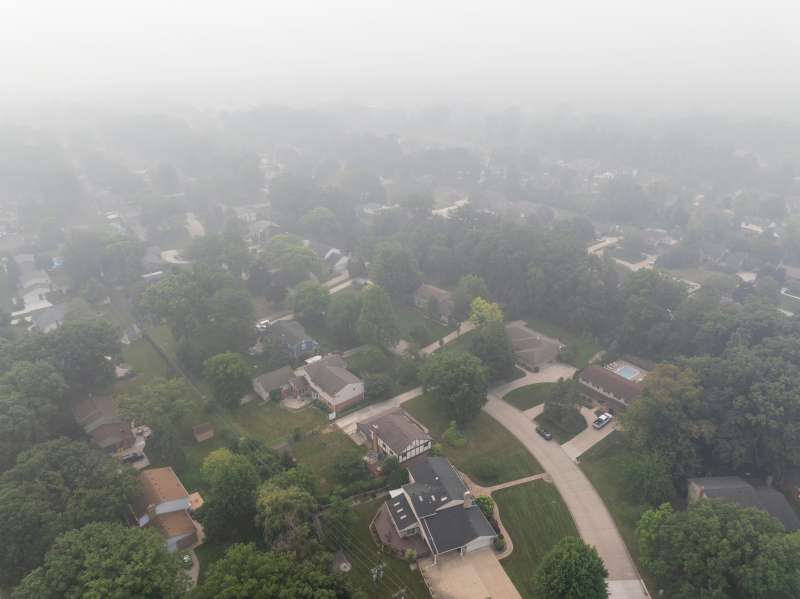
The air quality alert for Michigan, first issued last week, has been extended, officials said.
Authorities issued the warning on Thursday due to increased levels of fine particulates from smoke billowing from wildfires in Canada and Minnesota.
Michigan’s Department of Environment, Great Lakes, and Energy said over the weekend it has extended its air quality alert for the state through Monday.
The department said conditions are expected to improve on Monday, but could still reach an “Unhealthy for Sensitive Groups,” or orange on the Air Quality Index, across the state.
“Monday looks to continue a trend of slow improvement across the state,” EGLE officials said in a statement. “The smoke models are consistent with decreasing smoke concentrations, although some smoke is still expected to linger.”
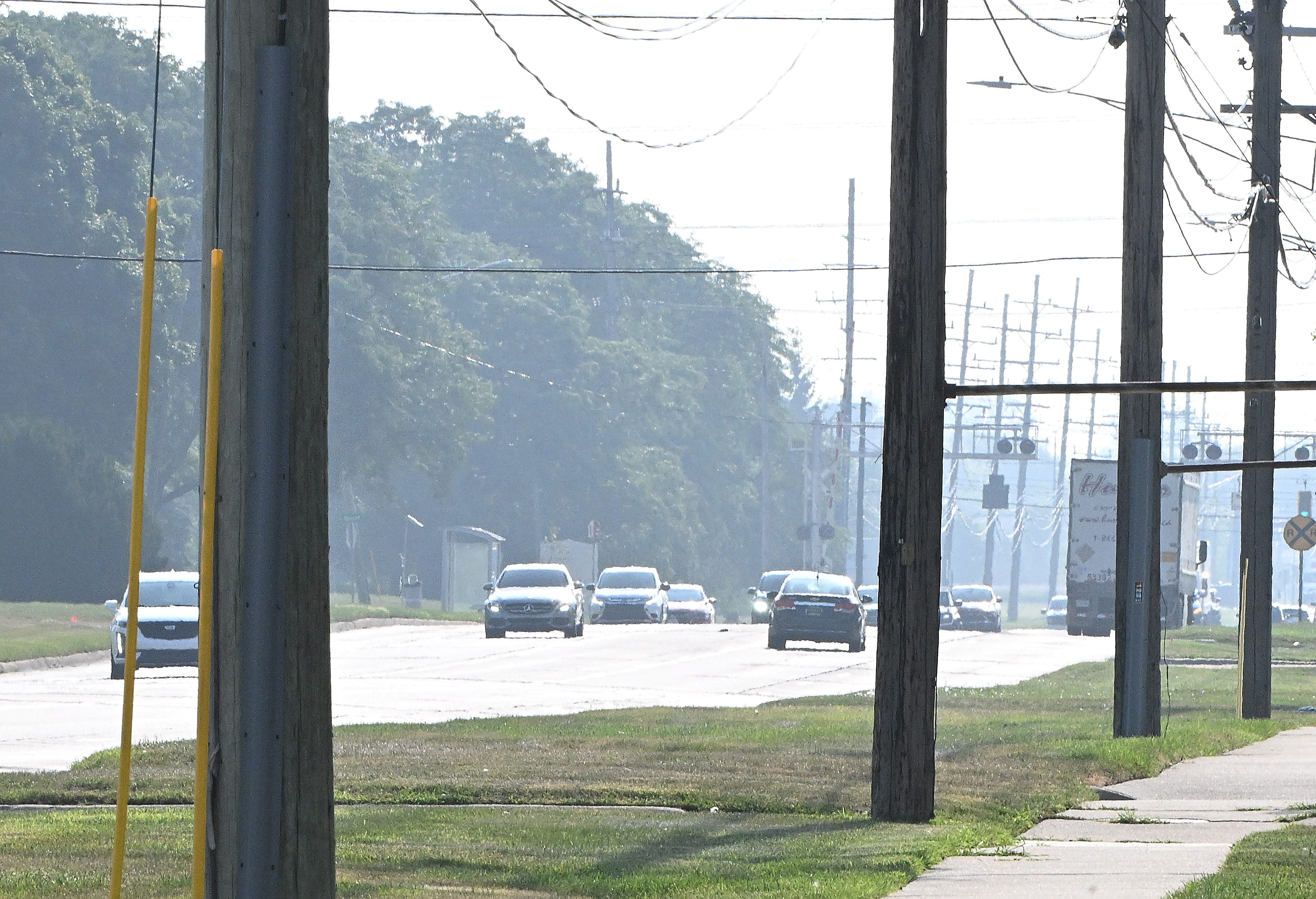
On Sunday, city of Detroit officials said they would continue to make respite sites from the air pollution available at the community’s recreation centers and libraries. They also said the city has extended the operating hours of recreation centers, distributing free masks to residents at those centers across the city, and limiting outdoor city programming and employee outdoor work.
“Air quality is significantly better than the hazardous levels we saw last week, and that is welcome news,” Ali Abazeed, Detroit’s Chief Public Health Officer and director of the city’s Health Department, said in a statement. “Better does not mean back to normal, however. Residents do not need to remain indoors across the board, but they should check current conditions and adjust the length and intensity of outdoor activities. If air quality worsens beyond what is forecast, we will notify residents and update our guidance accordingly.”
Shifting trend
National Weather Service officials said air pollutant levels are expected to improve as winds over Michigan shift to the south.
However, EGLE and the weather service both warn that ozone could spike in certain areas of the state as smoke lingers and if enough sun breaks through. Ozone is a toxic gas and lung irritant that often triggers asthma attacks.
By about 7:45 a.m. on Monday, Detroit’s air contained “Moderate” levels of pollutants, according to the federal government’s AirNow website and app. Its “Moderate” level means people who are unusually sensitive to particle pollution should consider reducing their activity level or shortening the amount of time they are active outdoors.
Last week, Detroit ranked No. 1 on a ranking of the most polluted global major cities twice. On Thursday, Detroit had an air quality index, or AQI, of 724 at one point, according to IQAir, a Swiss company that makes air quality monitoring and air cleaning products. On Friday, the city had an AQI, of 435, the company said.
But on Monday morning, it came in 16th with an air quality index of 86, IQAir’s list said.
However, some places in Michigan, including Grand Rapids, Kalamazoo, and the western Upper Peninsula, recorded unhealthy air quality levels on Monday morning.
EGLE officials also said that while Canada’s wildfires continue to burn, the agency’s forecast calls for the smoke to be more tolerable over the next few days.
This article originally appeared on The Detroit News: Michigan air quality alert extended; ‘slow improvement’ expected Monday
Reporting by Charles E. Ramirez, The Detroit News / The Detroit News
USA TODAY Network via Reuters Connect