By Bauyrzhan Zhazylykov, Capital News Service
LANSING — Michigan drivers can expect another summer filled with orange barrels, detours and road crews as road and bridge construction projects ramp up across the state.
Even as major construction plans remain on schedule, industry leaders say rising costs, inflation and global instability could continue pressure on transportation budgets.
“We’ve seen 20% to 30% inflation over the past five to 10 years,” said Lance Binoniemi, the vice president of government affairs for the Michigan Infrastructure and Transportation Association, which represents nearly 600 infrastructure and transportation companies.
“It seems like it’s continuing to get worse,” he added.
However, officials from the Michigan Department of Transportation said many construction bid prices had already been secured earlier in the season, helping limit the immediate impact of rising fuel and material costs on major projects.
“Bid prices for construction this season have already been secured, meaning increases in fuel pricing or materials costs are a concern a bidding contractor must take into account,” said Jocelyn Garza, the deputy director of public affairs for communications and media relations at MDOT.
“Fluctuating costs do impact routine maintenance operations, which are separate from the road and bridge construction costs,” she said.
MDOT plans more than 1,000 miles of road repairs and 169 bridge projects this season, including bridge replacements, rehabilitations and resurfacing work.
Garza said the Metro Region is expected to see the largest amount of work this summer because of its traffic volume and population.
“If we look at the investment totals, lane miles and similar factors, the Metro Region will see the largest construction activity and highest investment amount this year at $379 million,” Garza said.
MDOT oversees state transportation projects in seven geographic areas, including the Metro Region.
Across those areas, the department plans to invest hundreds of millions of dollars this season in road and bridge work, including about $890 million for road rehabilitation and reconstruction projects, nearly $194 million for bridge replacements and about $58 million for bridge repairs.
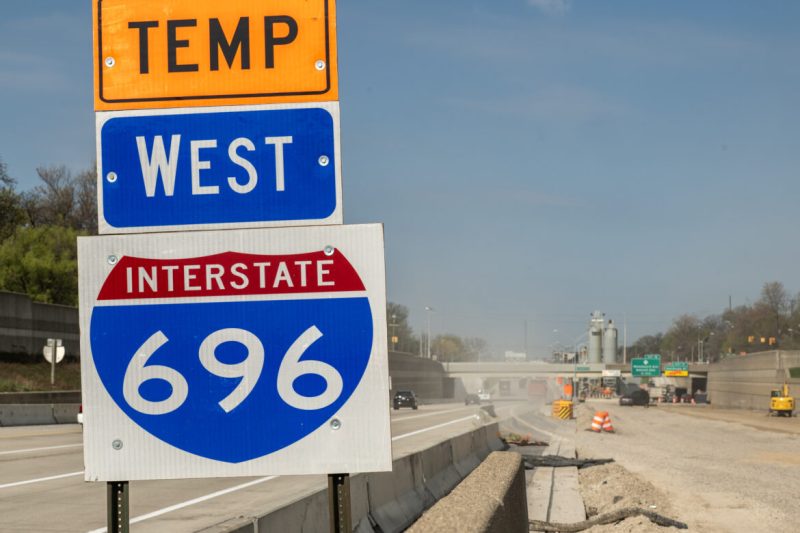
The projects include several major highway construction efforts. Contractors pointed to the ongoing I-696 project in Southeast Michigan as one of the largest.
“They’ve shut that whole highway down,” Binoniemi said.
While officials and contractors point to major highway projects, county road agencies say they continue funding shortages despite growing infrastructure needs.
The County Road Association of Michigan, which represents all 83 county road agencies, estimates counties are nearly $2 billion short annually of what is needed to maintain local roads and bridges.
As a result, local agencies often focus on preventive maintenance projects to extend the life of roads before they fall into poor condition and require costly reconstruction.
“We’re always measuring the condition of our good roads and our fair roads to make sure they stay in good and fair condition,” said Ed Noyola, the chief deputy and legislative director of the association.
“If you can do a chip seal or something less than a full replacement, you really extend the life of that pavement,” he said.
County road agencies also say another challenge affecting construction and maintenance work is the long delivery time for heavy equipment and machinery.
“Trying to get trucks and tractors and snowplows, that sort of stuff, does take some time,” Noyola said.
“It’s gone from a year or so to multiples – 18 months, 20 months, 24 months – to get a piece of heavy-duty equipment that we need and use on a regular basis.”
Officials say those equipment delays, along with ongoing funding and infrastructure challenges, could continue affecting future transportation projects.
They say Michigan’s transportation needs continue growing faster than available funding, which could lead to changes in the timing or size of some projects.
Bauyrzhan Zhaxylykov writes for Great Lakes Echo.