As jobs disappear alongside factories in West Michigan, voters looking for a stable economic future are considering how the candidates have voted to support that end.
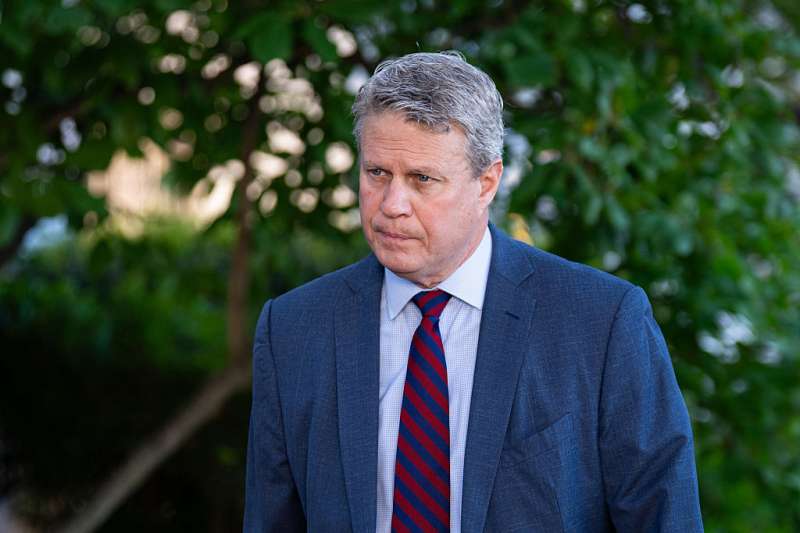
US Congressman Bill Huizenga (R-Holland), in office since 2011, has a nuanced voting record. In 2018, he pushed back against the Trump administration’s tariffs on steel and aluminum, saying he worried they would have the opposite of their intended results and asking Trump to reconsider.
“Any perceived short-term gain from these overly broad tariffs may be quickly blunted by hardworking men and women losing their jobs in West Michigan and communities where manufacturing plays a significant role in the local economy,” he wrote in a statement at the time.
But eight years later, he supported the tariffs Trump enacted in his second term, saying that while implementing them might be difficult in the short term, they would support domestic manufacturing.
Whether tariffs themselves are fully to blame for what’s unfolding in West Michigan’s economy can be debated, but economics professor Paul Isely, who also serves as Associate Vice President for Academic Affairs at Michigan’s Grand Valley State University in Allendale, said what’s most difficult for business owners is flip-flopping and uncertainty from leaders.
“One of the problems that we’ve had over the last few years is the rules keep changing very quickly,” Isely said.
Changes in West Michigan’s economy
In order to understand how policy is affecting West Michigan’s manufacturing sector, it helps to understand the major changes to the broader industry over the past 30 years.
Isely explains that coming out of the 2008 recession, companies in the state’s automotive industry began using automation to reduce their workforce. That became more common around 2015, and by the time the pandemic hit in 2020, automation was being used to replace workers sent home to avoid the spread of COVID-19. Since then, Isely said, automation has been accelerated by artificial intelligence (AI).
“Our surveys here in West Michigan have shown that 20% of manufacturing firms are using AI to reduce their headcount,” he said. More broadly, about 10% of overall businesses in the area are using AI for the same purpose.
And while automotive and furniture manufacturing once ruled in the area, newer sectors including tech and healthcare are growing. Isely said cities such as Kalamazoo saw a boom in healthcare with the presence of Stryker, and automotive manufacturers found it easy to pivot to aerospace given that the regulatory environment was similar.
“It created an outlet and an opportunity that was there that we were ready to do,” Isely said, “and now, as defense spending has ticked up, it has helped the area even more.”
Still, factories have closed in recent years, including Howard Miller Company in Zeeland, whose CEO cited tariffs and supply-chain disruptions as part of the reason for laying off all 133 workers at its clock- and furniture-making headquarters in 2025.
Another 64 workers in Grand Haven Township lost their jobs when the NPR of America engine manufacturing plant closed in 2025 to “optimize production.”
Pactiv Evergreen, a facility packaging food and beverages in Kalamazoo, laid off 153 employees last year, citing cost-cutting measures following a merger and acquisition.
But Isely said he projects slow growth for jobs this year, even if those in the manufacturing sector have decreased.
Isely said the changes happening in manufacturing over the past three decades are unprecedented, from a worker surge among millennials following the 2008 recession to the adoption of AI in recent months. With so much change happening, he said politicians must communicate clear approaches to consistent policy to foster the best environments for businesses.
“The government likes to believe they have a big effect on the economy—they generally have a small effect,” Isely said. “The economy is people buying and selling stuff, but the government sets the playing field, and it has to be put together in a way that’s logical and easy to follow so if you decide you’re going to do something, you understand what the rules are to do it.”
Isely said West Michigan can continue to recover by investing in the workforce, retaining young workers, and electing leaders with clear visions. The broader economy will even out as the effect of the war in the Middle East on gas prices “reaches a new status quo,” he said.
“The question is, are the changes we’re making now going to make us cost-competitive so when someone wants to manufacture something, it makes sense to do so here in West Michigan?”
In the meantime, a 2026 economic forecast for Grand Rapids, which Isely authored, showed that 51% of respondents blamed the government for negatively impacting business in the region.
A closer look at Huizenga’s approach
Huizenga, whose campaign could not be reached for comment, criticized Trump’s proposed tariffs in 2018, warning they would increase costs for West Michigan businesses. Last year, as Howard Miller closed, Huizenga said the tariffs were a good move, citing the need to reshore businesses post-pandemic.
In February of this year, he voted against a resolution that would have ended Trump’s national emergency declaration, which he used to impose tariffs on Canada.
Even as local officials blamed Trump’s tariffs for costing Michiganders jobs with the Howard Miller closure, the Michigan Chamber of Commerce and the US Chamber of Commerce have endorsed Huizenga for reelection.
Huizenga’s approach to supporting businesses has been through tax cuts. He supported the 2017 Tax Cuts and Jobs Act. Huizenga also voted in favor of the One Big Beautiful Bill Act in 2025, which included permanent tax cuts for small businesses, no tax on tips, and no tax on overtime. In a statement at the time, Huizenga said, “The One Big Beautiful Bill will supercharge Michigan’s economy by boosting manufacturing, helping farmers, modernizing our military, and unleashing American energy.”
This year, he co-authored the American Manufacturing Revitalization Exchange Program Act, aimed at strengthening manufacturing skills through an international workforce exchange effort.
What McCann proposes
In an interview with The Gander, Sen. Sean McCann—Huizenga’s Democratic opponent—said he plans to make it easier for businesses to make decisions by creating stability.
“The tariffs of the Trump administration that Congress and the congressmen have supported have deeply disrupted that predictability, that ability to know sort of what the future might hold, and that makes hiring decisions more difficult. It makes investment decisions more difficult; it just basically makes everything harder to do. It shrinks profit margins, it drives up cost,” McCann said.
Next, he plans to improve workforce training by investing in education. McCann said he’s spoken to small business owners harmed by the tariffs, and learned that the Heinz Corporation in Holland lost a multimillion energy efficiency grant after Trump began “destroying some of the clean energy structure.”
“The overall broader tariff strategy, on and off, has been bad for households in Michigan, and then you add on this layer of this trade war in Canada, and it disrupts the auto industry specifically, and it impacts our costs in Michigan here more than anything,” McCann said.
In the meantime, McCann blames Trump’s tariffs and trade policies for creating uncertainty that harms businesses in the region. And he thinks Huizenga’s stance on those policies remains unclear.
“Why is he silent on these policies?” McCann said. “It’s inexplicable to me as to why (Huizenga) supports these policies.”