By Capital News Service
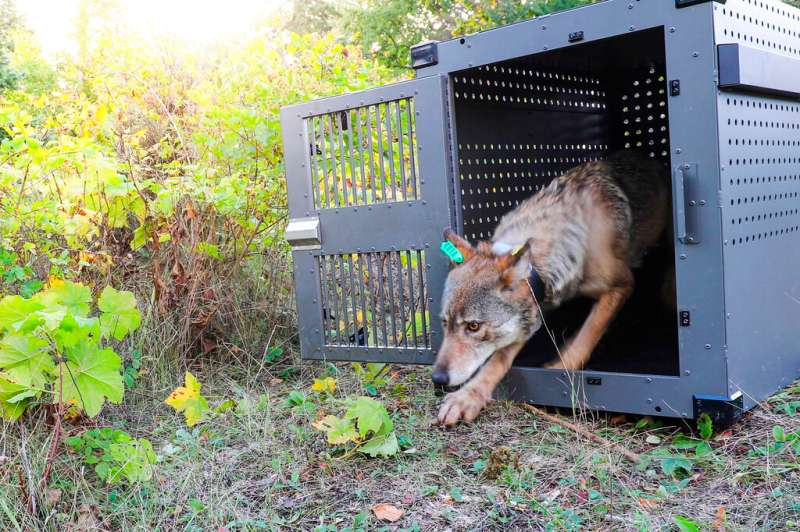
Public attitudes toward wolves are split in the Upper Peninsula, a new study finds, with more than 60% of residents surveyed favoring reducing wolf abundance, motivated mostly by worry about risks to livestock, white-tailed deer and human safety.
However, those who valued the ecological role of wolves were less likely to support cutting their numbers, according to the study, “Social and Ecological Influences on Human Coexistence with Gray Wolves,” in the journal Conservation Science and Practice.
“Perceived risks, particularly to deer, strongly influenced attitudes,” the study said.
The Wolf Conservation Center, based in New York, reported that there were at least 762 wolves in the UP in 2023.
The study recommended that the Department of Natural Resources balance public concerns with management of the state’s wolf population.
In the United States, heightened perception of risks negatively impacts people’s willingness to coexist with wolves.
“People living with wolves perceive real risks that need to be attended to,” said researcher Shawn Riley, an emeritus professor in the Michigan State University Department of Fisheries and Wildlife.