BY KYLE DAVIDSON, MICHIGAN ADVANCE
MICHIGAN—Last spring, Democrats in the state Senate introduced the Clean Energy Future plan, aimed at bringing multiple pieces of Gov. Gretchen Whitmer’s MI Healthy Climate Plan into state law.
While the package faced strong opposition from Republicans, the Democratic majorities in both the House and Senate voted to send the bills to the governor’s desk.
Whitmer signed the package in November, setting a 100% clean energy standard for 2040, raising the state’s energy waste reduction goals, giving the Michigan Public Service Commission (MPSC) additional criteria to consider while regulating operations for energy companies in the state.
It also establishes the new Community and Worker Economic Transition Office, aimed at assisting workers in the shift from fossil fuel and clean energy jobs.
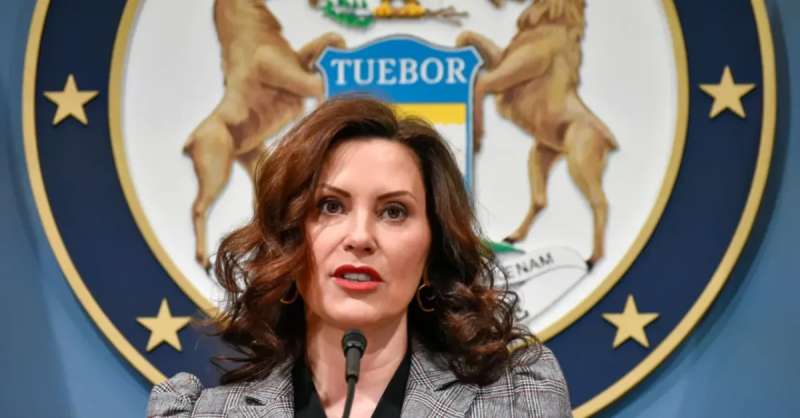
At a panel hosted by Evergreen Action on Friday, Whitmer joined members of Energy Innovation, the Michigan League of Conservation Voters and the Michigan Regional Council of Carpenters and Millwrights to discuss how these bills will impact Michigan’s environment and the future of its economy.
“As I shared at my State of the State [address] two nights ago, Michigan is now a leader on climate action. We’re proving that you can pass strong climate policies and create good-paying union jobs and lowering people’s electricity bills. We’re setting a new standard for the entire country,” Whitmer said.
Additionally, these policies will help to bring $7.8 billion in federal investments to Michigan, create thousands of jobs and lower electricity costs by an average of $145 a year, Whitmer said, citing a report from Evergreen Action, 5 Lakes Energy and the Michigan Energy Innovation Business Council.
While this new package and the federal Inflation Reduction Act are supporting economic growth and quality of life in Michigan, part of the work ahead is protecting what has already been done, Whitmer said.
“We can’t lose sight of the fact that now we’ve got to continue to show people what this is going to mean and why their lives and our economy is benefiting from it,” Whitmer said.
The CEO of Energy Innovation, Sonia Aggarwal, who previously helped develop the Inflation Reduction Act within the Biden administration, emphasized the federal dollars the Clean Energy Future package will bring to the state.
“Some of that federal funding would have gotten to Michigan without this package of policies, but what the governor and the Legislature have done in Michigan to increase the amount of federal dollars that will be flowing to the state is really incredible,” Aggarwal said.
With Michigan ranking 10th in the nation for carbon dioxide emissions, these policies have exciting implications for reducing climate impacts, Aggarwal said.
“Seeing this degree of progress in a state with large emissions is really going to make an impact on our overall United States capability to meet our climate targets,” she said.
“We have to get to, at least, cutting emissions in half by 2030 and 2030 is 308 weeks away. So we don’t have a ton of time and we know that the opportunity is right in front of us,” Aggarwal said.
Although the passage of the Clean Energy Future package was cheered by a number of environmental advocates, some raised concerns about the lack of accountability for energy companies.
Others—including state Rep. Dylan Wegela (D-Garden City)—criticized the new clean energy standard for including carveouts for energy sources like natural gas with carbon capture and storage and trash incineration, saying these energy sources would continue to bring disproportionate negative health impacts on low-income communities and communities of color.
During the panel, Lisa Wozniak, executive director of the Michigan League of Conservation Voters, called the package “historic,” but said there’s still work to be done.
“Did we accomplish everything that we wanted? No. And so the work will continue,” Wozniak said.
“We have to ensure that communities are allowed to install their own solar operations. We know that we have more work to do to ensure that all communities, especially Black and Brown communities, are free of toxic air pollution, and are more fully at the center of our clean energy progress,” Wozniak said. “And we’ve got to stay laser focused on the build out of more clean renewable energy and implement the laws so that Michiganders can fully realize the benefits of our clean energy future.”
Wozniak also highlighted efforts in progress, including legislation to allow Michigan communities to establish independently owned and subscribed community solar programs, removing the state’s cap on rooftop solar, and efforts to improve energy reliability in the state.
“The Michigan Public Service Commission’s authority to require utilities to spend money from rate increases on reliability and grid improvement was stripped from the bill. So this is something that we absolutely need to focus on,” Wozniak said.
“The bills do nothing to hold accountable utilities, for outages and to compensate consumers for lost work, or food or medicine, or other impacts of the all-too-frequent power outages and restoration that takes far too long,” Wozniak said.
There also needs to be more action to allow the Michigan Public Service Commission to consider justice, equity and affordability when considering rate cases, Wozniak said.
Panelists also highlighted positive impacts the package would have on labor in the state, with Tom Lutz, executive secretary-treasurer of the Michigan Regional Council of Carpenters and Millwrights, highlighting how labor provision within the package would support workers building and maintaining clean energy facilities.
Requiring developers to enter a project labor agreement for the project helps uphold standards for wages, education and safety, Lutz said while requiring prevailing wages ensures workers are making wages similar to people living in the community where they’re working.
“Unfortunately, in the past, some of these projects have been closely associated with a workforce that comes in from somewhere else, doesn’t get a prevailing wage [and] doesn’t spend those dollars in the local communities,” Lutz said.
“It doesn’t mean that the local contractor always gets the work. It means that the workers on the job haven’t lowered the standards in that community,” Lutz said.
However, when jobs have prevailing wage and project labor agreements, workers are more likely to be local, Lutz said.
“To be honest, if you have to pay ‘em an equal and fair wage and you can use someone local, that’s just more efficient, right? It means that there’s no additional cost to bring workers in and we’ve already invested in making sure that local workers will be trained and ready to go to work,” Lutz said.
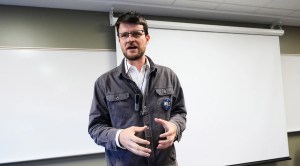
Before leaving the panel, Whitmer offered advice to other state leaders who may be looking to get similar climate policy efforts across the finish line.
“Listen to your people, collaborate across the board and don’t give in when the going gets tough. We’ve got momentum and I think drawing down these federal dollars is going to show that if you are shrewd, you’re able to deliver a good quality of life for people, a good job for people and benefit from all the work that’s been done on the national level,” Whitmer said.
READ MORE: New clean energy laws to cut utility bills for Michiganders
This coverage was republished from Michigan Advance pursuant to a Creative Commons license.